
Choosing a baby bed is one of the most important decisions you will make when preparing your nursery. In Singapore, ensuring that your infant’s sleeping environment is secure requires a clear understanding of both local safety regulations and international manufacturing standards. Because infants spend the majority of their first year asleep, a safe baby bed acts as the primary defense against serious hazards such as accidental falls, entrapment, and sudden infant death syndrome (SIDS).
While shopping, you will encounter various terms, certifications, and marketing claims. Knowing how to distinguish a genuinely certified, structurally sound baby bed from an unsafe model is essential. Always refer to the specific product documentation, labels, and manufacturer warnings for age, weight, and developmental limits before assembly or use. If instructions conflict, or if you suspect structural instability, stop using the bed immediately and consult the manufacturer or a qualified professional.
Understanding Baby Bed Safety Regulations in Singapore
When purchasing nursery furniture in Singapore, it is important to understand how consumer goods are regulated locally. Enterprise Singapore is the national authority responsible for overseeing product safety. While electrical appliances and certain high-risk items require a mandatory “Safety Mark” sticker to be sold legally, non-electrical consumer products like baby beds and cots fall under a different regulatory category.
Products mentioned in this guide
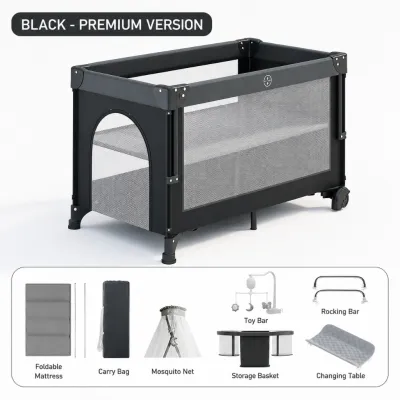
![[SG Stock]Brotish Multifunctional 2 Layer Portable Infant Baby Cot Playpen Travel Cot Bed Double-deck Playpen Sleep Bed](https://img.lazcdn.com/g/p/9306630fe674b3e82e74c940f19a16cd.jpg_400x400q80.jpg_.webp)
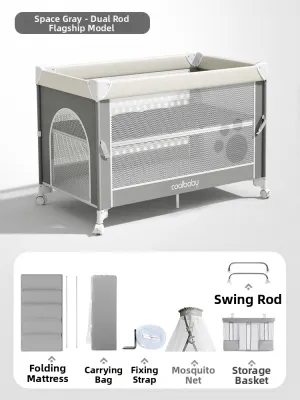
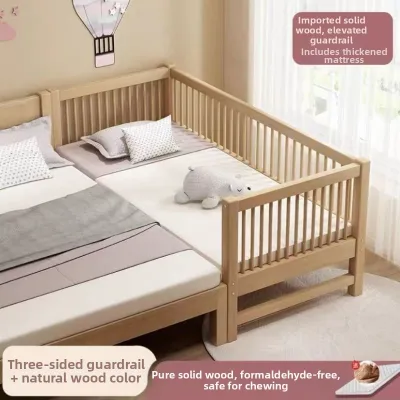
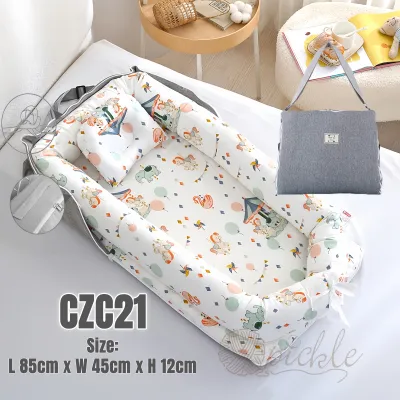
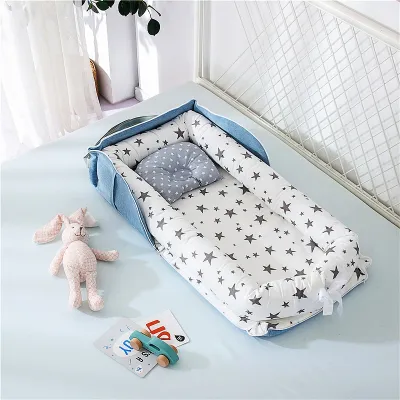
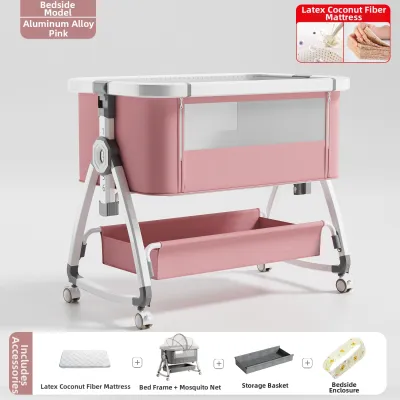
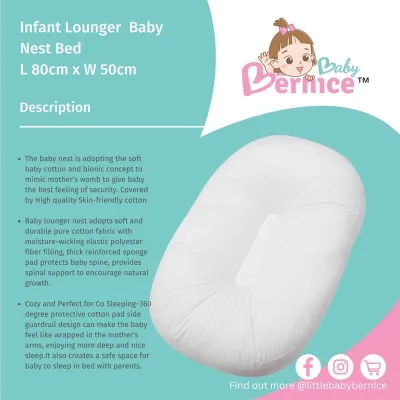
Prices are valid at publication and may change. Please refer to the product page for the latest price.
Non-electrical nursery furniture is governed by the Consumer Product Safety General Requirements (CPSGR). Under this framework, there is no specific, mandatory local safety sticker that must be affixed to a baby bed. Instead, the law places a general safety obligation on manufacturers, importers, and retailers. This obligation dictates that any consumer product offered for sale in Singapore must be safe for its intended use and free from foreseeable hazards.
To demonstrate compliance with the CPSGR, reputable brands test their products against established international or national standards. When browsing local stores, you should look for compliance statements or references to Singapore Standards (SS) on the product packaging or labels. These references indicate that the manufacturer has voluntarily aligned their design and production processes with recognized safety benchmarks.
The absence of a specific local “Safety Mark” sticker does not mean a baby bed is unregulated or unsafe. Rather, it means you must look closer at the product’s documentation. Buying from established, reputable retailers in Singapore provides an extra layer of security, as these businesses are subject to local enforcement and are required to cooperate with Enterprise Singapore to resolve any safety issues or product recalls.
Recognized International Safety Standards for Baby Cribs
Because Singapore’s regulatory framework relies heavily on general safety obligations, manufacturers of high-quality baby beds typically certify their products under major international standards. These certifications prove that the furniture has undergone rigorous mechanical and chemical testing. When evaluating a baby bed, you should look for compliance with at least one of the following recognized standards.

ASTM F1169 (United States Standard)
The ASTM F1169 standard, established by the American Society for Testing and Materials, is a highly comprehensive safety specification for full-size baby cribs. This standard focuses intensely on the structural integrity of the bed over long-term use. It requires the crib to pass demanding physical tests, including dynamic impact testing of the mattress support system and side-rail strength tests.
Under ASTM F1169, the spacing between the slats is strictly regulated to prevent a baby’s head or torso from becoming trapped. The standard also mandates that all hardware must be self-locking to prevent screws and bolts from loosening due to the natural vibrations of a baby moving inside the cot. Furthermore, it prohibits any design elements that could create catch points for clothing, which presents a strangulation hazard.
EN 716 (European Standard)
The EN 716 standard is the European benchmark for children’s cots and folding cots designed for domestic use. This standard is divided into two parts: Part 1 specifies the safety requirements, while Part 2 details the exact testing methods used in laboratory environments. EN 716 places a strong emphasis on preventing falls and entrapment.
Key requirements of EN 716 include a minimum internal height (the distance from the top of the mattress support to the top of the cot side) to prevent developing babies from climbing out. It also regulates the distance between slats, requiring them to be spaced closely enough to prevent a baby’s head from passing through, while remaining wide enough to avoid trapping limbs. Additionally, the standard requires that all edges and corners be rounded, and that the mattress base be strong enough to withstand repeated impacts.
AS/NZS 2172 (Australian and New Zealand Standard)
The AS/NZS 2172 standard is widely regarded as one of the most stringent nursery furniture standards in the world. It is highly relevant in the Singapore market, as many premium baby brands sold locally import products designed to meet these rigorous requirements. This standard covers everything from the materials used in construction to the specific design of safety barriers.
AS/NZS 2172 requires extensive testing for joint strength, impact resistance, and material durability. It also enforces strict guidelines on mattress firmness and crib depth to minimize the risk of suffocation. When a baby bed carries this certification, it indicates that the product has been built to withstand significant physical stress while maintaining a highly secure sleeping environment.
To verify these certifications, check the product’s permanent tracking labels, which are typically located on the inner headboard, the mattress base, or the assembly manual. Reputable manufacturers will clearly state which of these standards their product meets. Be highly cautious of any baby bed that does not cite at least one of these recognized testing benchmarks.
Essential Physical Safety Checks Beyond Certifications
While safety certifications provide an excellent foundation, they do not guarantee safety if the baby bed is assembled incorrectly, paired with an incompatible mattress, or poorly maintained. Before placing your infant in a new or assembled bed, you must perform several hands-on physical checks to ensure the sleeping space is secure.
- Slat Spacing: The distance between the slats of the baby bed must never exceed 6 centimeters (approximately 2 3/8 inches). This spacing is critical because wider gaps allow an infant's body to slip through, leading to dangerous head entrapment. A simple way to test this is by attempting to pass a standard soft drink can between the slats; if the can fits through easily, the slats are too far apart, and the bed is unsafe.
- Mattress Fit (The Two-Finger Rule): The mattress must fit snugly inside the crib frame with no significant gaps. To test the fit, insert your index and middle fingers between the edge of the mattress and the inner side of the crib. If you can fit more than two fingers into this space, the mattress is too small for the bed. Gaps larger than this pose a severe risk of suffocation or entrapment if the baby rolls into the crevice.
- Hardware and Structural Integrity: Shake the assembled baby bed firmly to check for wobbling or loose joints. All screws, bolts, and brackets must be tightened securely, and no hardware should be missing. Singapore's humid climate can cause natural wood to expand and contract slightly, which may loosen hardware over time. Establish a routine to inspect and tighten all connections every few weeks.
- Finish and Materials: Examine the entire frame for splinters, sharp edges, or rough surfaces that could scratch your baby's delicate skin. Because infants frequently chew on crib rails when teething, you must verify that all paints, varnishes, and protective finishes are certified non-toxic, lead-free, and phthalate-free. If the wood has a plastic teething guard, ensure it is firmly attached and free from cracks.
- Corner Posts: Inspect the corner posts at each end of the baby bed. These posts should be virtually flush with the top of the end panels (protruding no more than 1.5 millimeters). If the corner posts extend higher, they can easily catch on loose clothing, sleep sacks, or pacifier ribbons, creating a high risk of accidental strangulation.
Red Flags: When to Avoid or Stop Using a Baby Bed
As a caregiver, you must be able to identify structural flaws and design hazards that make a baby bed completely unsafe for use. If you encounter any of the following red flags, you should immediately reject the product or retire your existing bed.
Drop-Side Cribs
A drop-side crib features a side rail that slides down to make it easier for parents to lift the baby in and out of the bed. While convenient, this design has been linked to numerous infant fatalities worldwide. The moving parts of a drop-side mechanism are highly prone to warping, breaking, or being installed incorrectly during assembly.
When a drop-side mechanism fails, it can create a dangerous V-shaped gap between the mattress and the loose side rail. A baby can easily slip into this gap, becoming trapped and suffocating. Due to these severe risks, drop-side cribs are banned in several major international markets and are strongly discouraged by safety experts globally. You should opt exclusively for fixed-side baby beds.
Second-Hand or Vintage Cribs
While using a vintage or family-heirloom baby bed may seem sentimental or budget-friendly, older models rarely align with modern safety standards. Cribs manufactured decades ago may feature decorative cutouts in the headboard that can trap a baby’s head, or they may have wider slat spacing that does not meet the 6-centimeter safety limit.
Furthermore, older furniture is highly likely to have been painted with lead-based paints, which pose severe toxic risks to developing children. Second-hand beds also frequently arrive with missing, worn, or incompatible hardware. Substituting original bolts with random hardware store alternatives compromises the structural integrity of the bed and can lead to sudden collapse.
Wear and Tear and DIY Modifications
A baby bed must be retired immediately if it exhibits signs of structural degradation. Look out for cracked wood, split slats, or sagging mattress support frames. If a joint remains wobbly even after tightening the hardware, the internal threading may be stripped, rendering the bed unstable.
Never attempt to perform DIY modifications or makeshift repairs on a baby bed. Drilling new holes to adjust the mattress height, gluing broken slats, or using non-standard brackets voids all safety certifications and introduces unpredictable hazards. If a critical component of the bed breaks, contact the manufacturer directly for authorized replacement parts, or replace the entire bed if parts are unavailable.
How to Verify Safety Claims When Shopping
With many options available on online marketplaces and in physical retail stores, verifying safety claims requires a proactive approach. Do not rely solely on attractive marketing terms or aesthetic appeal when choosing a bed for your child.
First, ask the retailer or manufacturer directly for documentation proving compliance with international standards. Reputable brands will readily provide test reports or Certificates of Conformity (CoC) showing that their products have passed ASTM, EN, or AS/NZS testing. If a seller is unable or unwilling to provide this documentation, it is best to look elsewhere.
Second, always read the manufacturer’s instruction manual before purchasing or assembling the bed. Pay close attention to the specified age, weight, and developmental limits. For example, most baby beds require you to lower the mattress base to its lowest setting as soon as your baby can sit up or pull themselves to a standing position. Knowing these limits helps you plan for safe, long-term use.
Third, look past vague, unregulated marketing buzzwords. Terms like “baby-safe,” “natural,” or “eco-friendly” carry no legal weight and do not guarantee safety. Instead, look for independent, third-party certifications that verify material safety, such as Greenguard Gold for low chemical emissions or OEKO-TEX for textile components.
Finally, check local and international product recall databases before making a purchase. Enterprise Singapore maintains a list of product safety alerts and recalls on its official website. You can also search global databases, such as the US Consumer Product Safety Commission (CPSC), to verify if a specific brand or model has been recalled due to safety defects.
Frequently Asked Questions (FAQ)
Are drop-side baby beds allowed in Singapore?
While there is no specific legislation that explicitly bans the sale of drop-side baby beds in Singapore, they are highly discouraged by local consumer safety advocates and pediatricians. Because drop-side mechanisms are prone to mechanical failure and present severe entrapment and strangulation risks, they are banned in several major international markets. To ensure the highest level of safety for your infant, it is strongly recommended to choose a fixed-side baby bed.
How can I check if a second-hand baby bed is safe?
To determine if a second-hand baby bed is safe, you must conduct a thorough physical inspection. First, measure the slat spacing to ensure it is no wider than 6 centimeters. Second, verify that the mattress fits tightly with no gaps wider than two fingers. Third, confirm that all original hardware is present, in good condition, and tight, with no signs of wood rot or structural cracks. Finally, check the manufacturer’s label to ensure the bed was built to a recognized modern safety standard (such as EN 716 or ASTM F1169) and search online safety databases to verify that the specific model has not been recalled.
Community discussion
Share your experience or ask a question. Comments are reviewed before publication.