
When preparing for a new baby in Singapore, ensuring a safe sleeping environment is a top priority for parents. To be sold legally in Singapore, a baby bassinet must comply with general consumer safety regulations, which mandate that consumer goods must not pose a hazard under normal or foreseeable use. While Singapore does not have a singular, unique local safety standard specifically dedicated only to bassinets, the Consumer Product Safety Office (CPSO) oversees consumer product safety, requiring products to align with established international safety standards. Parents should actively verify that any bassinet they consider meets recognized global benchmarks and perform physical safety checks before finalizing their purchase.
Understanding Bassinet Safety Regulations in Singapore
The regulatory framework for consumer goods in Singapore is designed to protect families from poorly manufactured or hazardous nursery furniture. Under the Consumer Protection (Consumer Goods Safety Requirements) Regulations (CGSR), which is administered by the Consumer Product Safety Office (CPSO), all general consumer goods sold locally must meet safety requirements. This means that while there is no specific “Singapore Standard” (SS) exclusively written for baby bassinets, any bassinet offered for sale must conform to safety guidelines, which are typically demonstrated by compliance with major international standards.
Retailers and distributors in Singapore bear the legal responsibility of ensuring that the infant products they import and sell are safe and fit for their intended purpose. Because bassinets are high-risk items used for unsupervised infant sleep, reputable sellers should readily provide proof of safety compliance. When shopping, parents should not hesitate to ask retailers for official documentation, such as safety test reports or supplier declarations of conformity, to verify that the product has undergone rigorous testing.
Products mentioned in this guide
![[FREE GIFT] Mastela Dream Starlight Baby Bedside Bassinet](https://img.lazcdn.com/g/p/787e4c297d0211ba4e1008cdd92ef00a.jpg_400x400q80.jpg_.webp)
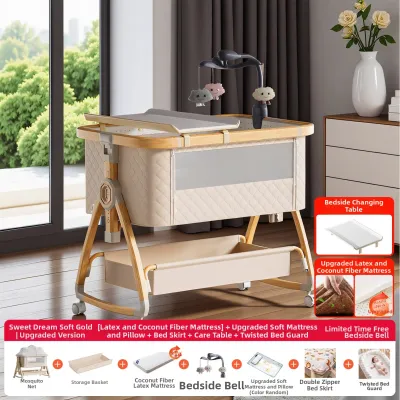
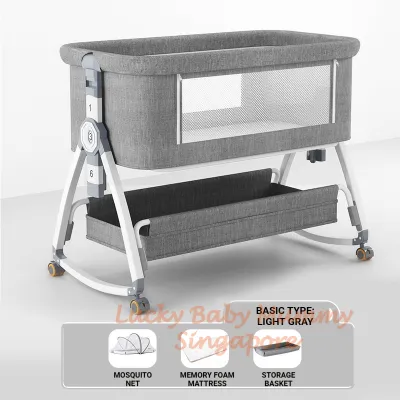
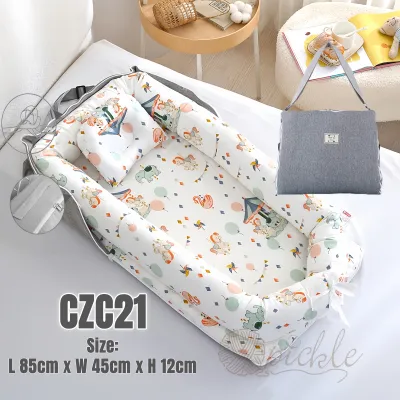
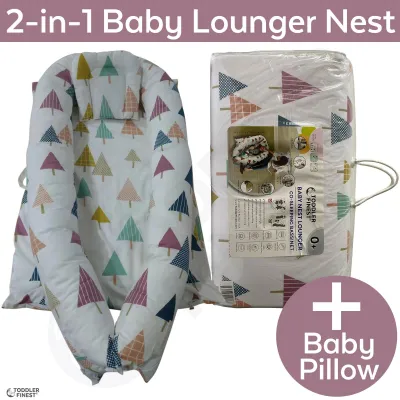
Prices are valid at publication and may change. Please refer to the product page for the latest price.
If you are purchasing from a local physical store or a brand’s official online store, you can request these compliance documents directly from their customer service department. A trustworthy manufacturer or distributor will be able to supply a copy of the test report issued by an accredited third-party testing laboratory. If a seller is unable or unwilling to provide any verification of safety testing, it is best to look for alternative options that prioritize transparency and infant safety.
Identifying Recognized Safety Marks on Product Labels
Locating and interpreting safety compliance labels is a practical way to ensure a baby bassinet meets international safety benchmarks. These labels are typically found permanently affixed to the physical frame of the bassinet, printed on the fabric lining, or clearly displayed on the product packaging and the manufacturer’s official website. Parents should look for specific codes that indicate the product has passed stringent mechanical, structural, and chemical safety tests.

The most widely recognized international standards for baby bassinets include the European standard EN 1130 (which specifies safety requirements for cribs and cradles) and the American standard ASTM F2194 (the standard consumer safety specification for bassinets and cradles). Additionally, the Australian and New Zealand standard AS/NZS 8811.1 is highly regarded, particularly for testing mattress firmness to reduce the risk of suffocation. Seeing these specific standard codes on a product label provides assurance that the bassinet has been designed to prevent structural collapse, entrapment, and other known hazards.
If the safety labels on a bassinet are unclear, written in a foreign language without translation, or entirely missing, you should contact the retailer or the brand’s customer service team before using the product. Ask them to confirm the exact standard version to which the bassinet was tested and to provide the corresponding certification details. Verifying these credentials beforehand helps ensure that the product you bring into your home adheres to modern safety protocols.
Essential Physical Safety Checks for Any Bassinet
Even when a baby bassinet carries international safety certifications, performing a hands-on physical inspection is a crucial step for every parent. Manufacturing variations or assembly errors can compromise the structural integrity of the product. Before placing your baby in any sleep environment, conduct a thorough physical check of the bassinet’s components to ensure everything is secure and properly aligned.
Begin by examining the sides of the bassinet, focusing on the spacing of any slats or the quality of the mesh fabric. If the bassinet has wooden or plastic slats, the distance between them should be narrow—ideally less than 60 millimeters—to prevent a baby’s head or limbs from becoming trapped. If the sides are made of mesh, ensure the fabric is taut, highly breathable, and free from any tears or loose threads that could pose a strangulation or entanglement hazard.
Next, evaluate the mattress and how it fits within the bassinet base. The mattress must be firm; it should not conform easily to the shape of your baby’s head, as soft bedding increases the risk of suffocation. There should be no gaps wider than 20 millimeters (roughly the width of two fingers) between the edge of the mattress and the inner walls of the bassinet. A tight, snug fit ensures that your baby cannot slip into a gap and become wedged.
Finally, inspect the overall stability of the bassinet’s stand, base, and any rocking mechanisms. Gently shake the frame to ensure it does not wobble or tip easily, and verify that all screws, bolts, and joints are tightly fastened. Check for any small detachable parts, sharp edges, or exposed metal brackets that could scratch your baby or present a choking hazard. If the bassinet features wheels or a rocking function, ensure that the locks work perfectly and remain securely engaged when the bassinet is stationary.
Safe Sleep Practices and Usage Boundaries
A safe bassinet is only effective when used in accordance with safe sleep guidelines and the manufacturer’s operational limits. Every baby bassinet is designed with specific physical boundaries that must be respected to prevent accidents. Parents must carefully read the product documentation to identify the maximum weight and height limits specified by the manufacturer, as exceeding these limits can compromise the stability of the frame.
Equally important is monitoring your baby’s developmental milestones, which often supersede weight limits. As soon as your baby shows signs of being able to roll over, push up on their hands and knees, or sit up unassisted, they must be transitioned out of the bassinet and into a full-sized crib. These developmental changes increase the risk of the baby tipping the bassinet over or falling out of the shallow sides.
To maintain a safe sleep environment, the interior of the bassinet must remain completely bare. Do not place pillows, thick blankets, quilts, bumper pads, or soft toys inside the bassinet, as these items pose significant suffocation and overheating risks. Your baby should sleep on their back on a firm, flat mattress covered only by a tight-fitting sheet designed specifically for that bassinet model.
Proper placement of the bassinet within your home is another critical safety factor. Position the bassinet away from windows, where direct sunlight can cause overheating, and well out of reach of window blind cords, electrical wires, or wall decorations that could fall. If the bassinet is designed to fold or collapse for travel, always double-check that all locking mechanisms are fully engaged and clicked into place before laying your baby down to sleep.
When to Stop Using or Replace a Bassinet
Knowing when to retire or replace a baby bassinet is essential for maintaining a safe nursery environment as your child grows. Bassinets are temporary sleep solutions designed for the early months of infancy, and their safe lifespan for an individual child is relatively short. Parents must remain vigilant and observe both the baby’s physical progress and the condition of the furniture to determine when it is time to transition to a crib.
The primary signal to stop using a bassinet is when your baby reaches any of the developmental milestones that allow for independent movement. If your baby can roll over, roll onto their side, or pull themselves up using the sides of the bassinet, the product is no longer safe for them. Continuing to use the bassinet past this stage increases the risk of falls, as the shallow depth of a bassinet cannot safely contain an active infant.
Regularly inspect the bassinet for physical signs of wear and tear, especially if it has been moved frequently or stored between uses. Look for loose joints, sagging mattress support boards, cracked plastic components, or frayed fabric seams. If you notice any structural degradation, discontinue use immediately; attempting DIY repairs on infant sleep products is highly discouraged unless using official manufacturer-approved replacement parts.
Additionally, parents should stay informed about product safety by monitoring local consumer safety announcements from the Consumer Product Safety Office or checking the manufacturer’s official communication channels. Product recalls can occur even years after a model is first released. Registering your purchase with the manufacturer or regularly searching safety databases ensures you are promptly notified if your specific bassinet model is flagged for safety issues.
Frequently Asked Questions (FAQ)
Are second-hand bassinets safe to use in Singapore?
Using a second-hand baby bassinet carries inherent safety risks that parents must carefully evaluate before making a decision. Pre-owned items often lack the original instruction manuals, making proper assembly difficult, and they may have an unknown history of recalls, structural damage, or exposure to improper storage conditions. Over time, materials like plastics, fabrics, and wood can degrade, compromising the overall stability of the frame. If you choose to use a second-hand bassinet, verify its manufacturing date to ensure it complies with modern safety standards, check that all safety labels are intact, and thoroughly inspect every joint, locking mechanism, and fabric panel for signs of wear or weakness.
Do bedside sleeper bassinets have different safety rules?
Bedside sleeper bassinets, which attach directly to an adult bed, require additional safety precautions due to the potential risks of entrapment and suffocation. When using a bedside sleeper, you must verify that the attachment mechanisms are fully compatible with your specific adult bed frame and mattress height, ensuring there are no gaps between the two sleep surfaces. It is critical to follow the manufacturer’s instructions precisely and ensure that the drop-side or mesh barrier is securely raised and locked into the upright position whenever the baby is sleeping unattended. Never leave the side panel lowered unless you are actively comforting or feeding your baby while awake and supervising them directly.
Community discussion
Share your experience or ask a question. Comments are reviewed before publication.