
Newborn skin is incredibly delicate, up to three times thinner than adult skin, making it highly susceptible to chemical residues, synthetic dyes, and artificial fragrances. When evaluating Attitude baby detergent for your little one’s laundry, the key lies in understanding how to read its specific ingredient list and verifying the formulation of the exact bottle you purchase. While many parents seek out plant-derived alternatives to minimize exposure to harsh chemicals, no single product can be guaranteed universally safe for every infant. Determining suitability requires a careful look at the active cleaning agents, preservatives, and fragrance profiles on the label, alongside observing how your baby’s skin reacts after the first few washes.
To make an informed decision, caregivers must look beyond front-label marketing claims and examine the actual chemical composition of the detergent. Because formulations can change over time or vary by region, verifying the ingredients on your specific bottle is the most reliable way to ensure you are using a mild, appropriate product for newborn clothing, swaddles, and bedding.
How to Read and Verify the Attitude Detergent Ingredient List
Locating the full ingredient list is the first step in evaluating any laundry product. While front labels often highlight appealing phrases like “plant-based” or “natural,” the complete chemical disclosure is typically found on the back of the physical packaging. If the physical label is difficult to read, you can cross-reference the product’s barcode on the manufacturer’s official website. Avoid relying solely on product descriptions on third-party ecommerce platforms or online marketplaces, as these listings may feature outdated formulations or simplified marketing summaries rather than the exact chemical names.
Products mentioned in this guide
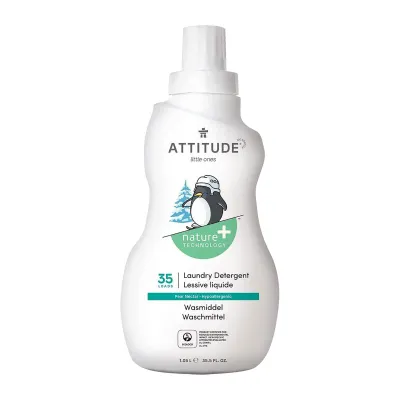
Prices are valid at publication and may change. Please refer to the product page for the latest price.
When reading the ingredient list, you will encounter standardized chemical names known as the International Nomenclature of Cosmetic Ingredients (INCI). For example, instead of simply listing “coconut-derived cleaner,” a label might specify “sodium coco-sulfate.” Understanding these standardized terms allows you to identify the exact compounds coming into contact with your baby’s clothes. It also helps you distinguish between mild, plant-derived surfactants and harsher synthetic alternatives that are more likely to strip the skin’s natural moisture barrier.
It is also important to recognize that formulation differences exist across specific product lines. Attitude offers several variants, including fragrance-free, sensitive skin, and lightly scented options. A formulation designed for general family use may contain different concentrations of surfactants or different fragrance profiles than one specifically formulated for newborns. For infants, especially those with a family history of eczema or sensitive skin, selecting the fragrance-free variant is generally the most prudent choice to minimize the risk of contact allergies.
Key Ingredient Categories to Evaluate for Newborn Skin
Surfactants are the primary cleaning agents in any detergent, responsible for lifting dirt, milk stains, and oils from fabric fibers. Plant-derived surfactants, such as those derived from coconut, corn, or palm, are commonly used in baby-specific formulas. While these are generally considered milder than conventional petroleum-based surfactants like sodium lauryl sulfate (SLS), they are still active cleaning agents. If not thoroughly rinsed from clothing, any surfactant residue can cause friction and localized irritation on a newborn’s sensitive skin.

Preservatives are another essential component of liquid detergents. Because liquid formulas contain water, they require a preservative system to prevent the growth of harmful bacteria, mold, and yeast over time. However, some conventional preservatives, such as methylisothiazolinone (MIT) or formaldehyde-releasing agents, are known skin sensitizers that should be avoided in baby care products. When evaluating a detergent, check that the preservative system relies on milder, food-grade, or biodegradable alternatives that keep the product shelf-stable without posing a high risk of skin irritation.
Fragrances and botanical extracts are the most common triggers for contact dermatitis in infants. Even natural essential oils or plant extracts used to create pleasant scents can contain volatile compounds that irritate a newborn’s developing respiratory system and skin. Synthetic fragrances often contain complex, proprietary chemical mixtures that do not have to be fully disclosed on the label. Opting for a truly fragrance-free formula eliminates these unnecessary additives, ensuring that your baby is not exposed to potential allergens during sleep or play.
Enzymes are biological proteins used in some detergents to break down tough organic stains like spit-up, formula, and diaper leaks. While enzymes like amylase, protease, and cellulase are highly effective at stain removal, they can sometimes remain trapped in fabric fibers. For newborns with extremely sensitive skin or conditions like eczema, prolonged contact with these enzyme residues can trigger irritation. If you choose an enzyme-containing formula for stubborn stains, ensuring a thorough rinse cycle is critical to removing any active proteins before the clothing is worn.
Checking Safety Labels and Third-Party Certifications
Terms like “hypoallergenic” and “dermatologically tested” are frequently used on baby products, but they do not carry standardized, legally binding definitions. “Hypoallergenic” simply means the product was formulated to minimize the likelihood of an allergic reaction, while “dermatologically tested” indicates the product was tested on human volunteers under the supervision of a dermatologist. While these labels suggest a focus on mildness, they do not guarantee that a product will be completely reaction-free for your specific baby.
To gain a more objective assessment, look for recognized third-party certifications on the packaging. Organizations such as the Environmental Working Group (EWG Verified) or ECOLOGO evaluate products based on strict environmental and health criteria. These certifications verify that the ingredients used meet specific safety thresholds and are free from chemicals of high concern. Because certifications can be updated or expire, it is a good practice to occasionally verify the product’s current status on the certifying organization’s official online database.
Additionally, look for explicit “free-from” claims on the label and cross-reference them with the ingredient list. A high-quality baby detergent should be free from optical brighteners, artificial dyes, and harsh sulfates. Optical brighteners are synthetic chemicals designed to remain on fabrics after washing to reflect light and make clothes appear whiter. These chemicals do not actually clean the fabric and can cause direct skin irritation when they rub against a newborn’s skin, making “free-from” claims an important factor to verify.
Safe Washing Practices and Monitoring for Skin Reactions
Using the right detergent is only half the battle; proper washing practices are equally important for protecting newborn skin. Always follow the manufacturer’s precise dosing guidelines, as using too much detergent makes it incredibly difficult for your washing machine to rinse the fabric clean. Excess detergent accumulates in the fibers of clothing, cloth diapers, and bedding, leading to a stiff texture that can chafe delicate skin. In Singapore’s warm and humid climate, sweat can reactivate these trapped detergent residues, increasing the likelihood of localized skin irritation.
Before washing your newborn’s entire wardrobe, it is highly recommended to perform a simple fabric patch test. Wash a single item, such as a small bodysuit or a washcloth, in the new detergent according to the instructions. Have your baby wear the item or use the washcloth for a day, then monitor their skin closely for the next 24 to 48 hours. This targeted test allows you to observe how your baby’s skin tolerates the detergent before exposing their entire body to washed fabrics.
During the first few weeks of using a new detergent, keep a close eye out for any physical signs of skin irritation. Common symptoms of contact dermatitis include localized redness, dry or rough patches, small red bumps, or signs of itching, such as your baby rubbing their skin against bedding. These reactions typically appear in areas where clothing fits snugly, such as the collar, cuffs, or diaper area, where friction is highest.
If you observe any signs of skin irritation, stop using the detergent immediately. Re-wash the affected clothing and bedding in plain, hot water to help strip away any lingering detergent residues, or switch to a known safe alternative. If the skin irritation does not improve within a few days, spreads to other areas, or causes your baby significant discomfort, consult a qualified pediatrician or dermatologist for professional guidance and treatment options.
Frequently Asked Questions (FAQ)
Can I use the standard Attitude detergent variant for newborn clothes?
It is generally best to avoid standard family detergents for newborns, as they often contain higher concentrations of surfactants and stronger fragrances designed for adult clothing. Newborns have highly sensitive skin that is easily irritated by these stronger formulations. If you plan to transition your baby to the standard family variant, wait until they are older and their skin barrier is more mature, typically after the first year. When making the transition, introduce the standard detergent gradually by washing a few items first to monitor for any adverse skin reactions.
Does plant-based detergent leave more residue on baby bedding?
Plant-based detergents do not inherently leave more residue than conventional synthetic formulas, but their rinsability depends heavily on water hardness, dosing, and your washing machine’s efficiency. Using too much detergent for the load size is the primary cause of fabric buildup, regardless of whether the ingredients are plant-derived or synthetic. To prevent residue on baby bedding, always measure the detergent accurately according to the manufacturer’s guidelines and avoid overloading the washing machine, which prevents proper water circulation during the rinse cycle.
Is it necessary to double-rinse when washing newborn items?
While not strictly mandatory for every baby, running an extra rinse cycle is a highly effective precautionary measure, especially during the first few months of life. An extra rinse helps ensure that all traces of surfactants, soil, and minerals are completely flushed from the fabric fibers of newborn clothing and bedding. If your baby has known skin sensitivities, eczema, or a family history of allergies, utilizing the extra rinse setting on your washing machine provides peace of mind and minimizes the risk of contact irritation.
Community discussion
Share your experience or ask a question. Comments are reviewed before publication.