
Newborn skin is incredibly delicate, possessing an outer barrier that is significantly thinner and more permeable than adult skin. When evaluating whether WaterWipes are safe for a newborn with sensitive or eczema-prone skin, the answer lies in understanding how their minimalist formulation interacts with your baby’s unique skin barrier. While these wipes are widely recognized for containing minimal ingredients, no single product is universally guaranteed to be free from causing reactions in every infant. Parents must learn how to evaluate the ingredients, monitor their baby’s skin for subtle signs of irritation, and apply proper wiping techniques to minimize physical friction.
By taking a systematic approach to baby skincare, you can make an informed decision that protects your newborn’s skin integrity. This guide details the science behind the formulation, explains how to identify early signs of contact dermatitis, and provides actionable steps for maintaining a healthy skin barrier in daily diapering routines.
Understanding the WaterWipes Formulation for Sensitive Skin
To evaluate how a wipe affects sensitive newborn skin, you must look closely at the ingredient list printed on the physical packaging rather than relying solely on simplified marketing claims. The core appeal of WaterWipes is their highly simplified formulation, which typically consists of 99.9% purified water and a tiny fraction of fruit extract. The water used undergoes a multi-stage purification process designed to remove impurities, minerals, and organic compounds that could otherwise irritate a newborn’s highly permeable skin barrier.
Products mentioned in this guide



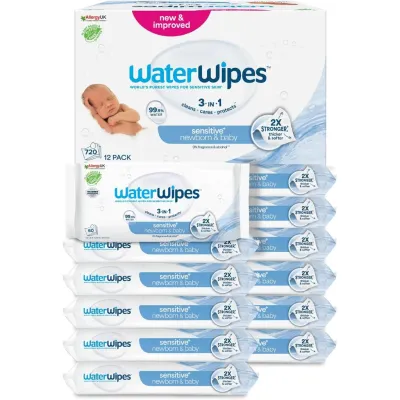
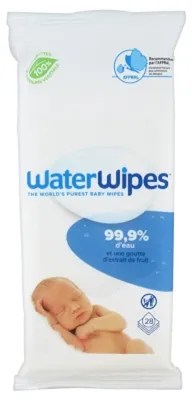

Prices are valid at publication and may change. Please refer to the product page for the latest price.
However, water alone in a sealed, dark, and moist environment is highly susceptible to bacterial and fungal growth. To maintain shelf life and prevent microbial contamination, the formulation includes a small concentration of grapefruit seed extract. While this extract serves as a mild conditioning agent and antimicrobial stabilizer, parents should be aware that botanical extracts can occasionally trigger localized sensitivities in highly reactive or eczema-prone skin. Comparing the physical package label against online marketing descriptions ensures you are aware of any minor formulation updates or trace ingredients.
Crucially, the formulation omits common chemical irritants that are frequently found in conventional baby wipes. It is free from added synthetic fragrances, alcohol, parabens, phthalates, and essential oils. Added fragrances and alcohol are among the primary culprits behind contact dermatitis in infants, as they can strip away the natural lipids protecting the stratum corneum. By verifying the absence of these harsh chemicals on the label, you can significantly reduce the risk of chemical-induced skin irritation during daily diaper changes.
Recognizing Potential Skin Reactions and Irritation Signs
Even when using a product with minimal ingredients, you must actively monitor your newborn’s skin for adverse reactions. The diaper area is highly vulnerable due to constant exposure to moisture, warmth, and digestive enzymes. Early signs of contact dermatitis or localized irritation typically present as mild, localized redness, unusual dryness, or tiny micro-rashes that appear specifically where the wipe has made direct contact with the skin.

It is important to distinguish between chemical sensitivity and mechanical irritation. The physical texture of a wipe, combined with the pressure applied during cleaning, creates friction against the skin. In warm and humid climates like Singapore, this friction can easily disrupt an already compromised skin barrier, especially if the baby is prone to infant eczema. If you notice the skin becoming rough, flaky, or increasingly red immediately after wiping, the physical rubbing action may be aggravating the skin as much as, or more than, the liquid formulation itself.
Establishing clear stop-use conditions is vital for preventing minor irritation from escalating into a painful rash. If you observe that redness or dryness persists, spreads beyond the immediate diaper area, or worsens after consecutive applications, you should immediately discontinue using the wipes. Continuing to use any wipe on an actively inflamed skin barrier can delay healing and increase the risk of secondary complications.
How to Verify Safety Labels and Dermatological Certifications
Navigating the array of safety claims on baby products requires a critical eye. Parents should look for independent dermatological seals and eczema-association approvals on the packaging, such as those from the National Eczema Association or Allergy UK. These seals indicate that the product has undergone review by independent dermatologists or toxicologists to verify that it meets specific criteria regarding the absence of common allergens, though they do not serve as an absolute guarantee against individual skin reactions.
Understanding the regulatory definitions of common marketing terms helps clarify what you are putting on your baby’s skin. The term “hypoallergenic” simply means the product is formulated to be less likely to cause allergic reactions, but it is not a legally binding medical standard. “Fragrance-free” indicates that no perfumes or scent-masking agents have been added, which is highly beneficial for sensitive skin, while “clinically tested” means the product has been evaluated on human subjects, though the exact parameters and sample sizes of those tests can vary.
In addition to reading safety seals, you should regularly inspect the physical product packaging for batch numbers, manufacturing dates, and expiration periods. Because water-based wipes contain minimal preservatives, they have a limited shelf life once opened. Using wipes past their expiration date or storing them in high-temperature environments can compromise the preservative system, leading to potential microbial contamination that can irritate your baby’s skin. Always store the package tightly sealed in a cool, dry place.
Safe Wiping Techniques and Alternatives for Eczema-Prone Skin
To protect your newborn’s fragile outer skin barrier, the method of application is just as important as the product you choose. When cleaning the diaper area, always apply a gentle patting or dabbing motion instead of a dragging, rubbing motion. Rubbing strips away the natural lipid barrier and creates microscopic tears in the skin, making it easier for moisture and bacteria to penetrate and cause painful diaper rash.
During severe eczema flare-ups, or when the skin in the diaper area is broken, bleeding, or weeping, even the mildest wipes can cause discomfort. Under these conditions, the safest approach is to temporarily switch to plain, lukewarm water and soft, single-use cotton cloths or cotton wool balls. Gently splashing water over the area or using a saturated cotton ball minimizes physical contact and eliminates any potential chemical exposure, allowing the skin barrier a chance to rest and recover.
After cleaning, ensure the baby’s skin is completely air-dried before taking any further steps. Trapping moisture under a diaper is a primary cause of skin maceration and yeast infections, a risk that is heightened in humid tropical environments. Once the skin is thoroughly dry, apply a thin layer of a pediatrician-recommended barrier cream or ointment to seal in moisture and shield the skin from urine and stool before fastening a fresh diaper.
When to Stop Use and Consult a Pediatrician
While mild diaper redness can often be managed with careful hygiene adjustments, certain symptoms require professional medical evaluation. You should stop using all commercial wipes and consult a pediatrician immediately if you observe severe symptoms such as weeping sores, open blisters, bleeding, or rapidly spreading rashes. These signs often indicate a severe allergic reaction or a secondary bacterial or fungal infection that requires targeted medical treatment rather than over-the-counter skincare adjustments.
Another key indicator for professional consultation is when standard, high-quality barrier creams and gentle hygiene practices fail to show any improvement after a few days. Persistent inflammation can be highly uncomfortable for a newborn and may point to an underlying skin condition, such as seborrheic dermatitis or a stubborn yeast infection, which requires a specific prescription treatment.
When you visit the healthcare provider, prepare by bringing the exact product packaging of the wipes, creams, and soaps you currently use. Showing the pediatrician the full ingredient lists allows them to identify potential contact allergens and provide an accurate diagnosis. This proactive step helps you establish a safe, customized skincare routine tailored specifically to your newborn’s sensitive skin needs.
Frequently Asked Questions (FAQ)
Are WaterWipes safe for cleaning a newborn's face and hands?
While these wipes are formulated with minimal ingredients, you should exercise caution when using them on a newborn’s face and hands. The skin on a baby’s face is exceptionally thin and sensitive, and the areas around the mouth and eyes are highly susceptible to irritation. Always review the manufacturer’s guidelines on the packaging regarding facial use, and avoid direct contact with the eyes and mucous membranes. If your baby shows any signs of localized redness or sensitivity on their cheeks or chin, switch to a soft washcloth dampened with plain, lukewarm water for facial cleaning.
What should I do if my baby develops a rash after using these wipes?
If your baby develops a rash, immediately discontinue using the wipes and gently rinse the affected area with clean, lukewarm water to remove any remaining residue. Pat the skin dry with a clean, soft towel without rubbing, and leave the diaper off for short periods to allow the skin to air-dry completely. Monitor the rash closely over the next twenty-four to forty-eight hours while keeping the area clean and protected with a plain, fragrance-free barrier ointment. If the rash does not begin to improve, spreads rapidly, or causes your baby visible discomfort, consult your pediatrician for professional guidance.

Community discussion
Share your experience or ask a question. Comments are reviewed before publication.