
The convenience of a drill-free installation makes suction grab bars highly appealing when planning bathroom safety upgrades for aging family members. Many caregivers look to these devices as a quick fix to prevent slips on wet tiles. However, understanding the physical limitations of these temporary fixtures is crucial before trusting them with a loved one’s safety.
The short answer is that suction grab bars are generally not safe enough to serve as primary, weight-bearing safety devices for elderly individuals in the shower. While they can offer temporary balance assistance on perfectly non-porous surfaces, they rely entirely on a vacuum seal that can degrade silently and fail without warning. For older adults who require reliable support to stand, sit, or prevent a fall, relying on suction-based devices poses a significant safety risk.
A suction grab bar is designed strictly as a balance aid, not a weight-bearing grab bar. This distinction is critical because a slip or loss of balance often triggers a sudden, high-force pull that can easily dislodge a suction cup. To make an informed decision for your household, you must evaluate the mechanics of these devices, the specific risks they present in a humid bathroom environment, and the structural requirements of your shower walls.
Products mentioned in this guide
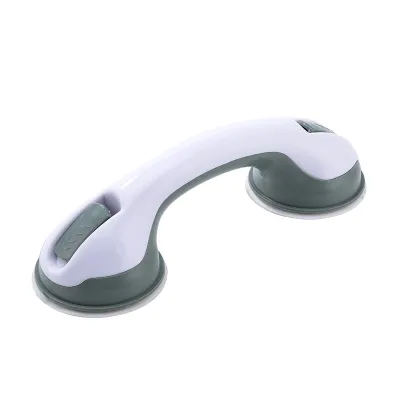
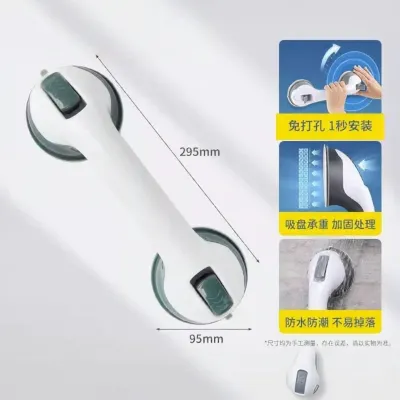
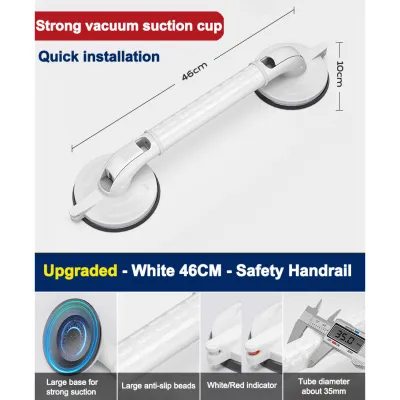
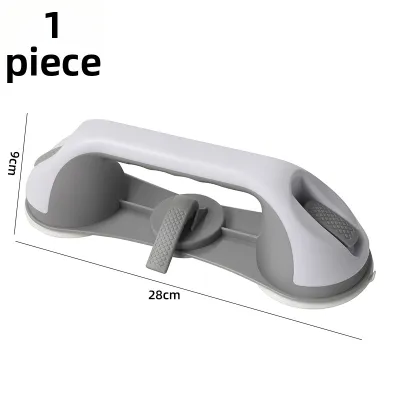
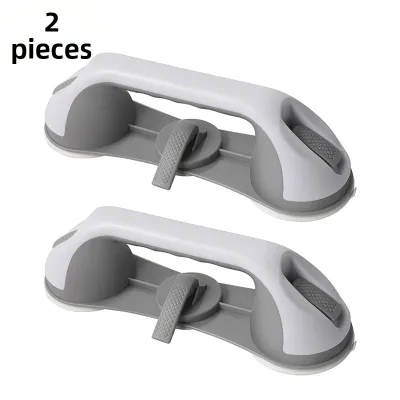
Prices are valid at publication and may change. Please refer to the product page for the latest price.
Understanding the Limits of Suction Grab Bars
Suction grab bars function by expelling air from beneath a flexible rubber cup, creating a low-pressure pocket held against the wall by atmospheric pressure. This seal relies entirely on a perfect, airtight contact barrier between the rubber rim and the mounting surface. Any microscopic gap allows air to seep in, equalizing the pressure and causing the bar to release instantly.
Contrast this with permanently mounted weight-bearing supports. Screw-in grab bars are mechanically anchored directly into the wall studs or solid masonry behind the wall tiles. This physical connection allows them to transfer heavy loads directly to the home’s structural framing, providing reliable resistance against sudden, forceful downward or outward pulls.
Because suction bars rely solely on atmospheric pressure and surface friction, they are highly sensitive to lateral and shear forces. A user pulling outward or downward with significant force can easily break the seal or cause the rubber to slide along a wet surface. This is why manufacturer instructions typically state that these devices are intended only for light balance assistance—such as steadying oneself while standing—rather than supporting full body weight during transfers.
Furthermore, weight ratings on suction models can be highly misleading. These ratings are strictly conditional, assuming a perfectly smooth, clean, non-porous surface and a brand-new rubber cup. In a real-world bathroom, environmental factors quickly degrade these conditions, making the actual weight capacity highly unpredictable.
Key Safety Risks for Elderly Shower Users
The bathroom environment is inherently hostile to vacuum seals. Steam, high humidity, and rapid temperature fluctuations cause the air inside the suction pocket to expand and contract, which gradually weakens the seal. Over time, moisture can also seep under the edges of the rubber cup, lubricating the contact point and causing the bar to slide even if the vacuum remains partially intact.

Soap scum, shampoo residue, and hard water deposits pose another major hazard. These substances accumulate on both the tile surface and the rubber suction cups, creating microscopic channels that allow air to bypass the seal. Even a thin, invisible layer of body oil can prevent the rubber from forming a true airtight bond, leading to sudden detachment when weight is applied.
The physical mechanics of how elderly users interact with grab bars also increase the risk of failure. When rising from a shower chair or lowering oneself onto a seat, a person typically exerts a heavy, sustained downward force. Suction grab bars are not engineered to withstand these continuous weight transfers. If an older adult leans heavily on the bar or uses it to pull themselves up, the leverage exerted can easily peel the suction cups away from the wall.
Another concern is the physical response of the user if a failure occurs. Older adults often have slower reaction times and reduced grip strength, making it difficult to recover balance if a support suddenly gives way. If a suction bar detaches during a slip, the user is likely to fall with the bar still in their hand, worsening the injury. Relying on a device that can release without warning introduces a dangerous false sense of security.
How to Evaluate Your Shower Surface for Suction Cups
If you are considering a suction grab bar as a temporary measure, you must carefully evaluate your shower walls to determine if they can even support a basic vacuum seal. The mounting surface must be completely non-porous, smooth, and flat. Suitable materials include large, high-gloss ceramic or porcelain tiles, thick tempered glass panels, and solid fiberglass shower enclosures.
However, many common bathroom finishes are entirely incompatible with suction cups. Natural stone tiles, such as marble, slate, or travertine, are inherently porous and contain microscopic pathways that allow air to leak through the material itself, neutralizing the vacuum. Textured tiles, matte finishes, and decorative relief patterns also prevent the rubber cup from forming a continuous, airtight seal.
Grout lines present a major obstacle. A suction cup must never overlap a grout line, as the recessed and porous nature of grout will immediately break the vacuum. This means the individual tiles in your shower must be larger than the diameter of the suction cups themselves, typically requiring tiles that are at least 10 to 12 centimeters square to leave enough flat space.
You must also inspect the structural integrity of the wall itself. Acrylic or fiberglass shower surrounds that flex or bend when pushed are unsuitable for suction bars. When a user pulls on the bar, the flexing wall panel can distort the shape of the suction cup, breaking the seal instantly. Ensure the underlying wall is completely rigid and free of movement before attempting to install any suction-based accessory.
Safer Alternatives for Reliable Shower Support
For reliable, long-term safety, permanently installed grab bars are the industry standard. These bars are secured with screws directly into the wooden wall studs behind the drywall or tile. If studs are not positioned where support is needed, professional installers use specialized heavy-duty toggle anchors designed for hollow walls or solid masonry. This mechanical fastening ensures the bar can support substantial weight without shifting.
If drilling into tiles is not an option—such as in rental properties or apartments where drilling is restricted due to waterproofing concerns—tension-mounted floor-to-ceiling poles offer a highly secure alternative. These poles use a heavy-duty internal spring or screw mechanism to wedge securely between the floor and the ceiling. Because they transfer forces vertically between two solid structural planes, they can support significant body weight and can be placed exactly where the user needs to stand or transfer.
To reduce the need for standing balance altogether, consider incorporating a high-quality shower chair or a transfer bench. These seating options allow elderly users to bathe while seated, eliminating the risk of slipping while standing on wet surfaces. Pairing a shower chair with a handheld showerhead allows the user to control the water flow easily without having to reach or stand up, significantly lowering the overall fall risk.
When planning these modifications, consulting an occupational therapist is highly recommended. These professionals can assess the user’s specific mobility levels and daily routines to recommend the precise placement of safety aids. Additionally, hiring a qualified contractor ensures that any installed grab bars or structural modifications comply with local building safety guidelines.
Essential Maintenance and Warning Signs
If you must use a suction grab bar, you must treat it as a temporary device that requires daily inspection. Never assume the bar is secure just because it was tight yesterday. Before every single use, perform a physical pull-test. Grasp the bar firmly and pull it in multiple directions to verify that the vacuum seal is fully intact and that there is no sliding or shifting along the wall surface.
Regular cleaning is essential to maintain adhesion. At least once a week, remove the bar entirely and wash both the rubber suction cups and the wall surface with a mild, residue-free soap and warm water. This removes accumulated soap scum, body oils, and mineral deposits that slowly compromise the seal. Allow all parts to dry completely before reattaching the bar.
You must also inspect the physical condition of the suction cups regularly. Look for visual warning signs of degradation, such as cracking, warping, or hardening of the rubber edges. If the rubber feels stiff, spongy, or shows any signs of splitting, the bar must be retired immediately. A compromised rubber cup cannot maintain a reliable vacuum and poses an immediate safety hazard.
Establish an absolute zero-tolerance policy for any movement. If you notice the bar sliding, shifting, or if the edges of the suction cups begin to lift even slightly, remove the device immediately. Detach it, clean the surfaces thoroughly, inspect the rubber, and reinstall it from scratch. If the bar repeatedly loses tension or slides, stop using it entirely and transition to a permanent safety solution.
Frequently Asked Questions (FAQ)
Can suction grab bars support full body weight?
No, suction grab bars cannot reliably support full body weight and should never be used for active weight transfer. They are engineered solely as balance aids to help a user steady themselves while standing. Relying on them to pull oneself up from a seated position, or to catch oneself during an active fall, exerts forces that far exceed the physical limits of a vacuum seal, leading to sudden and dangerous detachment.
How often should the suction cups be reattached?
Suction grab bars should be detached, cleaned, and reattached at least once every week, or even more frequently in highly humid environments. The constant exposure to steam, temperature shifts, and soapy water in a shower gradually weakens the vacuum seal over time. Regularly resetting the bar ensures that you can clean away invisible residues and re-establish a fresh, secure bond before the seal degrades to the point of failure.
Do safety indicator lights guarantee the bar is secure?
No, safety indicator lights or color-changing indicators do not guarantee that the bar is safe to use. These indicators typically measure the physical compression of the suction lever or the basic vacuum pressure beneath the cup, but they cannot detect if the wall surface is porous, if there is a microscopic air leak, or if the tile itself is flexing. They should only be used as a preliminary visual check and must always be verified with a manual physical pull-test before every use.
Community discussion
Share your experience or ask a question. Comments are reviewed before publication.