
Evaluating whether Rascals baby wipes are safe for a newborn with sensitive skin requires looking closely at the specific product formulation and your baby’s unique skin barrier. Newborn skin is up to thirty percent thinner than adult skin, making it highly susceptible to absorbing topical ingredients and prone to rapid moisture loss. While many parents find Rascals wipes suitable for daily diaper changes, no single baby product can be guaranteed safe for every infant. Safety is always conditional; it depends on the exact ingredient profile of the variant you choose and how your newborn’s skin reacts during initial contact.
Because “sensitive skin” is a broad term that encompasses everything from mild dryness to diagnosed atopic dermatitis, parents must take an active role in verifying product safety. Selecting a wipe is not merely about trusting brand reputation, but about understanding what goes onto your baby’s skin during each diaper change. To protect your newborn’s delicate skin barrier, you must inspect the ingredient list on the physical packaging, understand the limitations of marketing claims, and follow a systematic introduction process.
Key Ingredients to Check on the Rascals Wipes Label
When evaluating Rascals wipes, the ingredient list printed on the back of the package is your most reliable source of information. Manufacturers frequently update their formulations, meaning the ingredients in a pack purchased today may differ from those in a pack purchased a year ago. Parents should make it a habit to read the label of every new pack to ensure no hidden irritants have been introduced.
Products mentioned in this guide
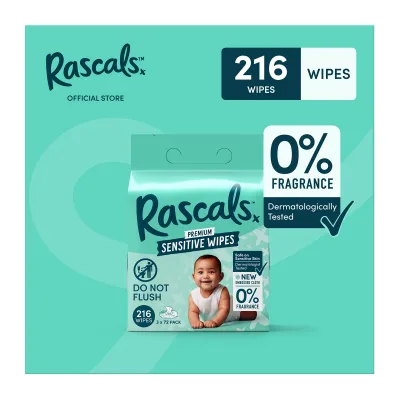
Prices are valid at publication and may change. Please refer to the product page for the latest price.
There are several common chemical irritants that parents of newborns with sensitive skin should actively avoid in any wipe formulation:
- Denatured Alcohol: Often added to skincare products to speed up drying times, alcohol can severely dehydrate a newborn's skin and cause a burning sensation on raw or irritated areas.
- Synthetic Fragrances: Frequently listed simply as "parfum" or "fragrance," these are complex mixtures of chemicals that represent one of the leading causes of allergic contact dermatitis in infants.
- Parabens: Used as preservatives to extend shelf life, these chemicals can penetrate the skin barrier and have been a point of concern for sensitive skin care.
- Harsh Preservatives: Compounds such as Methylisothiazolinone (MIT) and Methylchloroisothiazolinone (CMIT) are known sensitizers that can cause severe skin reactions in babies.
Conversely, a safe and gentle baby wipe should rely on a minimalist formulation. Look for variants that feature a very high water content, such as 99% purified water, which effectively cleanses without leaving a chemical residue. Beneficial soothing agents to look for include aloe vera (Aloe barbadensis leaf juice), chamomile extract, or calendula, which help soothe minor irritation and protect the skin barrier.
However, parents must remain cautious of marketing buzzwords. Labels that claim a product is “natural” or “organic” do not automatically guarantee that the wipes are safe for a newborn with highly sensitive skin. Natural botanical extracts can still act as allergens or skin sensitizers for certain infants. Always prioritize a short, simple ingredient list over broad marketing terms, and verify that the specific variant you are holding is free from unnecessary additives.
Understanding Safety Certifications and Dermatologist Testing
Baby wipe packaging is often covered with various seals, stamps, and marketing claims designed to reassure parents. Understanding what these terms actually mean—and what their limitations are—is crucial for making an informed decision. These labels indicate that a product has undergone certain evaluations, but they do not serve as a universal guarantee against skin reactions.

The term “hypoallergenic” is widely used in the baby care industry, but it is important to know that this term is not strictly regulated by a standardized global authority. When a brand labels their wipes as hypoallergenic, it generally means the product has been formulated without the most common known allergens. It does not mean the product is entirely incapable of causing an allergic reaction in a highly sensitive newborn.
Similarly, claims like “dermatologist tested” or “pediatrician approved” indicate that a medical professional has overseen some form of clinical testing, often involving patch tests on human volunteers. While these tests provide a helpful baseline of safety, they do not guarantee that the product will be compatible with your baby’s specific skin chemistry. Every infant’s skin microbiome and barrier strength are unique.
To verify the safety claims of Rascals wipes, look for independent, third-party certifications on the packaging or the brand’s official website. Certifications from recognized organizations, such as Allergy Certified or Dermatest, indicate that the product has undergone rigorous independent toxicological reviews. If your newborn has a diagnosed skin condition, such as eczema, do not rely solely on packaging claims; always consult your pediatrician or a pediatric dermatologist before introducing any commercial wipe to their care routine.
How to Safely Introduce New Wipes to a Newborn
For the first few weeks of a newborn’s life, their skin barrier is exceptionally fragile and still adjusting to the extrauterine environment. If your family has a history of eczema, asthma, or severe allergies, extra precautions are highly recommended. During this initial period, many pediatricians advise using only plain, lukewarm water paired with soft, sterile cotton balls or reusable organic cotton cloths for diaper changes, bypassing commercial wipes entirely until the skin barrier matures.
When you decide to transition to Rascals wipes, introducing them gradually through a controlled patch test is the safest way to minimize the risk of a widespread reaction. Follow this step-by-step protocol to test the wipes on your newborn:
- Select a Test Area: Choose a small, discreet patch of healthy skin on your baby's body, such as the inner arm or the upper thigh. Avoid testing on areas that are already red or irritated.
- Apply the Moisture: Gently pat a small amount of the liquid from a fresh Rascals wipe onto the selected test area. Do not rub the skin, as mechanical friction can cause false redness.
- Allow to Dry: Let the liquid dry naturally on the skin. Do not wash or wipe the area clean.
- Observe for 24 Hours: Monitor the test spot closely over the next 24 hours. Look for any signs of localized redness, swelling, tiny bumps, or dry patches.
- Evaluate and Proceed: If the skin remains clear and normal after 24 hours, you can begin using the wipes on a larger area, such as the diaper region.
Beyond the chemical formulation, you must also evaluate the physical properties of the wipe during use. Ensure the cloth material is soft and smooth to the touch; rough or highly textured wipes can cause micro-abrasions on delicate skin through repetitive wiping. Additionally, in air-conditioned environments—which are common in Singapore homes to keep babies comfortable in the tropical heat—a cold, heavily saturated wipe can startle a newborn and cause physical discomfort. Gently warming the wipe in your hands before application can make the experience much more comfortable for your baby.
Signs of Irritation and When to Stop Using
Even after a successful patch test, continuous use of a baby wipe can sometimes lead to cumulative irritation. Parents must remain vigilant and regularly inspect the diaper area, face, and hands for any early signs of contact dermatitis or localized skin irritation. Identifying these symptoms early allows you to take swift action before a minor reaction escalates into a painful rash.
Common observable signs of wipe-related skin irritation include:
- Localized Redness: Persistent pink or red patches that align directly with the areas where the wipe is used.
- Raised Bumps or Papules: Small, red bumps on the skin surface that may feel rough to the touch.
- Dry, Peeling, or Flaky Skin: Areas where the skin barrier has become compromised and is losing moisture rapidly.
- Behavioral Distress: Your baby showing unusual fussiness, crying, or flinching during wiping, which suggests the product is causing a burning or stinging sensation.
If you observe any of these symptoms, the first and most important step is to stop using the wipes immediately. Switch back to using plain lukewarm water and soft cotton pads to clean the area. After cleansing, gently pat the skin dry with a clean, soft towel; never rub the skin, as friction will worsen the inflammation. To help restore the skin barrier, apply a thin layer of a plain, fragrance-free barrier cream containing zinc oxide or pure petroleum jelly, if recommended by your healthcare provider.
While most mild diaper rashes can be managed at home with gentle care, certain symptoms require professional medical evaluation. You should consult a pediatrician immediately if the rash begins to spread beyond the diaper area, if the skin becomes broken, bleeding, or weeping fluid, or if you notice signs of a secondary bacterial or fungal infection, such as yellow crusting or pus. Do not attempt to diagnose or treat a severe, persistent rash with over-the-counter medicated creams without professional guidance.
Frequently Asked Questions (FAQ)
Can I use Rascals wipes on a newborn's face?
Facial skin is significantly thinner, more sensitive, and has a different lipid composition than the skin on a baby’s diaper area. Unless the specific Rascals wipe variant you are using explicitly states on the packaging that it is safe for facial use, you should avoid using it on your newborn’s face. For daily facial cleansing, wiping away milk residue, or cleaning drool, it is highly recommended to use a soft, clean cloth dampened with plain lukewarm water to minimize the risk of irritation around the sensitive eyes and mouth.
Are water-based wipes always better for sensitive skin?
Water-based wipes, which typically consist of 99% water, are generally excellent for sensitive skin because they minimize the number of chemical additives and potential irritants. However, they are not a universal guarantee of safety. Because water is highly susceptible to contamination, all water-based wipes must contain some form of preservative system to prevent the growth of harmful bacteria, mold, and yeast inside the package. A small subset of babies with extreme skin sensitivities may still react to these essential preservatives, making it vital to check the full ingredient list.
How many wipes should I use per diaper change for a newborn?
To protect your newborn’s delicate skin barrier, you should use only as many wipes as are absolutely necessary to clean the diaper area gently—typically one to three wipes per change, depending on the mess. Excessive wiping, scrubbing, or rubbing can cause mechanical irritation and strip away the skin’s natural protective oils, regardless of how safe or gentle the wipe formulation is. When cleaning your baby, use a gentle patting or light swiping motion rather than a vigorous scrubbing action, and ensure the skin is completely dry before putting on a fresh diaper.

Community discussion
Share your experience or ask a question. Comments are reviewed before publication.