
Caring for a newborn’s delicate skin requires extreme caution, especially when selecting products that come into direct contact with their hands and mouth. While Pigeon Hand and Mouth wipes are widely popular among parents, determining whether they are safe for your newborn depends on verifying the specific formulation of the pack in your hands. Because baby product formulations can change and vary by region, the safest approach is to understand how to read the ingredient label, identify potential irritants, and perform a systematic safety check before regular use.
Baseline Safety Standards for Newborn Hand and Mouth Wipes
Newborn skin is significantly thinner and more permeable than adult skin, making it highly susceptible to absorbing topical substances. When choosing wipes specifically for the hands and mouth, the safety threshold is even higher than that of standard diaper wipes. This is because infants frequently put their hands and fingers into their mouths, leading to a high likelihood of accidental ingestion of any chemical residues left behind on the skin.
Standard diaper wipes are formulated primarily to clean urine and stool, often containing stronger cleansing agents or barrier-forming ingredients that are not intended for oral contact. In contrast, dedicated hand and mouth wipes must prioritize ingredients that are safe if trace amounts are swallowed. This distinction is critical for newborns, whose metabolic and detoxification systems are still developing.
Products mentioned in this guide
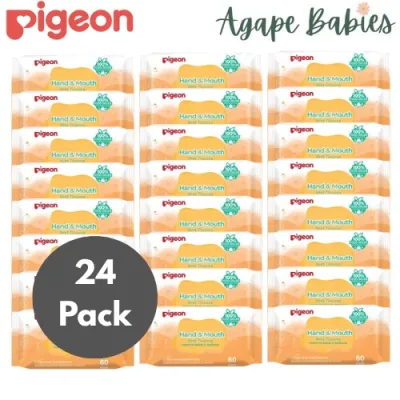
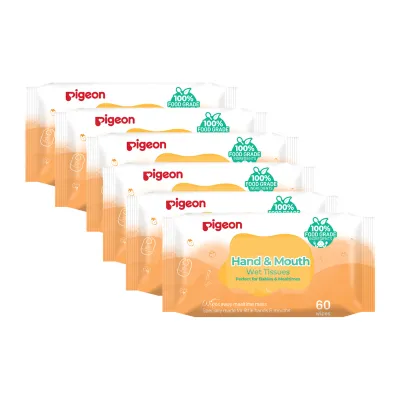
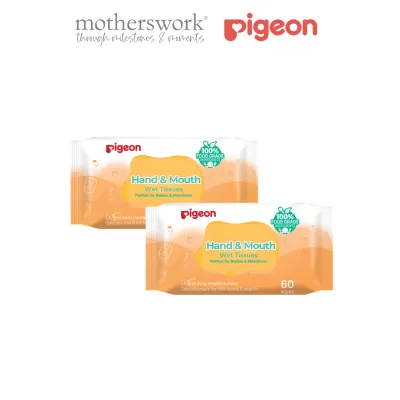
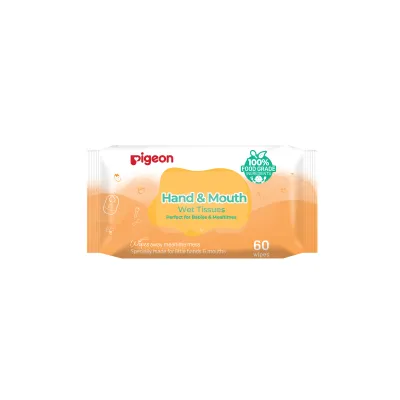
![[Pack Of 24] Pigeon Hand And Mouth Wet Tissues (24 x 20s = Total 480sheets)](https://img.lazcdn.com/g/p/5224da04b9d37ae4b91d06cf68136797.png_400x400q80.png_.webp)
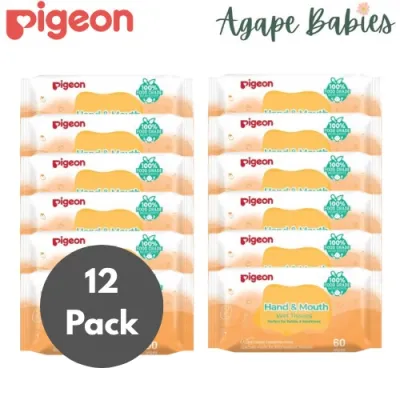
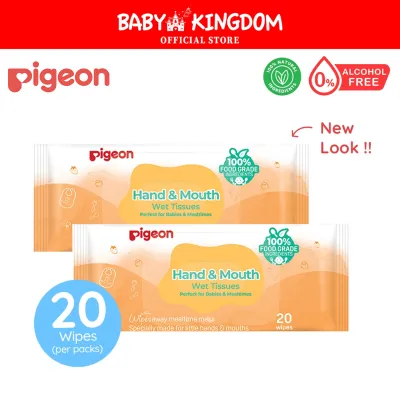
Prices are valid at publication and may change. Please refer to the product page for the latest price.
When evaluating these products, parents should look for explicit packaging claims such as “food-grade ingredients” or “toxicologically tested.” Food-grade classification indicates that the individual components used in the formula are cleared for contact with food or oral surfaces, minimizing the risk of adverse reactions if ingested in minute quantities. Additionally, look for certifications indicating the absence of common sensitizers, though these claims should always be verified against the actual ingredient list.
From a pediatric perspective, the introduction of any external wiping product to a newborn should be approached with caution. The mucous membranes of the mouth are highly sensitive and lack the protective outer keratin layer found on standard skin. Consequently, any product used in this area must be exceptionally mild, free from drying agents, and designed to maintain the natural physiological balance of the infant’s oral cavity and surrounding skin.
How to Verify the Exact Ingredients in Your Pigeon Wipes
To ensure the safety of the specific Pigeon Hand and Mouth wipes you have purchased, you must locate and verify the exact ingredient list on the physical packaging. While online product descriptions on ecommerce platforms or authorized retail pages provide a general overview, manufacturers frequently update their formulations to comply with local regulations or to improve product performance. The physical label on the back of the pack remains the most accurate and legally binding source of information for that specific batch.

Formulations for Pigeon wipes can vary significantly depending on the region of manufacture and distribution. For instance, wipes distributed in Singapore may have different preservative systems or base ingredients compared to those sold in other markets due to varying local cosmetic safety standards. Additionally, product lines often feature multiple variations, such as scented and unscented versions, which possess entirely different ingredient profiles that impact newborn suitability.
When reading the packaging, it is essential to cross-reference the prominent marketing claims on the front with the technical chemical names listed on the back. A package claiming to be “alcohol-free” or “paraben-free” must be verified by scanning the ingredient list for alternative chemical names that serve similar functions. The ingredients are listed in descending order of concentration, meaning the first few items constitute the vast majority of the liquid solution.
To perform a thorough check, compare the listed botanical or chemical names against reputable cosmetic ingredient databases or consult your pediatrician. If the packaging lacks a clear, legible ingredient list, or if the text is obscured by import stickers, contact the official distributor or avoid using the product on a newborn until the exact formulation is confirmed.
Evaluating Wipe Ingredients for Newborn Safety
Evaluating the safety of a wipe formulation requires a basic understanding of common cosmetic ingredients and their roles. The primary component of any high-quality baby wipe is highly purified water, often listed as aqua or water. This serves as the solvent for all other ingredients and must undergo rigorous filtration and sterilization processes to ensure it is free from microbial contamination without relying on harsh chemical sterilizers.
In addition to water, hand and mouth wipes typically utilize mild, plant-derived surfactants to gently lift dirt and food residue from the skin. Ingredients such as decyl glucoside or coco-glucoside are common examples of gentle cleansers derived from coconut or corn. These surfactants are preferred for newborns because they cleanse effectively without stripping the skin’s natural lipid barrier or causing irritation to oral tissues.
Conversely, there are several ingredients that parents should actively avoid when selecting wipes for a newborn. Simple alcohols, such as ethanol or isopropyl alcohol, should never be present, as they dry out delicate skin and can cause systemic toxicity if absorbed in large quantities. Strong preservatives, including parabens, methylisothiazolinone (MI), and formaldehyde-releasing agents, are also highly discouraged due to their association with contact dermatitis and potential endocrine disruption.
Artificial fragrances and perfumes are another major source of skin sensitization and allergic reactions in newborns. Even natural essential oils can be highly irritating to an infant’s respiratory system and sensitive skin. When reviewing the Pigeon label, ensure that terms like “parfum,” “fragrance,” or specific aromatic compounds are absent, particularly for wipes intended for use around the mouth where inhalation and ingestion are likely.
Finally, look for soothing humectants and emollients that support the skin barrier, such as glycerin or aloe vera extract. However, keep in mind that even natural botanical extracts can occasionally trigger allergic reactions in highly sensitive infants. By systematically checking each ingredient on the label, you can make an informed decision about whether the formulation meets the strict safety standards required for newborn care.
Safe Usage Practices and When to Stop Using the Wipes
Even if the ingredient list of your Pigeon Hand and Mouth wipes appears completely safe, you should still follow cautious usage practices when introducing them to a newborn. Before using the wipes on your baby’s face or hands, perform a preliminary patch test. Gently wipe a small, controlled area of the infant’s inner arm or leg with the product, and wait at least twenty-four to forty-eight hours to observe any potential skin reactions.
During and after use, closely monitor your newborn for any observable signs of irritation or allergic reaction. On the skin, this may present as redness, localized swelling, dry patches, or a fine red rash. Around the mouth, look for signs of oral discomfort, such as persistent rubbing of the face, fussiness during or after wiping, or redness on the lips and inner cheeks.
If you observe any of these symptoms, stop using the wipes immediately. Wash the affected area gently with plain, lukewarm water to remove any residual solution, and pat the skin dry with a clean, soft towel. Do not apply over-the-counter anti-itch creams or ointments to a newborn’s skin without professional medical guidance.
Consult a pediatrician or qualified healthcare professional if the skin irritation persists for more than a few days, if the rash spreads, or if your baby shows signs of severe discomfort or infection, such as oozing or blistering. When seeking medical advice, bring the physical package of the wipes with you so the healthcare provider can review the exact ingredient list and identify the potential allergen.
Frequently Asked Questions (FAQ)
Can hand and mouth wipes be used on a newborn's entire body?
Yes, hand and mouth wipes can generally be used on other parts of a newborn’s body, but they may not be the most efficient or cost-effective option. These wipes are typically formulated to be exceptionally mild and are often smaller or thinner than standard diaper wipes. While they are safe for occasional use on the arms, legs, or torso, they may lack the thickness, moisture level, and specific barrier-protecting ingredients required for effective diaper area cleaning. For routine diaper changes, it is preferable to use wipes specifically designed to handle acidic waste and protect the skin barrier in the diaper zone.
Is it necessary to rinse a newborn's hands or mouth after wiping?
In most cases, rinsing is not strictly necessary if the wipes are formulated with food-grade, rinse-free ingredients as indicated by the manufacturer. However, because a newborn’s skin barrier is still developing, leaving any residual cleansing agents on the skin can occasionally cause mild dryness over time. If your baby has extremely sensitive skin, or if you are using the wipes frequently throughout the day, rinsing the area with a damp, clean washcloth using plain water can provide an extra layer of safety and prevent the buildup of humectants or mild surfactants on the skin.
Community discussion
Share your experience or ask a question. Comments are reviewed before publication.