
Pigeon baby cotton buds can be used safely on newborns, but their safety depends entirely on how and where they are applied rather than the brand name alone. Pediatricians universally advise against inserting any cotton swab, regardless of size or brand, into a newborn’s ear canal or deep nasal passages. Instead, these grooming tools are designed strictly for cleaning the external, visible areas of a baby’s body. Understanding the anatomical differences of an infant is crucial; their ear canals are extremely short, and the eardrum sits very close to the surface, making internal insertion highly risky. Baby-specific cotton buds are engineered to address these anatomical vulnerabilities, but they still require careful, supervised handling by caregivers to prevent accidental injury.
Newborn skin is exceptionally thin and delicate, making it highly susceptible to micro-tears and irritation from friction. When parents use grooming tools, they must balance the need for cleanliness with the preservation of the skin’s natural protective barrier. A newborn’s sensory system is also highly reactive, meaning sudden movements or startle reflexes are common during grooming. Because of this, any tool used near the face, ears, or umbilical area must be handled with extreme precision and caution.
While brands like Pigeon design products specifically with infant safety in mind, no product can completely eliminate risk if used incorrectly. The primary function of a baby cotton bud is to assist in targeted, superficial cleaning, not to perform deep extraction of bodily fluids or wax. By understanding the physical limits of these tools and respecting the natural self-cleaning mechanisms of a baby’s body, parents can safely integrate them into their daily care routines.
Products mentioned in this guide
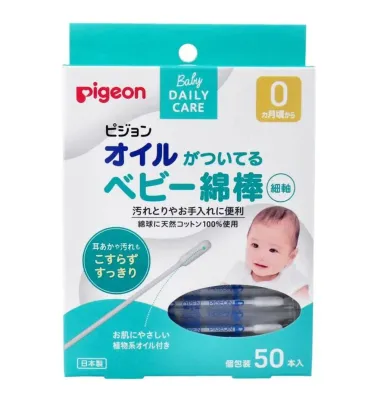
Prices are valid at publication and may change. Please refer to the product page for the latest price.
Evaluating Pigeon Baby Cotton Bud Design Features
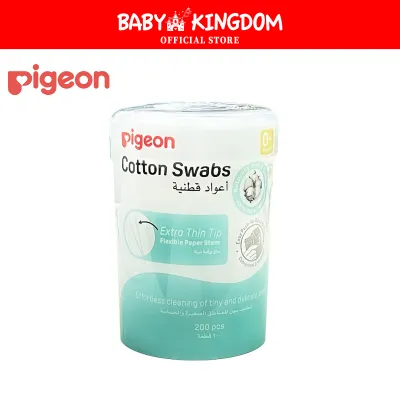
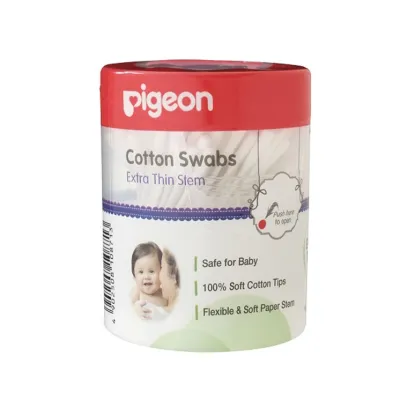
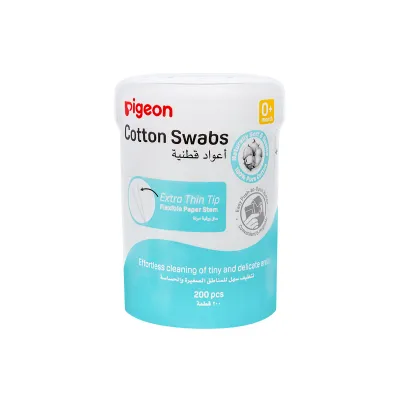
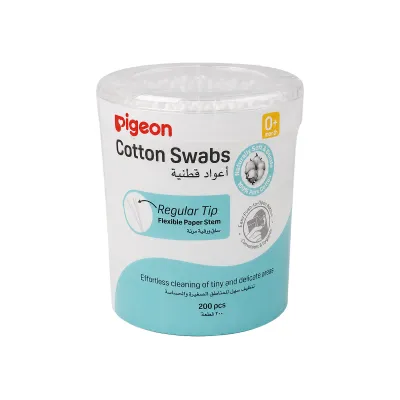
When selecting grooming tools for a newborn, parents should carefully evaluate the physical construction of the product. Look at the packaging of the Pigeon baby cotton buds to verify the specific design elements intended for infant care. Many baby-specific swabs feature a modified tip shape, such as a bulbous or dual-ended design, which acts as a physical barrier to prevent deep insertion. Additionally, check if the stems are made of flexible paper rather than rigid plastic, as paper stems bend under pressure, reducing the risk of accidental puncture if the baby suddenly moves.
The material composition of the cotton tip is another critical factor to observe. High-quality baby cotton buds typically utilize 100% pure cotton that is tightly wound to prevent loose fibers from shedding into the baby’s eyes, nose, or ears. Loose fibers can cause irritation or act as foreign bodies, leading to discomfort or mild inflammatory responses. Before using any swab, perform a quick visual and physical inspection. Gently tug on the cotton tip to ensure it is securely bonded to the stem and will not unravel or detach during use.
Always read the manufacturer’s label for age recommendations, intended use cases, and specific safety warnings. Manufacturers often update their packaging instructions, so verifying these details on your specific product batch is an essential step in maintaining a safe grooming routine. Some product lines may offer ultra-thin tips designed for specific tasks, while others feature standard safety tips. Choosing the correct variant for your intended task ensures you are not using a tool that is ill-suited for your newborn’s current developmental stage.
Safe Usage Boundaries: Where to Use and Where to Avoid
Establishing strict anatomical boundaries is the most effective way to prevent grooming injuries. Safe zones for baby cotton buds are strictly limited to the outer, visible surfaces of the body. These include the folds of the outer ear (the pinna), the dry skin surrounding the umbilical cord stump, and the very entrance of the nostrils. Using swabs in these areas helps remove excess moisture, lint, or loose debris without entering the body’s delicate cavities.

Conversely, danger zones must be avoided entirely. Never insert a cotton bud into the ear canal, deep into the nasal passages, or use it to aggressively scrub the base of the umbilical cord. Pushing a swab into the ear canal does not remove wax; instead, it often packs the wax tighter against the eardrum, which can lead to hearing issues, irritation, or even a ruptured eardrum. Similarly, inserting a swab deep into a tiny nostril can damage the sensitive mucosal lining, causing nosebleeds or pushing blockages further up the airway.
The golden rule for newborn grooming is to clean only what is clearly visible on the surface. If you cannot see the debris without pulling back tissue or shining a light deep into a cavity, it should not be reached with a cotton bud. Newborns do not have the same physical control or tolerance as adults, and a sudden head turn while a swab is inserted can lead to immediate, severe trauma. Keeping your cleaning efforts superficial ensures that even if the baby moves unexpectedly, the risk of injury remains minimal.
Precautions for Specific Newborn Grooming Tasks
Umbilical Cord Care
Caring for a newborn’s umbilical cord stump requires a gentle, hands-off approach to prevent premature pulling or infection. If your pediatrician recommends cleaning around the area, a baby cotton bud can be used to gently dab away moisture or debris from the surrounding skin. Moisten the tip slightly if instructed by your healthcare provider, and wipe around the base with minimal pressure. Never pull, tug, or pry at the drying cord stump, as it must fall off naturally. Ensure the area is completely dry afterward, as moisture can encourage bacterial growth.
Outer Ear Cleaning
After a bath, water and soft wax can collect in the outer folds of a newborn’s ear. To clean this area safely, hold your baby’s head steady and use a dry or slightly damp baby cotton bud to wipe only the outer curves of the ear. Avoid the opening of the ear canal entirely. If you notice wax migrating outward, you can gently sweep it away from the entrance, but do not attempt to reach inside. This simple routine keeps the outer ear clean and dry without risking damage to the delicate internal structures.
Nasal Crusts
Newborns often experience nasal congestion or dried mucus due to their narrow nasal passages. If you see visible crusts at the very edge of the nostril that are interfering with breathing, you can use a baby cotton bud to help clear them. First, soften the crusts by applying a drop of sterile saline solution to the nostril or by dampening the cotton tip. Gently sweep the softened debris outward from the rim of the nostril. Never push the swab upward into the nasal cavity, as this can compress the mucus and make breathing more difficult for your baby.
Warning Signs and When to Seek Medical Help
Even with careful grooming, accidents or localized irritations can occur, requiring immediate action. Caregivers must establish clear stop conditions during any grooming task. If your baby flinches, cries, shows signs of discomfort, or if you feel any physical resistance while using a cotton bud, stop the procedure immediately. Forcing a tool against a resisting infant significantly increases the risk of slips and punctures.
Monitor your baby for physical warning signs that indicate a need for professional medical evaluation. If you observe bleeding from the ear or nose, unusual yellow or green discharge, persistent redness, swelling, or a foul odor around the umbilical cord, do not attempt to treat it at home. These symptoms can point to infections or physical trauma. Consult a pediatrician promptly rather than attempting to clear deep blockages or applying over-the-counter drops without professional guidance.
Frequently Asked Questions (FAQ)
Can I use regular adult cotton buds if I run out of baby ones?
No, you should not substitute adult cotton buds for baby-specific ones. Adult swabs are designed with thinner, more pointed tips and highly rigid stems that lack safety stoppers. These structural differences make it much easier to accidentally insert the swab too deep into a newborn’s tiny ear or nose, significantly increasing the risk of tissue damage or eardrum puncture. If you run out of baby cotton buds, it is safer to use a clean, damp washcloth wrapped around your finger to wipe the outer areas until you can obtain proper infant-safe grooming tools.
How often should I clean my newborn's ears and nose?
Newborn ears and nasal passages are naturally self-cleaning and do not require daily grooming. Earwax serves a protective purpose, trapping dust and lubricating the ear canal, and it naturally migrates outward over time. You should only clean these areas when you observe visible dirt, wax, or crusts on the outer surfaces that cause discomfort or block the airway entrance. Over-cleaning can strip away natural protective barriers, irritate the delicate skin, and trigger the body to produce even more wax or mucus.
Community discussion
Share your experience or ask a question. Comments are reviewed before publication.