
Pigeon offers several lines of baby wipes, meaning the specific antibacterial or preservative ingredients vary depending on the product line and the region where it is sold. Determining whether these wipes are safe for your baby requires understanding the difference between active sanitizing agents and standard preservatives, learning how to read the packaging labels, and performing a careful skin compatibility check. Because infant skin is highly sensitive, parents must evaluate each product formulation against their child’s specific developmental stage and skin condition.
Understanding Antibacterial Agents and Preservatives in Baby Wipes
When evaluating baby wipes, it is essential to distinguish between active antibacterial agents and standard cosmetic preservatives. Active antibacterial agents are formulated to reduce or eliminate bacteria on external surfaces, hands, or toys. These are typically found in specialized sanitizing or “hand and mouth” wipes. In contrast, preservatives are ingredients added to the formulation to prevent the growth of mold, yeast, and bacteria within the wet wipe package itself.
Because baby wipes are water-based, they provide an ideal environment for microbial growth once the package is opened and exposed to air. Without a robust preservation system, a pack of wipes could quickly become contaminated with harmful microorganisms, posing a significant health risk to your baby. Therefore, even wipes labeled as “pure water” or “sensitive” must contain some form of preservative system to remain stable and safe during storage and use.
Products mentioned in this guide
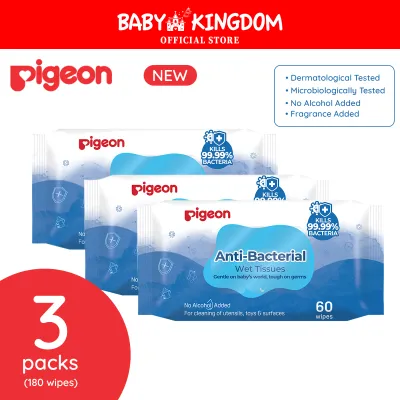
![Pigeon Anti Bacterial Baby Wet Tissue Wipes - 20 sheets / 60 sheets [100% Food Safe]](https://img.lazcdn.com/g/p/8f7e0f8bcd32626eb27faa9ff92f16d8.png_400x400q80.png_.webp)
![[Bundle Of 12] Pigeon Anti-Bacterial Wet Tissue 20s](https://img.lazcdn.com/g/p/379b6ed507f4aa537b2581352981dd3b.jpg_400x400q80.jpg_.webp)
Prices are valid at publication and may change. Please refer to the product page for the latest price.
It is also important to note that the term “antibacterial” on a package of wipes often indicates its intended utility, such as cleaning a toddler’s hands after outdoor play or wiping down high chairs and toys. These products are not intended to serve as medical-grade skin treatments or disinfectants for open wounds. Understanding this distinction helps parents select the appropriate wipe for the task at hand while avoiding unnecessary chemical exposure on delicate infant skin.
In warm and humid tropical climates, such as in Singapore, the risk of microbial proliferation in opened packages increases. This environmental factor makes the integrity of the preservation system even more critical. Parents should ensure that packages are sealed tightly after each use to prevent the wipes from drying out and to maintain the efficacy of the protective ingredients.
How to Read and Verify Ingredients in Pigeon Baby Wipes
To determine exactly what ingredients are in a pack of Pigeon baby wipes, parents should locate the International Nomenclature of Cosmetic Ingredients (INCI) list on the physical packaging. This list is typically printed on the back or side of the pack. By law in many regions, ingredients must be listed in descending order of concentration, allowing you to see which components make up the bulk of the liquid formula.

When reviewing the INCI list, you can cross-reference unfamiliar chemical names with reputable cosmetic ingredient databases, such as the Environmental Working Group (EWG) Skin Deep database or the Cosmetic Ingredient Review (CIR). Common ingredients found in various baby wipe formulations include mild surfactants, skin-conditioning agents like chamomile or aloe vera extracts, and preservatives such as phenoxyethanol, sodium benzoate, or ethylhexylglycerin. Identifying these compounds helps you make an informed decision based on scientific evaluations rather than marketing claims.
Because Pigeon manufactures multiple product lines, formulations differ significantly between variants. For instance, their “100% Pure Water” or “Sensitive” wipes are designed with minimal ingredients to reduce the risk of irritation on a newborn’s skin. Conversely, their antibacterial hand and mouth wipes or multi-purpose sanitizing wipes contain specific antimicrobial agents designed to clean dirt and germs from active toddlers. Always verify the specific product line and its intended use before purchasing, as a formulation designed for cleaning toys or hands may be too harsh for the sensitive diaper area.
Evaluating Skin Safety and Compatibility for Your Baby
An infant’s skin barrier is fundamentally different from that of an adult. A baby’s skin is thinner, more permeable, and has a higher rate of transepidermal water loss, making it highly susceptible to chemical irritation and environmental allergens. Because of this vulnerability, a formulation that is perfectly safe for one baby might cause contact dermatitis or irritation in another.
Before introducing any new wipe formulation to your daily routine, it is highly recommended to perform a localized patch test. To do this, take a single wipe and gently dab a small amount of the liquid onto a small, discreet area of your baby’s skin, such as the inner forearm or the upper thigh. Observe the area closely over the next 24 to 48 hours for any signs of redness, swelling, dryness, or tiny bumps. If no reaction occurs, the product is generally considered compatible with your baby’s skin.
When selecting wipes, parents should prioritize formulations that avoid known skin irritants, particularly if the baby has a history of eczema or sensitive skin. Common culprits include added synthetic fragrances, denatured alcohol, and certain essential oils. While these ingredients may provide a pleasant scent or a cooling sensation, they significantly increase the risk of allergic sensitization. Consulting your pediatrician or a pediatric dermatologist can help you identify which specific ingredients to avoid based on your baby’s unique skin profile.
When to Stop Use and Seek Pediatric Advice
Even when using reputable brands, adverse skin reactions can still occur. Parents must remain vigilant for signs of contact dermatitis or allergic reactions. These symptoms typically manifest as localized redness, dry or peeling skin, a raised red rash, or persistent itching. If your baby exhibits unusual fussiness or cries during wiping, this can also be an early indicator of skin discomfort or burning sensations.
If you observe any of these signs, stop using the wipes immediately. Switch to using a soft cloth dampened with plain, lukewarm water to clean the area until the skin heals. If the irritation or rash persists for more than a few days, spreads to other parts of the body, or appears to blister or ooze, consult a qualified healthcare professional or pediatrician promptly.
It is crucial to understand that antibacterial wipes are not designed to treat diaper rash, broken skin, or open wounds. Diaper rash is frequently caused by prolonged exposure to moisture, friction, or yeast infections, rather than simple bacterial contamination. Applying antibacterial agents or heavily preserved wipes to broken skin can cause severe stinging, worsen the irritation, and delay the natural healing process. For these conditions, always seek explicit medical direction and use recommended barrier creams or treatments.
Frequently Asked Questions (FAQ)
Can I use antibacterial baby wipes on a newborn's face and hands?
Pediatricians generally recommend using plain water or wipes specifically formulated for newborns—such as those containing 99% or 100% pure water with minimal preservatives—during the first few months of life. A newborn’s skin barrier is still developing and is highly sensitive to active antibacterial agents. Always check the manufacturer’s age recommendations and specific usage instructions printed on the Pigeon packaging before applying any wipe to a newborn’s face or hands, and avoid using multi-purpose sanitizing wipes on these sensitive areas.
Do antibacterial baby wipes expire, and is it safe to use them past the date?
Yes, baby wipes do expire, and using them past their expiration date is not recommended. Over time, the preservative system within the wipes degrades, which can allow harmful bacteria or mold to multiply inside the package. Additionally, the active antibacterial agents may lose their efficacy, rendering the wipes ineffective for sanitizing. Always locate the printed expiration date or the Period After Opening (PAO) symbol on the packaging, and safely discard any packs that have expired or have been open longer than the recommended timeframe.

Community discussion
Share your experience or ask a question. Comments are reviewed before publication.