
Organic blueberries are a highly nutritious, antioxidant-rich option for infants transitioning to solid foods, but they require careful preparation to ensure safety. While these small fruits offer essential vitamins and dietary fiber, their natural shape, firm texture, and skin present specific physical challenges for developing digestive and respiratory systems. Introducing them successfully involves understanding your baby’s developmental milestones, preparing the fruit to eliminate choking risks, and monitoring for potential sensitivities.
Choosing organic varieties can reduce your child’s exposure to synthetic pesticides, which is a common priority for many families. However, organic certification does not alter the physical properties of the fruit or eliminate the need for rigorous hygiene and safe preparation. By learning how to select, wash, mash, and serve these berries, you can confidently add them to your baby’s diet while minimizing common feeding risks.
When to Introduce Blueberries to Your Baby
Most infants are developmentally ready to begin their solid food journey around six months of age. At this stage, their digestive systems have matured enough to process foods other than breast milk or infant formula. However, age is only a general guideline, and you should look for specific physical signs of readiness before offering blueberries or any other solid foods.
Products mentioned in this guide

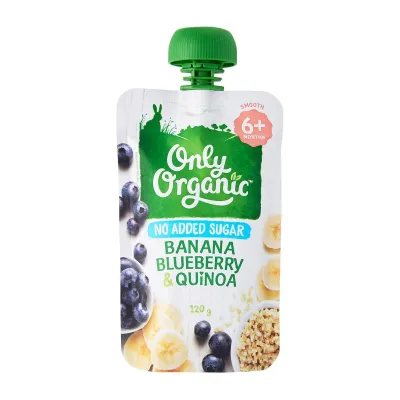
Prices are valid at publication and may change. Please refer to the product page for the latest price.
Key developmental milestones include the ability to sit upright with minimal support and maintain good head and neck control. Your baby should also lose the tongue-thrust reflex, which automatically pushes solid objects out of the mouth. Another clear indicator is showing active interest in meals, such as reaching for your food or watching you chew. If your baby cannot sit steadily in a high chair or continues to push purees out of their mouth, they may need more time to develop the necessary oral motor skills.
Before introducing blueberries, consult your pediatrician or family doctor for personalized guidance. A healthcare professional can evaluate your baby’s unique growth, motor skills, and medical history to confirm they are ready for solids. This step is particularly important if your baby was born prematurely, has developmental delays, or has a family history of severe food allergies.
It is important to recognize that choosing organic blueberries does not alter this developmental timeline. While organic farming practices avoid synthetic chemical inputs, an organic berry possesses the exact same physical structure, firmness, and size as a conventionally grown one. Consequently, the physical readiness required to swallow and digest the fruit remains identical, and parents must apply the same safety standards regardless of the agricultural label.
Understanding and Managing Choking Hazards
Whole blueberries are classified as a high-risk choking hazard for infants and young toddlers due to their physical characteristics. Their small, round, and firm shape is almost identical in size to a baby’s airway. If a baby attempts to swallow a whole berry, it can easily become lodged in the trachea, blocking the flow of oxygen. Additionally, the smooth, taut skin of a fresh blueberry can make it slippery when wet with saliva, causing it to slide to the back of the throat before the baby has a chance to chew or mash it with their gums.

To eliminate this hazard, you must modify the texture of the blueberries to match your baby’s current developmental stage. For babies who are just starting solids around six months of age, blueberries should be thoroughly pureed or mashed into a completely smooth paste. You can use a baby food blender or a fine-mesh sieve to ensure no large skin fragments or lumps remain. If the puree is too thick, you can thin it with a small amount of breast milk, formula, or water.
As your baby grows and develops a stronger chewing motion and a pincer grasp—typically between eight and ten months—you can transition to textured finger foods. At this stage, you must still never serve whole blueberries. Instead, flatten each individual berry completely between your thumb and forefinger until it is thoroughly squished and no longer round. Alternatively, you can cut each berry into quarters. Avoid simply cutting them in half, as semi-circular pieces can still conform to the shape of a small airway and pose a choking risk.
Regardless of how carefully you prepare the food, active and uninterrupted adult supervision is mandatory during every meal and snack. Sit directly facing your baby while they eat, ensuring they are buckled securely in an upright position in their high chair. Avoid distractions such as mobile phones or television, as choking is often silent. Being present allows you to immediately recognize the difference between normal gagging—a loud, protective reflex where the baby coughs food forward—and true choking, which is silent and requires immediate emergency intervention.
Identifying and Responding to Allergic Reactions
While blueberries are not categorized among the top common food allergens—such as peanuts, tree nuts, milk, eggs, soy, wheat, fish, and shellfish—any food has the potential to trigger an allergic response. When introducing blueberries to your baby for the first time, it is essential to follow a systematic approach to identify any adverse reactions quickly and accurately.
The standard clinical recommendation is the “one new food at a time” rule. Introduce blueberries on their own or alongside a food your baby has already safely consumed multiple times. Do not introduce any other new foods for at least three to five days. This waiting period allows you to monitor your baby closely and ensures that if a reaction does occur, you can easily isolate the blueberries as the cause.
Allergic reactions can range from mild skin irritation to severe, life-threatening systemic responses. Mild to moderate symptoms often appear within minutes to a few hours after ingestion. These may include localized hives, red raised patches on the skin, swelling around the mouth or eyes, mild vomiting, or sudden diarrhea. Sometimes, the acidic nature of berries can cause a mild contact rash around the lips, which is often a localized skin irritation rather than a true systemic allergy, but it should still be monitored closely.
Severe allergic reactions, known as anaphylaxis, require immediate emergency medical attention. Signs of a severe reaction include difficulty breathing, wheezing, a persistent cough, swelling of the tongue or throat that restricts swallowing, pale or blue-tinted skin, or sudden extreme lethargy. If you observe any of these severe symptoms, stop feeding immediately, do not attempt to induce vomiting, and call emergency services or transport your baby to the nearest emergency department without delay.
Organic vs. Conventional: What Parents Should Know
When shopping for baby food ingredients, parents often weigh the benefits of organic versus conventional produce. Organic blueberries are cultivated under strict agricultural standards that prohibit the use of most synthetic pesticides, herbicides, and chemical fertilizers. Choosing organic can significantly reduce the trace chemical residues present on the fruit, which is a reassuring choice for parents looking to minimize their infant’s environmental chemical exposure during rapid growth phases.
Despite these differences in farming methods, organic produce is not inherently sterile or free from environmental contaminants. Organic berries are grown in open soil, exposed to natural fertilizers, wildlife, insects, and weather elements. They are also harvested, packed, and transported by human hands, which introduces opportunities for dirt, natural yeasts, and foodborne pathogens to accumulate on the surface of the fruit.
Therefore, thoroughly washing all fresh blueberries is a universal safety requirement, regardless of whether they are labeled organic or conventional. Place the berries in a colander and rinse them under cool, clean running water right before you plan to prepare them. Gently rub the surface of the berries with your fingers to dislodge dirt and debris. Avoid soaking the berries in a bowl of water, as this can cause them to absorb excess moisture, degrading their texture and potentially drawing surface bacteria into the fruit.
Before preparing the berries, perform a careful visual inspection of the entire batch. Discard any blueberries that are mushy, shriveled, leaking juice, or showing visible signs of white, grey, or green mold. Mold spores can spread easily within a container, and consuming spoiled fruit can cause digestive upset in infants.
Safe Storage and Handling Practices
Proper storage and handling of blueberries are critical to preventing foodborne illnesses, as infants have developing immune systems that are highly susceptible to bacteria. Fresh blueberries should be stored in their original breathable container in the refrigerator. To maximize their shelf life, do not wash the berries before storing them, as residual moisture encourages rapid mold growth and spoilage.
If you choose to use frozen organic blueberries, they must be handled with equal care. Thaw only the portion you plan to use by placing them in a clean container in the refrigerator overnight. If you need to thaw them quickly, you can warm them gently on the stove or in a microwave. Always test the temperature of the thawed or warmed berries on the inside of your wrist before serving them to your baby to prevent thermal burns or temperature shock.
Maintaining strict kitchen hygiene during preparation is essential to prevent cross-contamination. Wash your hands thoroughly with warm water and soap for at least twenty seconds before handling the fruit. Ensure that all cutting boards, knives, bowls, and mashing utensils are thoroughly cleaned and sanitized, especially if they have previously been used to prepare raw meat, poultry, or seafood.
Finally, always practice safe serving habits to prevent bacterial growth. Spoon a small portion of the prepared blueberry puree or mashed fruit into a separate baby bowl rather than feeding directly from the main storage container. Saliva contains enzymes and bacteria that begin breaking down food immediately. If you dip a used spoon back into the main container, you introduce these bacteria, which can multiply rapidly during storage. Always discard any uneaten portions left in your baby’s serving bowl at the end of the meal.
Frequently Asked Questions (FAQ)
Can babies eat blueberry skin?
Yes, babies can digest blueberry skin once they are developmentally ready for solid foods, but the skin can present texture challenges. In its whole form, the skin can stick to the roof of a baby’s mouth or cause gagging. To make it safe and manageable, ensure the berries are thoroughly mashed, pureed, or finely chopped, which breaks down the skin into tiny, easily swallowable pieces.
Are frozen organic blueberries safe for babies?
Frozen organic blueberries are safe, highly convenient, and nutritionally comparable to fresh berries. Because they are frozen solid, they present a severe choking hazard if offered directly from the freezer. You must fully thaw, warm to a safe temperature, and thoroughly mash or puree them before serving to ensure they are soft enough for your baby to swallow safely.
Do organic blueberries need to be washed?
Yes, organic blueberries must always be washed before consumption. Organic certification regulates the use of synthetic chemicals, but the fruit is still exposed to soil, dust, natural fertilizers, insects, and human handling during distribution. Rinsing them under cool running water right before preparation effectively removes these surface impurities and ensures clean, safe food for your baby.
Community discussion
Share your experience or ask a question. Comments are reviewed before publication.