
When evaluating whether Nomieo baby wipes are safe for your newborn, the short answer is that safety is never an absolute, universal guarantee. While many baby wipes are formulated with sensitive skin in mind, a newborn’s skin barrier is highly delicate, and individual tolerances vary significantly. Whether a specific pack of Nomieo wipes is suitable for your infant depends heavily on the exact product variant, its specific ingredient profile, and your baby’s unique skin sensitivity.
Nomieo offers several variations of baby wipes across different online marketplaces and local retailers, ranging from pure water-based formulations to scented options. Because product formulations can change and different batches may target different use cases, you should never rely solely on front-of-pack marketing claims like “hypoallergenic,” “ultra-gentle,” or “organic.” Instead, the most reliable way to determine safety is to flip the pack over and carefully evaluate the physical ingredient list.
In Singapore’s warm and humid tropical climate, diaper rash and skin irritation can develop rapidly due to trapped moisture and friction. This environmental factor makes choosing the right wipe even more critical for local parents. The following sections will equip you with the practical knowledge needed to decode the ingredient list on your Nomieo pack, understand the unique needs of newborn skin, and execute a safe trial process.
Products mentioned in this guide
![[New Bundle Sale] Nomieo Travel Pack Wet Wipes 10s/Pack 100% Pure Water Unscented Portable Newborn Baby Wipes Mini Pack](https://img.lazcdn.com/g/p/814cf7c479bfe78385a809161513aa27.jpg_400x400q80.jpg_.webp)
![[New] Nomieo Travel Pack Wet Wipes 10s/Pack 100% Pure Water Unscented Portable Newborn Baby Wipes](https://img.lazcdn.com/g/p/5ea37b2a75335f09c1c1639b8c599b31.jpg_400x400q80.jpg_.webp)
![[Premium Wet wipes] New Nomieo Thick Baby Wet Wipes 80sheets/pack Pure water wet tissues Safe for Baby Face & Body Add Vitamin E/Aloe Extract/Chamomile Essence/Seaweed Essence](https://img.lazcdn.com/g/p/d70b06763f5217d7227d73b9dea4ac12.jpg_400x400q80.jpg_.webp)
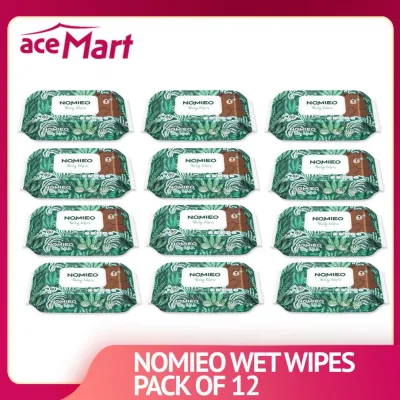
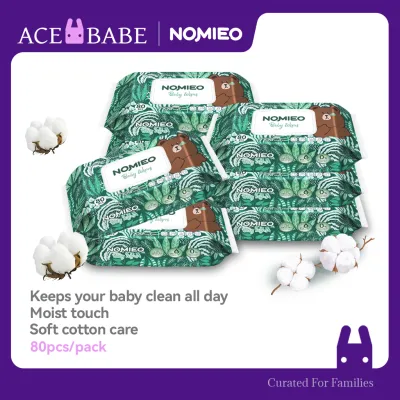
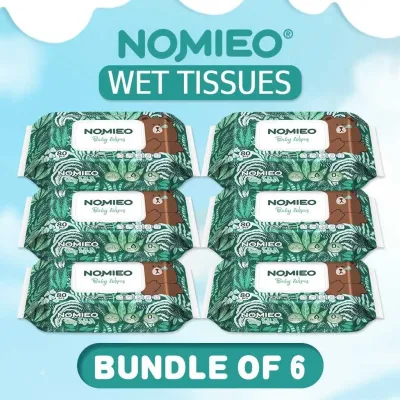
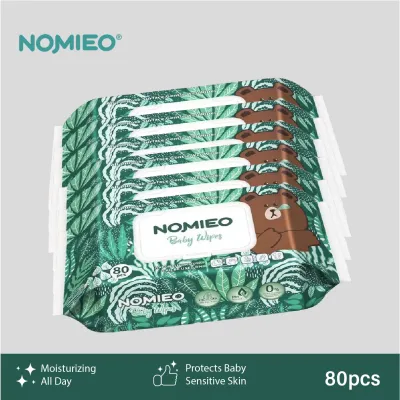
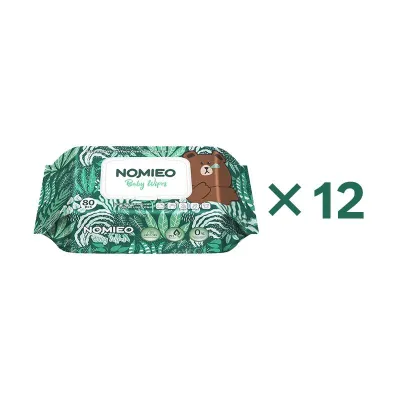
Prices are valid at publication and may change. Please refer to the product page for the latest price.
How to Evaluate the Ingredient List on Nomieo Wipes
Reading a cosmetic or baby care label can feel like deciphering a foreign language, but understanding a few key component groups will help you make an informed purchase decision. Baby wipes are essentially non-woven fabrics saturated with a liquid solution (the wipe liquor), which is typically composed of over 95% water alongside mild cleansers, skin conditioners, and a preservation system.
Beneficial and Soothing Ingredients to Look For
When examining the back of a Nomieo wipes package, the very first ingredient listed should always be purified water, often labeled as Aqua. High-quality baby wipes utilize water that has undergone reverse osmosis or deionization to ensure it is entirely free of microscopic contaminants, minerals, and bacteria. This pure water base serves as the gentle vehicle for cleansing your baby’s skin.
Alongside water, look for mild, plant-derived surfactants and emollients. Ingredients such as coco-glucoside or decyl glucoside are gentle cleansers derived from coconut or corn starch that help lift away oil-soluble impurities without stripping the skin’s natural lipid barrier. Additionally, humectants like glycerin or propylene glycol are highly beneficial because they draw moisture into the stratum corneum, helping to maintain essential hydration during diaper changes.
Many formulations also incorporate soothing botanical extracts, such as aloe barbadensis leaf extract (aloe vera) or chamomilla recutita flower extract (chamomile). While these natural ingredients are excellent for calming mild skin redness, parents must remain cautious. Natural botanical extracts contain complex organic compounds that can occasionally trigger localized contact allergies in highly sensitive newborns, meaning their presence still requires careful observation during initial use.
Common Irritants to Check For on the Label
To protect your newborn’s skin, you must actively scan the Nomieo ingredient label for potential irritants that pediatricians and dermatologists advise avoiding during the first few months of life:
- Fragrances (Parfum or Fragrance): Whether synthetic or derived from natural essential oils, added fragrances are among the leading causes of allergic contact dermatitis in infants. For a newborn, always prioritize completely fragrance-free variants.
- Drying Alcohols: It is vital to differentiate between drying alcohols and safe fatty alcohols. Avoid drying alcohols like ethanol, isopropyl alcohol, or alcohol denat, which rapidly evaporate and strip away the skin's protective oils. Conversely, fatty alcohols like cetyl alcohol or stearyl alcohol are non-irritating emollients that help soften the skin.
- Harsh Preservatives and Surfactants: Ensure the wipes do not contain older, sensitizing preservatives such as methylisothiazolinone (MI), methylchloroisothiazolinone (MCI), or formaldehyde releasers. Similarly, avoid harsh foaming surfactants like sodium lauryl sulfate (SLS) or sodium laureth sulfate (SLES), which can severely disrupt a newborn's delicate skin barrier.
By carefully cross-referencing the physical packaging of your Nomieo wipes against these lists, you can immediately filter out variants that pose an unnecessary chemical risk to your infant.
Why Newborn Skin Requires Extra Care with Wipes
Understanding why baby wipe ingredients matter so much requires looking at the unique physiology of newborn skin. An infant’s skin is not simply a miniature version of adult skin; it is a developing organ system with distinct structural differences that make it far more vulnerable to environmental insults.

First, newborn skin is up to 30% thinner than adult skin. The stratum corneum, which is the outermost protective layer of the epidermis, is exceptionally thin, and the individual skin cells are less tightly packed. This structural difference results in a highly permeable skin barrier, meaning that any topical chemicals applied to the skin are absorbed much more rapidly and deeply into the underlying tissues.
Second, the diaper area presents a uniquely hostile microenvironment. The skin in this region is subjected to constant friction from diapers, prolonged exposure to moisture, and contact with urine and feces. Fecal matter contains active digestive enzymes, such as lipases and proteases, which break down the skin’s natural lipids. When urine increases the local pH from its healthy acidic state to a more neutral or alkaline level, these destructive enzymes become even more active, rapidly compromising the skin barrier.
Because of this biological vulnerability, a wipe formulation that is perfectly safe for a toddler or an older child can easily cause severe irritation, burning, or contact dermatitis on a one-week-old newborn. Minimizing the number of ingredients your baby is exposed to during this critical developmental window is the most effective way to prevent painful diaper rashes.
How to Safely Introduce a New Wipe Brand to Your Baby
If you have purchased Nomieo wipes and verified that the ingredient list is free of obvious harsh chemicals, you should still introduce them systematically rather than using them immediately for every diaper change. A structured, low-risk testing protocol minimizes the potential impact of an unexpected allergic reaction.
The Patch Test Protocol
Before using any new wipe brand on your baby’s highly sensitive diaper area, perform a localized patch test. Gently wipe a small, clean area of your baby’s skin that is easily observable but not prone to constant rubbing, such as the inner forearm or the side of the calf. Allow the liquid to dry naturally, and do not wash the area.
Observe this specific spot over the next 24 to 48 hours for any delayed hypersensitivity reactions. Look closely for localized redness, tiny raised bumps, dry patches, or swelling. If the skin remains completely clear and normal after 48 hours, the risk of an acute allergic reaction to that specific formulation is low.
Gradual Introduction
Once the patch test is successful, introduce the wipes gradually. Start by using them only for low-friction cleaning tasks, such as wiping your baby’s hands or feet after a feeding, provided the product packaging explicitly states it is safe for general body use. Monitor these areas for any signs of dryness or irritation over a few days before transitioning to using them for diaper changes.
Checking Manufacturer Guidelines
Always read the specific manufacturer instructions, warnings, and age recommendations printed on the Nomieo packaging. Pay close attention to storage instructions; wet wipes must be stored in a cool, dry place out of direct sunlight, and the plastic lid or adhesive seal must be closed tightly after every use. In Singapore’s humid climate, failing to seal the package properly can cause the wipes to dry out or, conversely, create an environment where mold and bacteria can multiply if the preservation system is compromised.
Environmental Factors
To accurately evaluate how your baby’s skin reacts to a new wipe, timing is everything. Avoid introducing Nomieo wipes during periods when your baby’s skin barrier is already compromised or under stress. For example, if your newborn is currently experiencing a teething flare-up, recovering from an illness, dealing with an active diaper rash, or showing a reaction to a recent immunization, postpone the trial. Introducing a new product during these times makes it incredibly difficult to isolate the true cause of any new skin irritation.
Signs of Irritation and When to Stop Use Immediately
As a parent, you must remain vigilant for any physical signs that your newborn’s skin is reacting poorly to a baby wipe. Recognizing these symptoms early allows you to intervene before a mild irritation escalates into a severe, painful skin infection.
Observable Signs of Irritation
Monitor your baby’s diaper area closely during and after changes. Stop using the wipes immediately if you observe any of the following symptoms:
- Localized Redness (Erythema): A distinct pink or red flush that mirrors the exact path where the wipe was used.
- Raised Bumps or Papules: Small, rough red bumps or a sandpaper-like texture on the skin.
- Peeling or Flaking Skin: Visible scaling or dry, cracked patches in the skin folds.
- Behavioral Distress: Increased fussiness, squirming, or crying specifically when you wipe the skin, which indicates a burning or stinging sensation.
Low-Risk First Aid Steps
If you suspect a reaction, immediately discontinue using the Nomieo wipes. Switch temporarily to using plain, lukewarm water and soft, reusable cotton cloths or single-use, fragrance-free dry cotton pads. Gently pat the skin dry with a clean towel instead of rubbing, and allow the diaper area to air-dry completely before putting on a fresh diaper. In Singapore’s humid environment, maximizing “air time” is highly effective for reducing moisture build-up and letting the skin barrier heal naturally.
When to Seek Professional Medical Help
While mild contact irritation often resolves within a few days of removing the trigger, you must consult a qualified pediatrician if you observe any of the following warning signs:
- The rash spreads beyond the immediate diaper area to the abdomen, back, or limbs.
- The skin shows signs of a secondary bacterial or fungal infection, such as pus-filled blisters, weeping fluid, bleeding, or yellow, honey-colored crusting.
- Your baby develops a fever or becomes unusually lethargic and difficult to comfort.
- The diaper rash does not show clear signs of improvement after three days of discontinuing the wipes and using only plain water.
Frequently Asked Questions (FAQ)
Can I use Nomieo wipes on my newborn's face and hands?
You must check the specific Nomieo packaging to verify if the variant is approved for facial use. Facial skin, especially around the eyes and mouth, is significantly thinner and more sensitive than the skin on the diaper area. If the packaging does not explicitly state that the wipes are safe for face and hands, or if the formulation contains any added fragrances or botanical extracts, do not use them on your newborn’s face.
Do water-based baby wipes still need preservatives?
Yes, any baby wipe that contains water absolutely requires a preservation system. Water is a breeding ground for bacteria, mold, and yeast. Without an effective preservative, a sealed, moist package of wipes would become contaminated with dangerous microorganisms within weeks. When evaluating water-based wipes, focus on ensuring the formula uses mild, food-grade, or highly tolerated preservation agents rather than seeking a completely preservative-free product.

Community discussion
Share your experience or ask a question. Comments are reviewed before publication.