
Determining whether a Joie bassinet is safe for your newborn requires looking beyond the brand name to evaluate the specific model’s certified safety standards, physical design, and correct household setup. Safety is a shared responsibility between the manufacturer’s engineering and the caregiver’s daily practices. While Joie designs products for the global nursery market, parents must actively verify the certification labels on their specific unit, read the user manual thoroughly, and strictly adhere to safe sleep guidelines. No baby product is universally safe without proper assembly, regular maintenance, and an environment free of sleep hazards.
Understanding Bassinet Safety Standards
Safety standards are rigorous testing protocols designed to simulate real-world use and potential hazards. They are established by regulatory bodies to ensure that infant sleep products meet strict criteria before they reach the market. These tests evaluate structural integrity, stability, and material safety to protect vulnerable newborns.
Structural tests evaluate the strength of the frame, ensuring it does not collapse under weight or repeated movement. Stability tests check the center of gravity, ensuring the bassinet will not tip over if a sibling bumps into it or if the baby shifts weight. These mechanical evaluations are crucial for preventing accidental collapses or tip-overs during daily use.
Products mentioned in this guide
![[Joie] Amigo 120 Foldable Travel Cot Playpen with Bassinet - Baby Portable Bed for Newborn to Toddler (0–15kg)](https://img.lazcdn.com/g/p/d9c71662c083daae5a26458680c79d05.jpg_400x400q80.jpg_.webp)

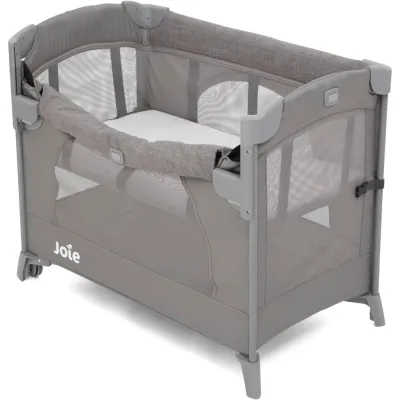
Prices are valid at publication and may change. Please refer to the product page for the latest price.
Breathability and entrapment tests are equally critical. They measure airflow through side fabrics and ensure that any gaps, mesh openings, or joints are small enough to prevent a baby’s head, limbs, or fingers from becoming trapped. These standards help minimize the risk of suffocation and physical injury.
International frameworks serve as regional benchmarks for these tests. For example, European standards like EN 1130 (for cribs and cradles) or American standards like ASTM F2194 (for bassinets and cradles) outline strict safety criteria. In Australia and New Zealand, AS/NZS standards serve a similar purpose, ensuring regional compliance.
A certification mark indicates the product met these testing criteria at the factory under normal use conditions. However, it does not guarantee safety if the bassinet is assembled incorrectly, modified, or used outside the manufacturer’s explicit guidelines. Caregiver vigilance remains the final line of defense.
How to Verify Joie Bassinet Certifications Before Purchase
To ensure your chosen Joie bassinet meets these rigorous benchmarks, you must perform a systematic verification process before completing your purchase. This proactive approach helps you confirm that the specific model aligns with the latest safety regulations.

Start by locating the physical certification marks. These are typically printed on a tracking label permanently attached to the bassinet frame, sewn into the fabric lining, or clearly displayed on the outer packaging and the cover of the user manual. Look for specific codes like EN 1130 or ASTM F2194 depending on your region.
Next, cross-reference the exact model number. Joie produces several bassinet and travel cot models, and safety specifications can vary between different versions or regional releases. Locate the model number on the product box or the white sticker on the frame, then visit the official Joie website to download the exact user manual and review the safety declarations.
Finally, consult national consumer safety portals and local regulatory databases. In Singapore, Enterprise Singapore monitors consumer product safety, while global databases like the US Consumer Product Safety Commission (CPSC) or the European Union’s Safety Gate list product recalls. Search these databases using the exact model name and production batch code to ensure there are no active safety notices or voluntary recalls associated with your specific unit.
Key Physical Safety Features to Inspect
Once the bassinet is in your home, conduct a thorough physical inspection before placing your baby inside. This hands-on check ensures that the product has been assembled correctly and has suffered no damage during shipping or handling.
Begin with the mattress fit. The mattress must be firm and fit snugly against all four sides of the bassinet. There should be no gaps wider than two fingers (approximately 3 cm) between the edge of the mattress and the side walls, as gaps pose a severe entrapment and suffocation risk. Never add a second mattress or a thicker aftermarket pad.
Examine the side panels for breathability. Safe bassinets utilize fine, tightly woven mesh on at least two, and ideally all four, sides. This mesh allows continuous airflow, helping to regulate the baby’s temperature and reducing suffocation risks if the baby rolls face-first against the side. Ensure the mesh is taut and free of tears or loose threads.
Test all locking mechanisms repeatedly. If your Joie model features folding joints for travel, wheels for mobility, or a drop-side panel for bedside sleeping, every single joint must lock securely into place with an audible click. Ensure that wheels are locked when the bassinet is stationary and that any height-adjustment mechanisms are evenly set and firmly secured on both sides.
Assess the overall structural integrity. Run your hands along the frame, plastic joints, and fabric seams to check for smooth finishes, rounded corners, and an absence of sharp edges or exposed screws. Give the fully assembled bassinet a gentle shake to verify that the base is sturdy, balanced, and does not wobble or sway excessively.
Safe Sleep Practices and Usage Boundaries
Even the most highly certified bassinet cannot protect an infant if safe sleep practices are ignored. Creating a secure sleep environment is essential for reducing the risk of Sudden Infant Death Syndrome (SIDS) and other sleep-related accidents.
Always place your baby flat on their back for every sleep, both naptime and nighttime. The sleep surface must remain completely flat; never use inclines, wedges, or positioners, as an elevated head can cause the baby’s chin to drop to their chest, potentially blocking their airway.
Keep the sleep space entirely bare. Do not place loose blankets, sheets, pillows, bumper pads, sheepskins, sleep positioners, or soft toys inside the bassinet. If you are concerned about warmth, use a properly fitted infant sleep sack or swaddle suitable for the room’s temperature instead of loose bedding.
Position the bassinet in a safe location within your home. Place it on a flat, level, and stable floor surface. Keep it well away from windows where dangling blind cords or curtain strings present a strangulation hazard. Ensure it is positioned far from heaters, radiators, electrical cords, and heavy wall decorations that could fall into the sleeping area.
Adhere strictly to operational rules during unsupervised sleep. If your Joie bassinet has a drop-side feature for bedside access, this side must be fully raised and locked whenever the baby is sleeping unsupervised or when you are asleep. Similarly, if the model has a manual rocking or swinging mode, disable this feature and lock the frame into a stationary position before leaving the baby alone.
When to Stop Using the Bassinet
Bassinets are temporary sleep solutions designed strictly for the early months of an infant’s life. Knowing when to transition your baby to a larger, deeper sleep space is critical for preventing falls and injuries.
Always refer to the maximum weight and height limits specified in your Joie model’s instruction manual. Many standard bassinets have a weight limit of around 9 kg, but this is a maximum threshold, not the sole indicator for transition.
Monitor your baby’s physical and developmental milestones closely, as these often dictate when to stop using the bassinet long before the weight limit is reached. You must transition your baby to a full-size crib or cot immediately if they show signs of rolling over, pushing up on their hands and knees, or attempting to sit up unassisted.
Once a baby gains the strength to move or pull themselves up, the shallow sides of a bassinet no longer provide adequate fall protection. Delaying this transition increases the risk of the baby tipping the bassinet or climbing over the edge, making daily developmental observation essential for safety.
Frequently Asked Questions (FAQ)
Is it safe to use a second-hand Joie bassinet?
Using a pre-owned Joie bassinet carries inherent risks that require careful evaluation. Second-hand items may have suffered hidden structural damage, worn-out locking joints, or degraded plastics from improper storage. They might also lack the original user manual, warning labels, or essential attachment straps, or they may conform to outdated safety standards.
If you choose to use a second-hand model, first verify that the exact model has not been recalled by checking the manufacturer’s website and consumer safety databases. Inspect the frame thoroughly for cracks, bent metal, or loose rivets. Ensure the mattress is clean, firm, free of mold, and fits perfectly without gaps. If the mattress shows any signs of sagging or wear, replace it with an official, model-specific replacement mattress directly from Joie.
Are bedside sleeper modes safe for overnight sleep?
Bedside sleeper modes, where one side of the bassinet is lowered to align with the adult bed, can be used safely for overnight sleep only if you strictly follow the manufacturer’s installation instructions. The most critical safety requirement is the secure attachment mechanism. You must use the provided straps to anchor the bassinet tightly to the adult bed frame, ensuring there is absolutely no gap between the adult mattress and the bassinet.
Any gap between the two sleep surfaces poses a severe risk of the baby rolling into the space and becoming trapped. Additionally, the drop-side panel must be raised and locked whenever the bassinet is not securely attached to the adult bed. Ensure your adult bedding, pillows, and heavy blankets cannot drape over or enter the bassinet space, maintaining a clear, safe boundary for your baby.

Community discussion
Share your experience or ask a question. Comments are reviewed before publication.