
Welcoming a newborn brings a wave of joy, along with a sudden, heightened awareness of every product that touches your baby’s skin. Among the most frequently used items in any nursery are baby wipes, which come into direct contact with highly sensitive areas multiple times a day. Hoppi wipes have gained significant popularity among parents seeking gentle diapering solutions, but determining whether they are safe for a newborn requires a closer look at their specific ingredient formulation. Because newborn skin is structurally different from adult skin, parents must look beyond appealing packaging claims and learn how to evaluate the chemical makeup of the wipes they choose.
Why Newborn Skin Requires Careful Ingredient Checks
To understand why ingredient scrutiny is so critical, it is helpful to examine the unique physiology of newborn skin. At birth, an infant’s skin is still developing. The stratum corneum, which is the outermost layer of the epidermis acting as the body’s primary protective shield, is up to thirty percent thinner than that of an adult. This thinness means that the skin barrier is highly permeable, resulting in a significantly higher absorption rate. Any chemical, fragrance, or preservative applied to a newborn’s skin can penetrate much deeper and enter the systemic circulation more easily than it would in an older child or an adult.
Furthermore, a newborn’s skin barrier is structurally immature, making it highly susceptible to rapid moisture loss and external irritants. The natural acid mantle—a thin, slightly acidic film on the skin’s surface that helps ward off harmful bacteria—takes several weeks to fully establish. During this delicate transitional phase, exposure to harsh cleansing agents, synthetic additives, or improper pH levels can disrupt this fragile balance, leading to dryness, chafing, and painful diaper rash. In tropical, humid environments like Singapore, trapped moisture combined with friction from diapers can quickly exacerbate these vulnerabilities, making a gentle, non-irritating wipe formulation even more essential.
Products mentioned in this guide
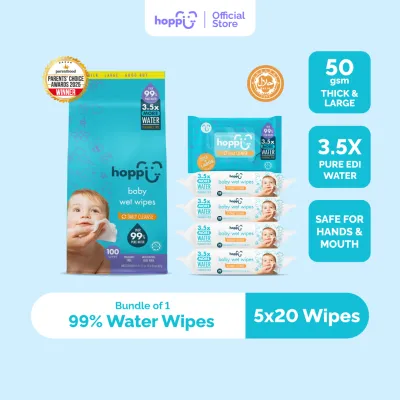
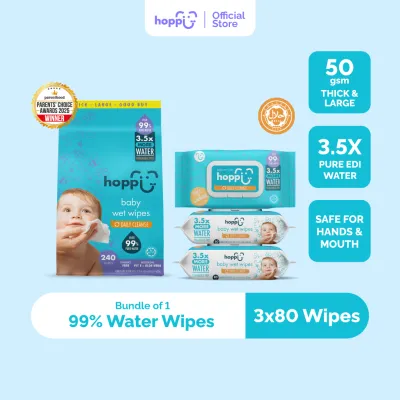
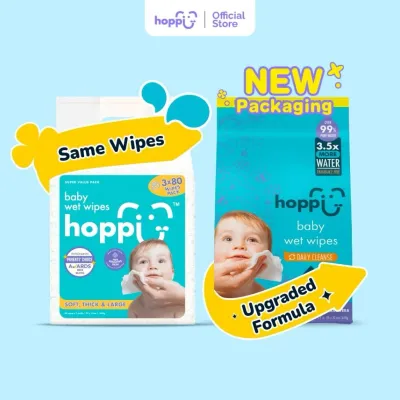
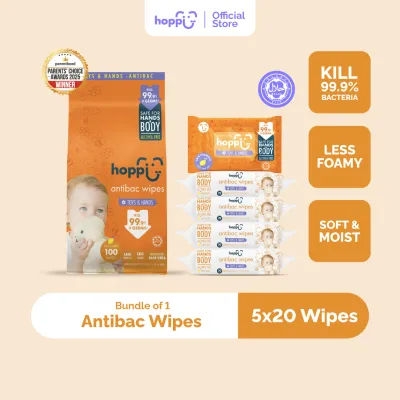
![[CARTON] Hoppi Premium Sensitive Wipes [German Dermatologically Tested] with Halal Certified (80 Wipes x 12 Packs)](https://img.lazcdn.com/g/p/9eedd3810aadd4bcdb20e459ac5665e9.jpg_400x400q80.jpg_.webp)
![Hoppi Premium Sensitive Wipes [German Dermatologically Tested] with Halal Certified (20 Wipes x 5 Packs)](https://img.lazcdn.com/g/p/9c319f74d24427eba3be4bcb3cf34116.jpg_400x400q80.jpg_.webp)
Prices are valid at publication and may change. Please refer to the product page for the latest price.
Given these physiological factors, parents cannot rely solely on front-of-pack marketing terms such as “hypoallergenic,” “organic,” or “ultra-gentle.” These terms are often used broadly across the baby care industry and are not subject to uniform, legally binding global standards. A product labeled as “gentle” may still contain trace ingredients, botanical extracts, or preservation agents that can trigger contact dermatitis in a highly sensitive newborn. The only reliable way to ensure a product’s suitability is to turn the package over and systematically verify the actual ingredient list against established pediatric skin safety guidelines.
How to Verify the Ingredient List on Hoppi Wipes
Verifying the safety of Hoppi wipes begins with locating and reading the complete ingredient list. By law in many regions, manufacturers must print the full formulation on the physical packaging, usually on the back or bottom panel near the barcode. If the print on the packaging is too small to read comfortably, or if you are purchasing the wipes through online marketplaces or ecommerce platforms, you should cross-reference the product details on the brand’s official digital channels or contact their customer support directly to request the complete ingredient declaration.

When reading the ingredient list, it is important to understand that ingredients are listed in descending order of concentration. The first few ingredients make up the vast majority of the wipe’s liquid formulation, while ingredients listed near the end are present in very small amounts, often representing preservatives, pH adjusters, or specialized skin conditioners. For baby wipes, the primary ingredient is almost always water (often listed as aqua, purified water, or EDI water), which serves as the solvent. Following water, you will typically find humectants designed to draw moisture into the skin, mild cleansing agents, and a preservation system to keep the wipes free from microbial contamination.
In addition to reading the ingredients, parents should look for specific dermatological testing claims on the packaging, such as “dermatologically tested” or “suitable for sensitive skin.” However, rather than taking these claims at face value, it is highly recommended to verify them through official manufacturer documentation. Reputable brands often make their safety certificates, dermatological test results, and ingredient safety data sheets available upon request. Checking these documents allows you to confirm that the wipes have undergone rigorous, independent clinical testing under the supervision of dermatologists before being marketed for newborn use.
Key Ingredients to Evaluate for Newborn Safety
When evaluating Hoppi wipes or any other baby wipe brand for newborn safety, there are three primary categories of ingredients that require careful scrutiny: fragrances, preservatives, and surfactants.
Fragrances and essential oils are among the most common causes of cosmetic contact allergy in both children and adults. Even natural essential oils, such as lavender, chamomile, or tea tree oil, contain complex chemical compounds that can act as potent sensitizers on a newborn’s delicate skin barrier. While these botanical extracts are often added to convey a soothing, natural image, they can easily trigger redness, itching, and allergic reactions. For newborns, the safest choice is always a completely fragrance-free wipe, which eliminates these unnecessary sensory additives entirely.
Preservatives are another critical category to evaluate. Because baby wipes are pre-moistened and stored in warm, dark diaper bags or nursery drawers, they are highly susceptible to the growth of harmful bacteria, mold, and yeast. A wipe without an effective preservation system poses a severe risk of infection, especially on compromised skin. However, the challenge lies in balancing microbial safety with skin compatibility. Parents should carefully check the ingredient list to ensure the wipes are free from harsh preservatives such as parabens, methylisothiazolinone (MI), methylchloroisothiazolinone (MCI), and formaldehyde-releasing agents. Instead, look for milder, food-grade preservatives or skin-compatible alternatives that effectively prevent contamination without causing chemical irritation.
Finally, evaluate the surfactants and cleansing agents used in the formulation. Surfactants are compounds that lower the surface tension of water, allowing it to mix with oils and lift away greasy stool, urine, and skin impurities. While some wipes rely solely on water, others incorporate mild surfactants to improve cleansing efficiency. Parents should verify that any surfactants used are ultra-mild and plant-derived, such as coco-glucoside or decyl glucoside, rather than harsh sulfates like sodium lauryl sulfate (SLS), which can strip the skin of its natural lipids and cause severe dryness.
How to Safely Introduce New Wipes with a Patch Test
Even if an ingredient list appears perfectly clean and free of known irritants, every newborn’s skin is unique, and individual sensitivities can still occur. To minimize the risk of a widespread adverse reaction, parents should always perform a simple, low-risk patch test before integrating a new brand of wipes into their daily diapering routine.
To conduct a patch test, select a small, healthy, and discreet area of your baby’s skin, such as the inner forearm or the upper thigh. Gently swipe a small corner of the wipe over this selected area, ensuring the liquid makes direct contact with the skin. Allow the area to air-dry naturally, and do not wash or wipe it clean immediately. Keep the area dry and free from other topical creams or lotions for the duration of the test.
Observe the test area closely over a period of 24 to 48 hours. This extended observation window is crucial because contact allergies often present as delayed hypersensitivity reactions, which may not appear immediately after exposure. Look for any signs of localized redness, tiny raised bumps, swelling, or dry, rough patches. If the skin remains completely clear and normal after 48 hours, it is generally safe to proceed with using the wipes on other parts of the baby’s body.
When using the wipes, your physical technique is just as important as the formulation itself. Always use a gentle, patting motion or single-direction sweeps rather than aggressive, back-and-forth scrubbing. Excessive friction physically disrupts the fragile stratum corneum, creating micro-tears in the skin barrier that make it far more vulnerable to chemical irritation and bacterial invasion.
Recognizing Skin Irritation and When to Stop Use
Despite your best precautions, skin irritation can still develop. Being able to recognize the early visual and behavioral indicators of an adverse reaction allows you to take prompt action before the condition worsens.
Visual signs of contact dermatitis or irritation typically include localized redness (erythema) that matches the shape of the wiped area, dry or peeling skin, raised red bumps, or a warm-to-the-touch sensation. Behavioral indicators are equally telling; a newborn experiencing skin discomfort will often become unusually fussy, cry during diaper changes, or show signs of distress when the diaper area is touched. If you observe any of these signs, you should stop using the wipes immediately.
Upon discontinuing the product, implement immediate, low-risk steps to soothe the irritated skin. Switch temporarily to using plain, lukewarm water and soft, sterile cotton balls or dry, reusable cotton wipes to cleanse the diaper area. After cleansing, allow the skin to air-dry completely before putting on a fresh diaper. In Singapore’s warm and humid climate, maximizing diaper-free air time is highly effective in reducing moisture buildup and promoting natural skin healing. You may also apply a thin layer of a fragrance-free, zinc oxide-based barrier cream to protect the compromised skin from the irritating effects of urine and stool.
While mild diaper irritation often resolves within a few days of removing the offending product, certain symptoms require professional medical evaluation. You should consult a pediatrician or a pediatric dermatologist immediately if the rash begins to blister, ooze, bleed, or develop yellowish crusts, as these are signs of a secondary bacterial or fungal infection. Additionally, seek professional help if the rash spreads rapidly beyond the diaper region, is accompanied by a fever, or fails to show any signs of improvement after three to four days of switching to plain water cleansing.
Frequently Asked Questions (FAQ)
Can I use Hoppi wipes on my newborn's face and hands?
Before using any baby wipe on your newborn’s face or hands, you must carefully check the manufacturer’s packaging for explicit instructions and clearance for these specific areas. The skin on a baby’s face, particularly around the mouth and cheeks, is significantly thinner and more sensitive than the skin on the diaper region. Furthermore, hands frequently go into a newborn’s mouth, meaning any residue left behind by the wipe could be accidentally ingested. If the packaging explicitly states the wipes are safe for face and hands, you may use them gently, but you must always avoid the delicate eye area and mucous membranes to prevent irritation.
Are water wipes always safer than formulated wipes for newborns?
While water-based wipes with minimal ingredients are highly appealing for their simplicity, they are not universally superior to formulated wipes, as both options involve distinct trade-offs. Wipes that consist of ninety-nine percent water still require a highly effective, food-grade preservation system to prevent the rapid growth of bacteria and mold once the package is opened. Furthermore, water alone is often insufficient for breaking down and lifting lipid-based diaper messes, such as breastmilk or formula stool. Formulated wipes that incorporate safe, ultra-mild surfactants and skin-conditioning humectants can cleanse these messes more efficiently with fewer wipes and less physical friction, which ultimately helps preserve the integrity of the newborn’s fragile skin barrier.

Community discussion
Share your experience or ask a question. Comments are reviewed before publication.