
Foldable child seats are legal to use in Singapore, provided they carry recognized international safety certifications and are appropriate for your child’s height and weight. While these compact restraints offer immense convenience for parents navigating Singapore’s public transport and ride-hailing network, their safety depends heavily on correct installation and matching the seat to your child’s developmental stage. Understanding how these portable options compare to traditional, rigid car seats is essential for making an informed decision that balances daily practicality with robust crash protection.
Understanding Singapore's Legal Requirements for Child Restraints
Under the Singapore Road Traffic Act, anyone under the height of 1.35 metres must be secured with an approved child restraint appropriate for their height and weight when travelling in a passenger vehicle. This law applies strictly to all private cars and private hire vehicles, such as those booked through ride-hailing applications. Failing to secure a child properly not only compromises their safety but also constitutes a traffic offence that carries composition fines and demerit points for the driver.
To remain compliant, parents must ensure that any foldable child seat they purchase is recognized by local traffic authorities. The Singapore Traffic Police and Land Transport Authority (LTA) recognize specific international safety standards rather than individual product brands. This means a foldable seat is only legally compliant if it bears a physical certification label from an approved international testing body, such as the United Nations Economic Commission for Europe (UN ECE) or the Federal Motor Vehicle Safety Standards (FMVSS) of the United States.
Products mentioned in this guide
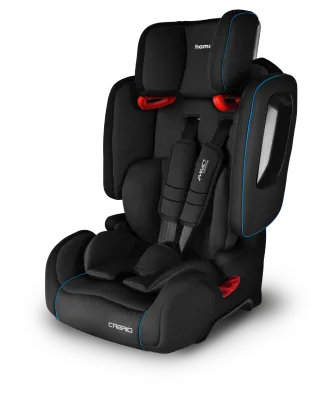
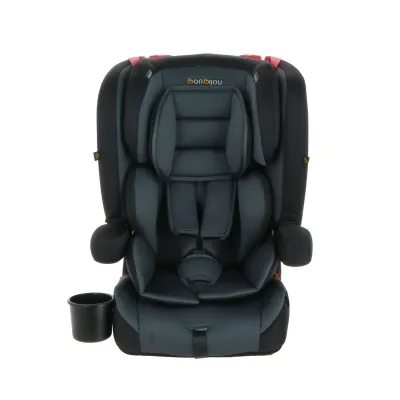
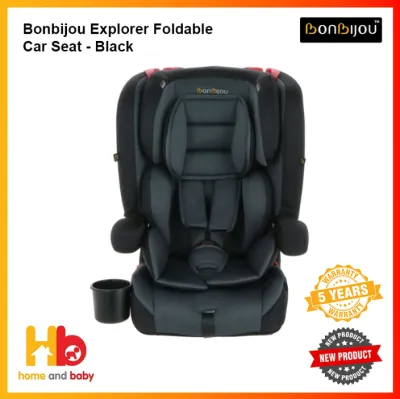
Prices are valid at publication and may change. Please refer to the product page for the latest price.
Before purchasing a portable seat, you should cross-reference the product’s technical specifications with the official guidelines provided by the Singapore Traffic Police. Many compact seats sold on online marketplaces are marketed as “travel safety vests” or “portable cushions” but lack the structural testing required to meet local legal definitions of a child restraint system (CRS). A compliant seat must be classified specifically as a child restraint and must match your child’s current weight and height category, rather than a generic age recommendation.
Safety Trade-offs of Foldable and Portable Designs
Foldable child seats are engineered to prioritize portability, which inevitably introduces structural trade-offs when compared to standard, heavy-duty car seats. Traditional car seats feature a rigid, single-piece plastic or metal shell designed to absorb and redirect crash forces away from the child. In contrast, foldable designs rely on hinges, joints, and flexible materials to collapse into a compact shape, which can introduce potential points of movement or structural flexing during a high-impact collision.

One of the most significant trade-offs is the level of side-impact protection. Standard car seats often feature deep side wings lined with energy-absorbing foam to protect a child’s head, neck, and torso from lateral forces. Highly compact, foldable seats frequently minimize or entirely omit these side wings to maintain a slim profile. This design choice means that while the seat may perform adequately in frontal impacts, it may offer less lateral containment in side-impact scenarios.
Furthermore, the performance of a foldable seat relies heavily on strict adherence to the manufacturer’s stated weight, height, and age limits. Because these seats have less structural mass, using them for a child who exceeds the specified limits can cause the folding mechanisms or harness anchorages to fail under stress. Conversely, placing a child who is too small into a foldable booster seat can result in poor seat belt positioning, increasing the risk of seat belt-induced injuries to the abdomen or neck.
Installation stability also varies greatly between foldable models and fixed seats. While some premium foldable seats feature ISOFIX connectors, many rely solely on the vehicle’s three-point seat belt for installation. A seat belt-secured foldable seat requires a tight, precise fit to prevent lateral shifting. Because ride-hailing vehicles vary in seat contour and belt tension, achieving a stable installation can be more challenging and time-consuming than clicking a seat into dedicated ISOFIX anchorages.
Essential Safety Certifications and Labels to Check
When shopping for a foldable child seat, you must look past marketing claims and inspect the physical product for authentic safety certification labels. In Singapore, the most widely recognized standard is the UN ECE R44/04 or the newer UN ECE R129 (often referred to as i-Size). Other accepted standards include the US FMVSS 213, the Canadian CMVSS 213, the Australian/New Zealand Standard AS/NZS 1754, and the Japanese JIS.
To verify authenticity, look for a permanent, high-contrast label—often orange or white—stitched into the fabric or molded directly into the plastic shell of the seat. For UN ECE certified seats, this label will display an “E” circle followed by a number indicating the country of certification, along with the specific approval number and the weight or height range for which the seat is approved. Be wary of generic stickers or printed certificates that do not match the physical seat, as these are common on unverified online marketplaces.
Additionally, reputable manufacturers will always provide visible safety warnings, a clear batch or serial number, and instructions on how to register the product for safety recalls. Before finalizing your purchase, search the manufacturer’s official website to confirm that the model is active and has not been subject to any safety recalls. If a product lacks a clear brand name, manufacturer contact information, or a traceable batch number, it should be avoided entirely, regardless of how convenient or affordable it appears.
Ideal Use Cases and Scenarios to Avoid
Foldable child seats excel in specific travel scenarios where carrying a bulky, standard car seat is highly impractical. For families in Singapore who do not own a personal vehicle and rely on private hire cars, carpooling, or occasional taxi rides, a lightweight, foldable seat is an invaluable tool. It allows parents to maintain a high level of safety while remaining compliant with local laws, without the burden of carrying a heavy, rigid seat through shopping malls or public transit.
These seats are also highly suitable for air travel and vacation use. Many foldable models are designed to fit easily into overhead airplane compartments or under passenger seats, making them convenient to transport to your destination. Once you arrive, having a portable seat ensures you can safely secure your child in rental cars or local transport services without relying on potentially outdated or poorly maintained rental seats.
However, there are several scenarios where foldable seats should be avoided in favor of standard, fixed car seats. For daily commuting in a family-owned vehicle, a dedicated, non-folding car seat with robust side-impact protection and ISOFIX installation is always the preferred choice. High-speed highway travel, such as long-distance driving on expressways, also demands the maximum level of structural protection available. Additionally, foldable seats are generally unsuitable for infants and very young toddlers who lack the neck strength and spinal development to sit upright without deep, contoured support.
Proper Installation and Usage Guidelines
To ensure a foldable child seat provides the protection it was designed for, you must install and use it in strict accordance with the manufacturer’s instruction manual. Because foldable seats have unique joint mechanisms and belt paths, assuming you know how to install one based on experience with standard seats can lead to dangerous errors. Always keep the physical manual handy or download a digital copy onto your mobile device for quick reference during travel.
When installing the seat, pay close attention to the routing of the vehicle’s seat belt. The belt must pass through the designated green or red guides precisely as instructed, without any twists or slack. If the seat features an internal harness, perform the “pinch test” to ensure proper tightness: if you can pinch any webbing between your fingers at the child’s collarbone, the harness is too loose and must be tightened further.
Proper child posture is critical for the seat to function correctly during an impact. Ensure your child sits fully back against the seat shell, with their head supported and their feet positioned naturally. If you notice the seat shifting excessively on the vehicle upholstery, or if the vehicle’s seat belt does not lock securely, you should reinstall the seat or try a different seating position in the vehicle. If you are unsure about the installation, consider consulting a certified child passenger safety technician to verify the fit.
Frequently Asked Questions (FAQ)
Are Children Exempt From Car Seat Rules in Taxis and Private Hire Cars?
In Singapore, standard street-hailed taxis are legally exempt from the child restraint requirement, meaning children under 1.35 metres can travel in them using only the vehicle’s seat belt. However, private hire cars booked via mobile applications are not exempt from this rule, and children must be secured in an appropriate restraint. Despite the legal exemption for traditional taxis, physical laws of motion remain the same; using a portable child seat in every commercial vehicle is highly recommended to protect your child from sudden braking or collisions.
Do Foldable Child Seats Have an Expiration Date?
Yes, foldable child seats have a limited lifespan and typically expire between six to ten years from their date of manufacture. You can find this date stamped directly onto the plastic shell of the seat or printed on a white tracking label. Over time, exposure to Singapore’s high heat and humidity can cause the plastic components to become brittle, while the webbing and folding joints can degrade from regular use, significantly reducing the seat’s ability to withstand crash forces.
Community discussion
Share your experience or ask a question. Comments are reviewed before publication.