
The safety of a fisher price baby walker depends entirely on its design and how it is used. While traditional sit-in baby walkers are associated with significant safety risks, the push-along activity walkers that dominate Fisher-Price’s current product range are widely considered a much safer option. However, safety is never absolute. It relies on your child’s developmental readiness, the specific safety features of the model, and how thoroughly you childproof your home environment. By understanding the structural differences and implementing essential supervision rules, you can make an informed decision that supports your baby’s physical development without exposing them to unnecessary hazards.
Sit-In vs. Push Walkers: Understanding the Safety Difference
To evaluate safety, you must first distinguish between the two primary types of baby walkers available on the market: traditional sit-in models and modern push-along models.
Sit-in walkers feature a suspended fabric seat inside a wheeled frame. The baby sits inside with their feet touching the floor, allowing them to glide around rapidly. This design is widely discouraged by pediatricians and safety organizations globally. It grants a baby high-speed mobility before their muscles, coordination, and cognitive skills are ready to handle it. This leads to severe risks, such as falling down stairs, tipping over on uneven surfaces, or reaching dangerous hazards like kitchen counters, hot liquids, or electrical cords that would otherwise be out of reach.
Products mentioned in this guide


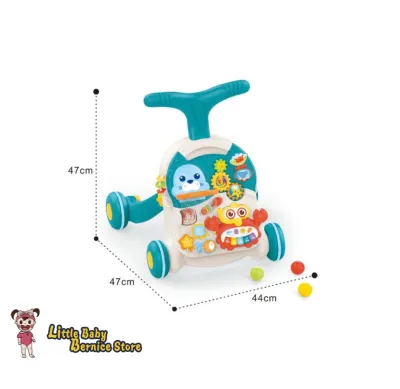
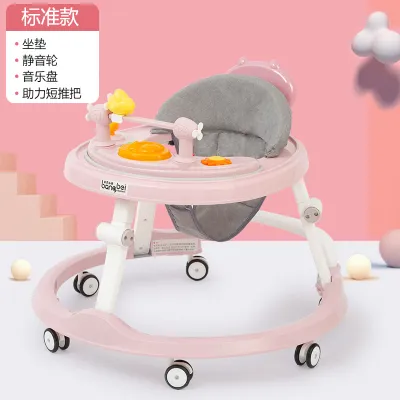
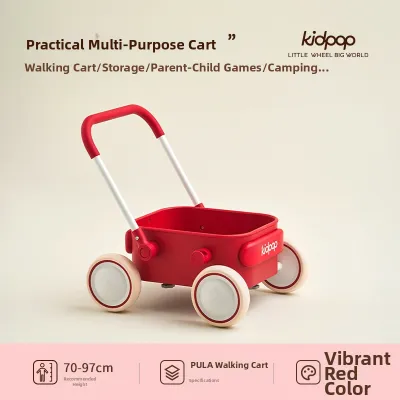
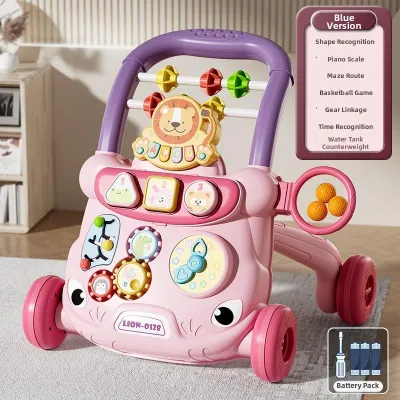
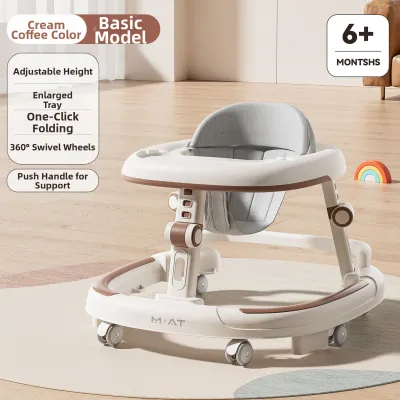
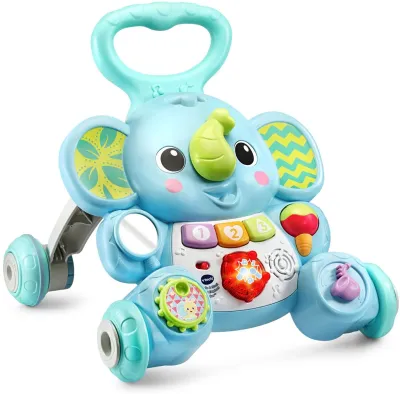
Prices are valid at publication and may change. Please refer to the product page for the latest price.
In contrast, push-along activity walkers are upright toys with a handle and wheels. The baby stands behind the toy, holds onto the handle, and pushes it forward while walking. Fisher-Price’s current baby walker lineup consists almost entirely of these push-along models. Because these toys do not suspend the baby or artificially force them into an upright position, they are widely considered a much safer alternative when used correctly and under supervision.
Rather than providing false support that can alter natural hip and leg alignment, a push walker requires the baby to actively engage their core, balance, and leg muscles. This ensures that their mobility matches their actual physical strength and developmental stage, rather than bypassing these crucial milestones.
Essential Safety Features to Verify on a Fisher Price Baby Walker
When choosing or inspecting a fisher price baby walker, you should look for specific physical design elements that ensure stability, control, and overall safety.

Wheel Resistance One of the most critical features to check is wheel friction control. On many modern push walkers, the wheels are equipped with adjustable resistance settings or clicking mechanisms. This prevents the walker from rolling away too quickly when a baby applies their weight, which could otherwise cause them to slip and fall forward.
Base Stability A safe push walker must have a wide, stable wheel base. The center of gravity should be low and distributed evenly. When you inspect a model, check if the base is significantly wider than the handle. This design prevents the toy from tipping backward or sideways when your baby leans heavily on the handlebar or pulls themselves up using the frame.
Handle Design The handlebar should be sturdy, textured for a secure grip, and positioned at a height that allows your baby’s elbows to bend slightly. A handle that is too high can cause your baby to overextend and lose balance, while one that is too low can encourage poor posture and slouching.
Verification Steps Before purchasing or using any walker, you must verify the manufacturer’s official specifications. Do not rely on the product name or general category descriptions. Always check the packaging, instruction manual, or the official Fisher-Price website for:
- The recommended age range: Typically starting around 6 to 9 months, or when the baby can stand independently.
- Maximum weight limits: To ensure the toy can support your child's weight safely.
- Safety certification labels: Such as ASTM or EN standards, which indicate the product has undergone rigorous stability and materials testing. Always verify if there are any active product recalls or safety notices for your specific model before use.
Childproofing Your Singapore Home for a Push Walker
Adapting your living space to accommodate a push walker is essential for preventing common household accidents, especially within typical Singaporean residential layouts.
Flooring Considerations Modern Singaporean homes, particularly HDB flats and condominiums, frequently feature polished ceramic tiles, vinyl, or smooth laminate flooring. While easy to clean, these surfaces offer very little traction. A push walker can easily glide too quickly on these slick floors, causing the baby to lose their footing. To mitigate this risk, consider placing large, non-slip foam play mats or firmly secured area rugs in the designated walking zone. This adds necessary friction to slow down the wheels and provides a cushioned landing pad in case of falls.
Stairs and Drop-offs Multi-story homes, houses with split-level living rooms, or apartments with step-down balconies and wet kitchens present severe tipping hazards. You must install secure, hardware-mounted safety gates at both the top and bottom of all staircases. Ensure that balcony doors and kitchen entryways remain firmly closed or barricaded when your baby is using the walker, as even a small drop of a few centimeters can cause the walker to tip over.
Hazard Clearance Before letting your baby push their toy, perform a thorough sweep of the floor and low-lying areas. Use this checklist to clear the path:
- Electrical cords and cables: Secure them along baseboards to prevent the walker's wheels from catching and tripping.
- Small objects: Clear away toys, coins, or keys that could cause the walker to halt abruptly or present choking hazards.
- Sharp edges: Cover the corners of low coffee tables, TV consoles, and cabinets with soft corner guards.
- Reachable hazards: Ensure that hot drinks, heavy decorative items, or tablecloths that can be pulled down are kept far out of reach, as the walker allows your baby to stand taller and reach higher than usual.
Doorways and Thresholds Transition strips or raised door thresholds between rooms can cause the walker’s wheels to catch suddenly. If the walker stops abruptly while the baby is moving forward, the momentum can cause them to tumble over the handlebar. Always monitor your baby closely when they navigate between different rooms, or limit their play to a single, flat, threshold-free area.
Developmental Readiness and Active Supervision Rules
Introducing a push walker at the right time and establishing strict usage rules are just as important as the physical features of the toy itself.
Readiness Milestones Age is only a general guideline; developmental milestones are the true indicator of readiness. Your baby should not use a push walker until they can independently pull themselves up to a standing position using furniture and bear their full weight on their legs. Introducing a walker too early to force walking before their muscles are ready can strain their developing joints and lead to poor walking habits, such as walking on tiptoes. If you have concerns about your child’s physical development or motor skills, consult a qualified pediatrician or pediatric physiotherapist before introducing mobile toys.
Active Supervision A push walker is not a babysitter. Active supervision means staying within arm’s reach of your baby at all times during use. You must be close enough to intervene instantly if the walker speeds up, approaches an obstacle, or if your baby begins to lose their balance. Avoid distractions like mobile phones or household chores while your baby is on the move.
Usage Limits Limit your baby’s walker sessions to short intervals, such as 10 to 15 minutes at a time. Prolonged use can lead to muscle fatigue, frustration, and over-reliance on the toy for balance, which can actually delay independent walking. Encourage plenty of barefoot floor play, crawling, and cruising along furniture, as these natural movements are essential for developing spatial awareness and foot strength.
Storage When playtime is over, store the walker in a secure closet or an area completely out of your baby’s reach. Leaving the walker unattended in the living room invites unsupervised climbing, tipping, or pulling, which can result in injuries when you are not actively watching.
Frequently Asked Questions (FAQ)
Are push walkers recommended over sit-in walkers for learning to walk?
Yes, pediatricians and child development experts generally recommend push walkers over sit-in models. Push walkers encourage natural physical progression by allowing babies to practice balance, weight-bearing, and coordination at their own pace. Because the baby is not suspended in a seat, they learn to control their own center of gravity and use their feet flat on the floor, which builds the necessary muscle strength and spatial awareness for independent walking.
What should I do if the push walker moves too fast on my tiles?
If the walker glides too quickly on your tiled or vinyl floors, first check if the model has adjustable wheel resistance or tension screws that you can tighten to slow down the wheels. If your model does not have this feature, the safest solution is to restrict its use to carpeted areas, large foam play mats, or non-slip area rugs. These textured surfaces naturally increase friction, slowing the walker down to a manageable pace while providing a safer, cushioned environment for your baby.
Community discussion
Share your experience or ask a question. Comments are reviewed before publication.