
Many Britax car seats are fully compliant and legal for use in Singapore, but compliance is strictly model-specific. The Singapore Land Transport Authority (LTA) does not issue a unique domestic safety certification for child car seats. Instead, the government legally recognizes specific, rigorous international safety standards. If your particular Britax model carries an official certification label from one of these approved global frameworks, it is entirely legal to use on Singapore roads.
To ensure your child is traveling legally and safely, you must physically inspect the car seat for its original, intact certification label. Because Britax manufactures seats for various global markets—including Europe, the United States, and Australia—different models conform to different standards. Understanding how these international certifications align with Singapore’s traffic laws is the first step in choosing the right seat for your vehicle.
Understanding Singapore's Legal Requirements for Child Car Seats
Singapore’s Road Traffic Act mandates strict rules regarding child passenger safety. Under current regulations, any passenger under 1.35 metres in height must be secured using an approved child restraint system, a booster seat, or an adjustable seatbelt suitable for their height and weight. This law applies to all private motor vehicles, including private hire cars like Grab and Gojek. While public buses and traditional street-hailed taxis are legally exempt due to practical operational reasons, safety experts strongly advise using a portable child restraint in these vehicles whenever possible.
Products mentioned in this guide
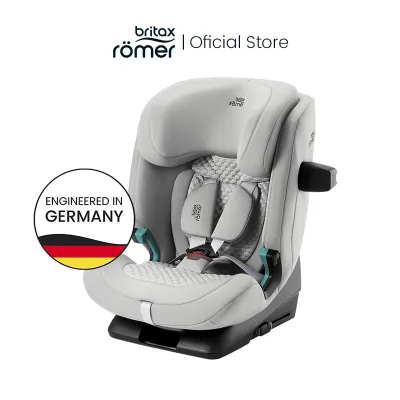
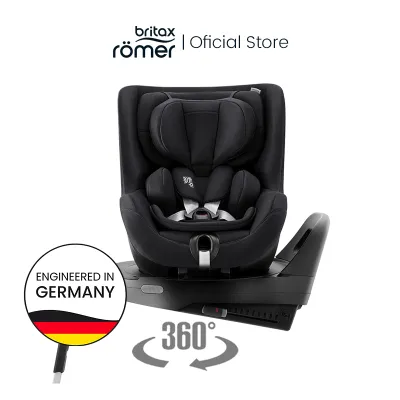
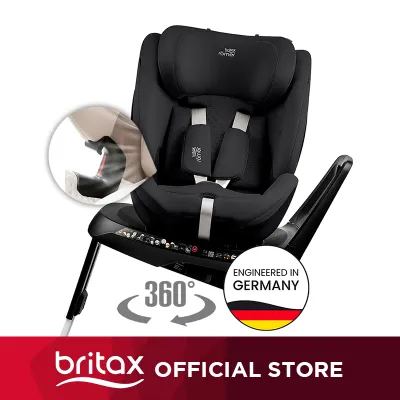
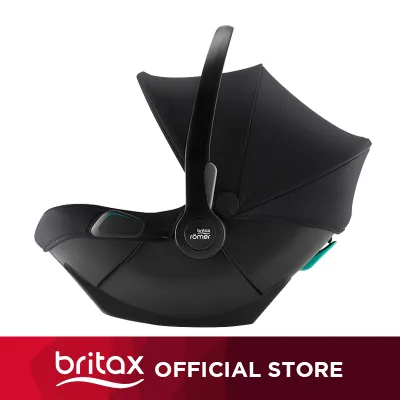
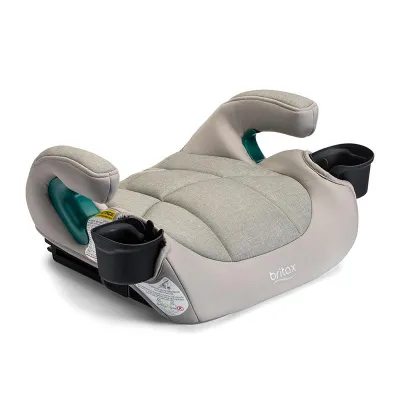
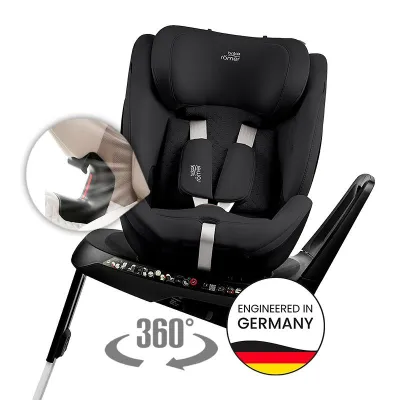
Prices are valid at publication and may change. Please refer to the product page for the latest price.
Rather than testing and certifying car seats locally, Singapore’s Land Transport Authority recognizes several major international safety standards. These approved standards include:
- UN ECE R44/03 and R44/04: The older European standard, which categorizes car seats by the child's weight.
- UN ECE R129 (i-Size): The newer European standard, which categorizes seats by the child's height and introduces mandatory side-impact testing.
- US FMVSS 213: The United States Federal Motor Vehicle Safety Standard for child restraint systems.
- AS/NZS 1754: The joint Australian and New Zealand safety standard.
- Japanese Technical Standard: The domestic safety standard approved by Japan's Ministry of Land, Infrastructure, Transport and Tourism.
Singapore is currently in a transitional phase where both the older weight-based ECE R44/04 and the newer height-based ECE R129 (i-Size) standards remain legally valid. The ECE R129 standard was developed to simplify the selection process for parents and minimize installation errors by focusing on the child’s height rather than weight. It also requires rigorous side-impact crash testing, which was not a mandatory part of the older ECE R44/04 evaluation. If you are purchasing a new Britax seat, choosing one certified under ECE R129 offers a modern safety framework, but an ECE R44/04 certified seat remains fully legal as long as your child fits within the specified weight limits.
How to Verify the Certification Label on Your Britax Car Seat
Before installing any Britax car seat in your vehicle, you must locate and verify its physical certification label. This label is the only legal proof of compliance if you are stopped by traffic police in Singapore. It is typically a high-visibility orange or white sticker permanently affixed to the back, base, or side of the car seat’s plastic shell. If this label is missing, faded, or torn, the seat cannot be legally verified as compliant.

Reading an ECE R129 (i-Size) Label
When inspecting a Britax seat certified under the newer European standard, look for the following key details on the label:
- The i-Size Logo: A distinct icon showing a child seat with the letter "i" next to it.
- Height Range: A clear indication of the height limit (for example, "40 cm – 105 cm") and the maximum child weight allowed for the seat.
- The Approval Mark: A circle containing the letter "E" followed by a number. This number indicates the European country that granted the certification (for instance, "E1" represents Germany, where many Britax Romer models are tested and approved).
- Approval Number: A unique sequence of numbers starting with "01", "02", or "03", which indicates the specific revision of the R129 standard the seat meets.
Reading an ECE R44/04 Label
For Britax seats certified under the older weight-based standard, the orange label contains different parameters:
- Weight Group: The label will specify the weight category, such as "Group 0+" (up to 13 kg) or "Group 1/2/3" (9 kg to 36 kg).
- The "E" Mark: Similar to the R129 label, a circle with an "E" and a country code must be visible.
- Standard Version: The approval number must begin with "04" or "03". Older versions, such as "01" or "02", are obsolete and no longer legally compliant for use in Singapore.
Parents must exercise extreme caution when considering second-hand or pre-loved Britax car seats. If the certification sticker has been peeled off, washed away, or damaged beyond legibility, you should not use the seat. Without this physical proof, you cannot verify the seat’s regulatory compliance, its manufacturing date, or its specific weight and height boundaries. Furthermore, second-hand seats carry invisible risks, such as internal structural stress from a previous collision or material degradation that may not be visible to the naked eye.
Britax Engineering Features and Regulatory Safety Standards
Britax integrates several proprietary engineering features across its product lines to meet and exceed the performance criteria required by international testing bodies. While marketing terms may vary by region, the underlying physical designs are engineered to satisfy specific dynamic crash test parameters.
ISOFIX Compatibility
Many modern Britax seats feature rigid ISOFIX connectors that latch directly onto the standard anchor points built into your vehicle’s chassis. Under the ECE R129 (i-Size) standard, ISOFIX is highly emphasized because it dramatically reduces installation errors compared to traditional seatbelt installations. The rigid connection ensures the seat remains securely anchored during both normal driving and sudden deceleration, minimizing lateral and forward movement.
Side Impact Protection
To meet the strict lateral collision testing mandated by the ECE R129 standard, Britax utilizes specialized side-impact management systems, often marketed as Side Impact Cushion Technology (SICT). These components consist of energy-absorbing materials or deployable cushions on the side of the seat shell. In the event of a side collision, these features are designed to deform and absorb a portion of the impact energy before it reaches the child, while the deep, padded side wings help contain the child’s head and torso.
5-Point Harness Systems
For infant and toddler models, Britax employs a 5-point harness system designed to distribute crash forces across the strongest parts of a child’s skeletal structure: the shoulders, hips, and pelvis. During a collision, the harness restrains the child within the protective shell of the seat, preventing them from being thrown forward. The harness straps are designed to stretch slightly to absorb energy, reducing the immediate force exerted on the child’s body.
It is important to remember that proprietary marketing names are not a substitute for official certification. A seat’s ability to protect your child relies on its overall tested performance under standardized laboratory crash conditions. Always cross-reference the specific model’s user manual and official certification documents to verify how these engineering features perform within the recognized safety frameworks.
Installation and Usage Boundaries for Maximum Protection
Even the most highly certified Britax car seat cannot provide its engineered level of protection if it is installed incorrectly or used outside its design limits. Legal compliance on paper must always be matched by precise, real-world execution inside your vehicle.
First, always consult both your Britax user manual and your vehicle’s manufacturer handbook before installation. Not every certified car seat fits perfectly into every car model. You must verify that your vehicle’s seat geometry, seatbelt length, and ISOFIX anchor locations are fully compatible with your specific Britax model. Many Britax seats require a top tether strap or a support leg to prevent the seat from rotating forward during an impact; you must verify that your vehicle’s floorboard and seatback are approved for these components.
Second, pay close attention to the orientation of the seat. The ECE R129 standard legally mandates that children must travel in a rear-facing position until they are at least 15 months old. Rear-facing seats support the child’s head, neck, and spine far more effectively during a frontal collision by distributing the forces across the entire back of the seat. Do not transition your child to a forward-facing position prematurely, even if they have reached the minimum legal age, as long as they remain within the height and weight limits specified for rear-facing travel on your seat’s certification label.
Finally, establish clear stopping conditions for your car seat. You must cease using any Britax car seat immediately if:
- The child's head or weight exceeds the maximum limits printed on the physical certification label.
- The seat has been involved in a moderate-to-severe vehicle collision, as invisible micro-fractures in the plastic shell can compromise its structural integrity in a subsequent impact.
- The seat has reached its manufacturer-specified expiration date, which is typically 6 to 10 years from the date of manufacture due to the natural degradation of plastic and foam materials in Singapore's hot, humid climate.
Frequently Asked Questions (FAQ)
Can I use a Britax car seat purchased overseas in Singapore?
Yes, you can legally use a Britax car seat purchased overseas in Singapore, provided it carries an intact, original certification label from one of the international safety standards recognized by the LTA, such as UN ECE R44/04, UN ECE R129, or US FMVSS 213. However, you must inspect the label carefully before use. Models manufactured for specific regional markets may carry localized certifications that are not recognized under Singapore law. Additionally, ensure that the seat’s installation mechanisms and dimensions are fully compatible with your vehicle’s seatbelts or ISOFIX anchors.
Does Singapore law require ISOFIX for car seat installation?
No, Singapore law does not mandate the use of ISOFIX for child car seat installation. Securing an approved, compliant car seat using your vehicle’s standard three-point adult seatbelt is fully legal and safe, provided the installation is performed exactly as detailed in the Britax instruction manual. While ISOFIX is widely recommended by safety experts because it simplifies the installation process and significantly reduces the risk of user error, a properly executed seatbelt installation offers equivalent compliance and protection.
What should I do if the certification label on my Britax seat is missing?
If the certification label on your Britax car seat is missing, faded, or damaged so that it cannot be read, you should stop using the seat immediately. Without the physical label, you cannot prove its legal compliance to authorities, and you cannot verify the critical height and weight limits required for safe operation. You should contact Britax customer support directly, providing them with the seat’s exact model name, serial number, and manufacture date—which are often stamped directly into the plastic shell—to request official verification or replacement documentation.
Community discussion
Share your experience or ask a question. Comments are reviewed before publication.