
To determine if a Bebelock car seat is compliant with Singapore’s car seat safety regulations, you must verify that the specific model carries an officially recognized international safety certification label. In Singapore, child restraint systems are not approved by brand name alone; instead, traffic authorities require individual models to meet strict international testing standards. Before using any Bebelock model on local roads, parents must locate the physical certification sticker on the seat and cross-reference its specifications with local legal mandates.
Understanding Singapore's Legal Requirements for Child Car Seats
Under the Singapore Road Traffic Act, all passengers under 1.35 metres in height must be properly secured using an approved child restraint appropriate for their height and weight, or use a booster seat with an adjustable seatbelt. This law applies to all private passenger vehicles traveling on local roads. Failing to secure a child properly can result in legal penalties for the driver, including composition fines and demerit points, as well as significantly increased risks during a collision.
The Traffic Police and Land Transport Authority recognize specific international safety standards rather than conducting independent local testing. These recognized standards include the United Nations Economic Commission for Europe (UN ECE) standards, specifically UN ECE R44/04 and the newer UN ECE R129 (commonly known as i-Size). Other recognized standards include the Federal Motor Vehicle Safety Standards (FMVSS 213) from the United States, the Australian/New Zealand Standard (AS/NZS 1754), and the Japanese Industrial Standards (JIS).
Products mentioned in this guide
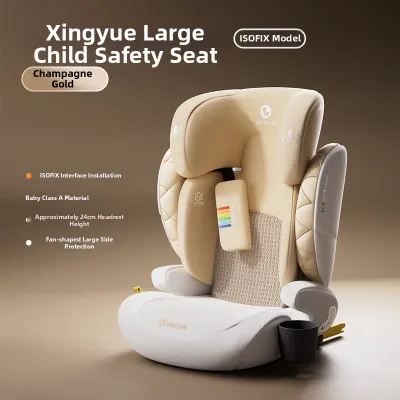
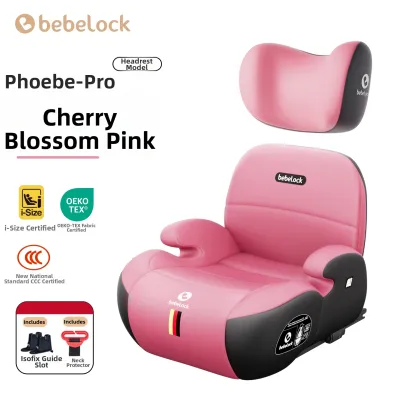
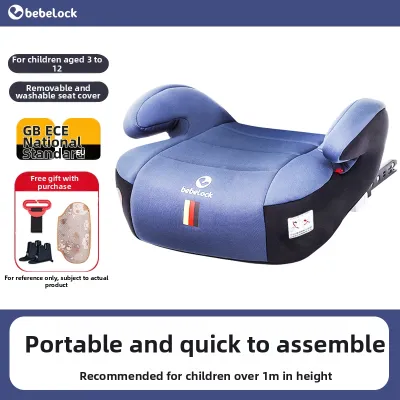
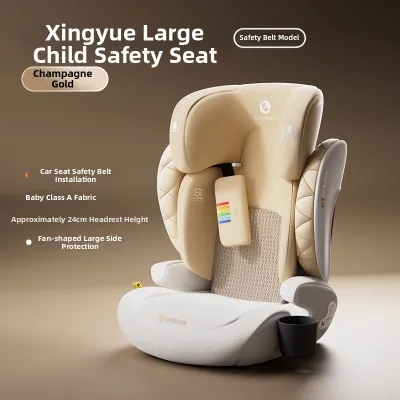
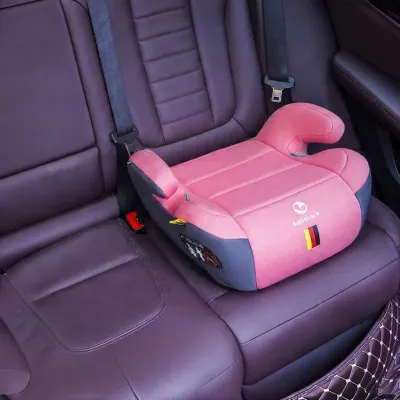
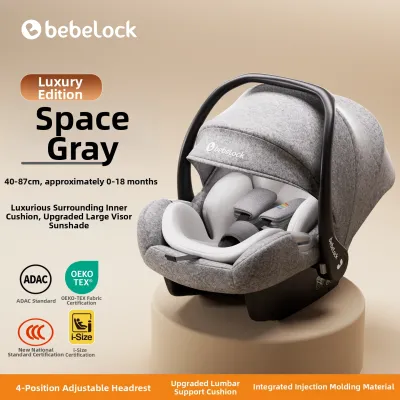
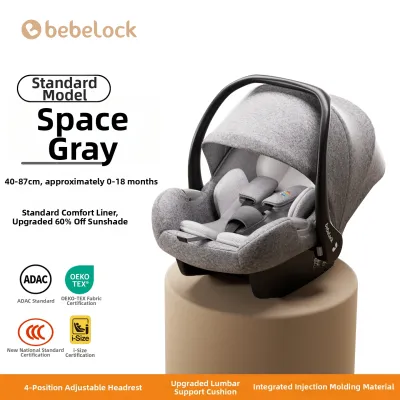
Prices are valid at publication and may change. Please refer to the product page for the latest price.
It is crucial to distinguish between these legally recognized standards and general manufacturer marketing claims. A brand may advertise a seat as “crash-tested,” “highly secure,” or “ergonomically optimized,” but these phrases carry no legal weight under Singapore law. Only a valid, physical certification label from an approved international testing body proves that the seat is legally compliant for use on Singapore roads. Parents must verify the presence of these official marks before purchasing or installing any child restraint system.
How to Verify Compliance Labels on a Bebelock Car Seat
To confirm whether your Bebelock car seat is legally compliant, you must perform a physical inspection of the unit. Look for a highly visible, usually orange, certification label. This sticker is typically affixed directly to the plastic shell of the seat, often located on the underside of the base, the rear panel, or along the side wings. If this label is missing, defaced, or entirely absent, the seat cannot be verified as legally compliant.

When you locate the orange label, you must decode the information printed on it to ensure its validity. A standard UN ECE R44/04 or R129 label contains several critical pieces of data. First, look for the standard code, which will clearly state “ECE R44/04” or “R129”. Second, identify the approval number, which usually begins with “04” for R44/04 models, indicating the revision series. Third, look for a circle containing the letter “E” followed by a number (such as E1 for Germany or E4 for the Netherlands), which indicates the country where the certification was granted.
The label also specifies the weight or height category for which the seat is approved. For R44/04 labels, this is expressed as a weight range (such as 0-18 kg or Group 0+/1). For R129 labels, this is expressed as a height range (such as 40 cm to 105 cm) alongside a maximum child weight limit. You must verify that your child’s current physical measurements fall strictly within these specified limits, as using a seat outside its approved range compromises its protective capabilities.
Once you have examined the physical label, cross-reference this information with the printed user manual and any documentation provided by the official retailer. Ensure that the model name, approval number, and weight or height limits on the physical sticker match the documentation exactly. If there are discrepancies between the sticker and the manual, or if the sticker appears tampered with, the seat’s compliance remains unverified and should not be used.
Evaluating Practical Safety Features Beyond Legal Minimums
While legal compliance is the baseline requirement, parents should also evaluate the practical safety features and daily usability of a Bebelock car seat. The harness mechanism is a primary safety component. Most compliant seats for infants and toddlers utilize a 5-point harness system, which secures the child at the shoulders, hips, and crotch. This design distributes crash forces across the strongest parts of the child’s body. Ensure the harness is easy to adjust and fits snugly over your child’s shoulders without twisting.
Side-impact protection is another critical feature to evaluate. Look for deep, energy-absorbing side wings lined with materials like Expanded Polystyrene (EPS) or Expanded Polypropylene (EPP) foam. These materials are designed to absorb impact forces and protect the child’s head, neck, and torso in the event of a lateral collision. Adjustable headrests are also valuable, as they allow you to position the side-impact protection correctly as your child grows.
Installation compatibility is vital for the seat to perform as intended. Car seats generally install using either the vehicle’s 3-point seatbelt or the ISOFIX system. ISOFIX anchorages provide a rigid, mechanical connection between the car seat and the vehicle chassis, reducing the risk of installation errors. Before purchasing, check your vehicle’s manual to confirm if it has ISOFIX anchor points and consult the car seat manufacturer’s vehicle fit list to ensure compatibility with your specific car model.
Caregiver supervision and proper adjustment are essential for ongoing safety. Regularly check that the harness is tightened correctly (using the “pinch test” at the collarbone) and that the seat remains tightly secured to the vehicle. If the car seat is ever involved in a moderate to severe collision, it must be replaced immediately, as invisible structural damage can compromise its ability to protect your child in a future incident.
Steps to Take If Certification Is Missing or Unclear
Using a child restraint system that lacks clear, verifiable certification poses significant safety and legal risks. In a collision, an uncertified seat may fail structurally, leading to severe injury. Legally, operating a vehicle with an uncertified child restraint can result in traffic fines and demerit points. If you cannot find a certification label on your Bebelock car seat, or if the markings are unclear, do not install or use the seat.
Instead, contact the manufacturer or the authorized local distributor directly. Request the official Certificate of Conformity or test reports associated with your specific model number. Legitimate distributors should be able to provide documentation linking the model to a recognized international standard. If they cannot provide this proof, the seat should be treated as uncertified.
If you purchased the seat from an online marketplace or a physical retail store and cannot obtain proof of compliance, initiate a return, exchange, or refund process immediately. Most reputable e-commerce platforms and local retailers have consumer protection policies for items that do not meet local legal safety standards. Clearly state that the product lacks the mandatory safety certification labels required by Singapore traffic regulations when requesting a refund.
Frequently Asked Questions (FAQ)
At what height or age can a child transition out of a car seat in Singapore?
In Singapore, children must use an approved child restraint or booster seat until they reach a height of 1.35 metres, regardless of their age. Once a child exceeds 1.35 metres, they may legally transition to using the vehicle’s standard adult seatbelt. To ensure a safe fit, perform a physical check: the lap belt must rest low across the hips and upper thighs, and the shoulder belt must cross the center of the chest and collarbone, never resting against the neck or face.
Can I legally use a Bebelock car seat purchased overseas?
You can legally use an overseas-purchased Bebelock car seat in Singapore only if it carries a physical certification label from one of the internationally recognized standards accepted by local authorities, such as UN ECE R44/04 or R129. If the imported model only carries region-specific certifications that are not recognized under Singapore’s Road Traffic Act, it is not legally compliant. Additionally, parallel imports may lack local warranty support and clear English instruction manuals, which are critical for correct installation and safety.
Community discussion
Share your experience or ask a question. Comments are reviewed before publication.