
When preparing your nursery in Singapore, choosing a safe crib is one of the most critical decisions you will make. While Babyhood is a widely recognized brand in the nursery furniture market, evaluating whether a Babyhood crib is safe requires looking beyond the brand name. The safety of any specific crib depends on its compliance with recognized international safety standards, correct assembly, and adherence to safe sleep practices.
No crib can be declared universally safe based solely on brand reputation. Every model has unique specifications, weight limits, and design features that you must verify against your child’s developmental stage. To ensure your infant’s safety, you must inspect the specific model’s documentation, regularly check the hardware, and strictly follow established safe sleep guidelines.
Safety is an ongoing practice that does not end once the crib is set up. As your baby grows, their physical capabilities change, which introduces new risks. Regular hardware inspections, monitoring for physical wear, and strictly adhering to the manufacturer’s weight and height limits are essential to maintaining a secure sleeping environment over time.
Products mentioned in this guide
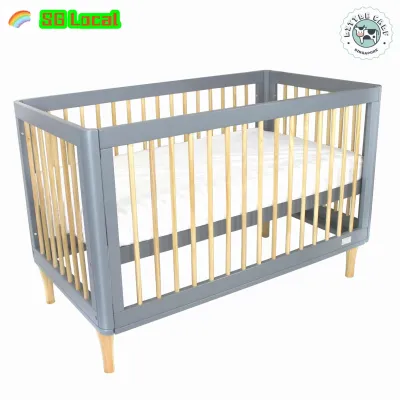
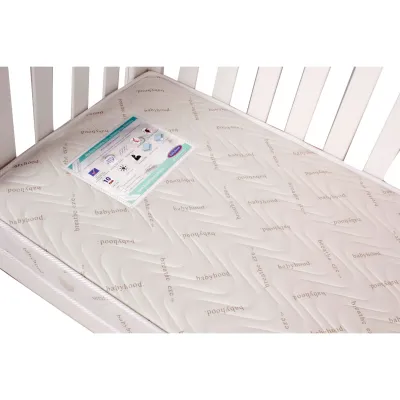
Prices are valid at publication and may change. Please refer to the product page for the latest price.
Key Safety Standards for Baby Cribs in Singapore
Singapore does not have a single domestic safety certification mandatory only for cribs; instead, Enterprise Singapore and local consumer protection frameworks rely heavily on established international safety standards. When shopping for a Babyhood crib, you should verify which of these major international standards the specific model complies with.
European Standard (EN 716) This standard is highly respected globally and governs children’s cots and folding cots for domestic use. It outlines strict requirements for structural stability, the height of the cot sides, and the distance between slats. It also details testing methods to ensure materials do not splinter and that there are no small parts that could present a choking hazard.
US Standards (ASTM F1169 and ASTM F406) The American Society for Testing and Materials (ASTM) sets rigorous benchmarks. ASTM F1169 applies to full-size baby cribs, while ASTM F406 covers non-full-size cribs and playpens. These standards mandate extensive testing for structural integrity, side-strength, mattress support hardware, and the prevention of head or limb entrapment.
Australian and New Zealand Standard (AS/NZS 2172) Given that Babyhood is an Australian brand, many of its models are designed to meet AS/NZS 2172. This standard is famous for its exceptionally strict rules regarding drop-side mechanisms, structural strength, and the elimination of potential snag points. It also enforces rigorous limits on toxic substances in paints, lacquers, and finishes.
These standards are not mere formalities; they dictate the physical geometry of the crib. For instance, they ensure that slats are spaced closely enough to prevent a baby’s head from slipping through, and they require that the materials used are free from harmful lead or volatile organic compounds (VOCs). Always consult the manufacturer’s product manual or official specifications sheet to confirm which of these standards apply to your chosen model.
Identifying and Mitigating Common Crib Hazards
Even when a crib is built to high standards, understanding the physical hazards associated with nursery furniture allows you to perform your own safety checks at home.

Slat Spacing One of the most critical structural safety features of any crib is the distance between the vertical slats. To prevent a baby’s head, neck, or torso from becoming trapped, the gap between slats must be no more than 60 millimetres (approximately 2.36 inches). You can easily check this at home using a standard measuring tape. If a soda can can fit through the slats, the spacing is too wide and poses a severe entrapment risk.
Mattress Fit A poorly fitting mattress creates dangerous gaps where an infant can become wedged, leading to suffocation or entrapment. To test this, place the mattress inside the crib and apply the “two-finger rule.” If you can insert more than two fingers between the edge of the mattress and the inner crib frame, the mattress is too small for that specific crib. Always verify the manufacturer’s recommended mattress dimensions, which are typically printed on a warning label on the crib base.
Drop-Side Mechanisms Movable drop-sides were historically popular for making it easier to lift a baby out of the crib. However, due to safety risks associated with mechanical failures, warping, or incorrect assembly that led to infant entrapment, drop-side cribs have been banned or heavily restricted in several jurisdictions, including the United States. If you choose a Babyhood model with a drop-side feature, you must exercise extreme caution. Ensure the mechanism operates smoothly without sticking, inspect the moving parts weekly for wear, and strictly follow the manufacturer’s assembly instructions. If you prefer to minimize risk, prioritizing a fixed-side crib is a highly stable and safer alternative.
Corner Posts and Hardware Inspect the top corners of the crib. Corner posts should be virtually flush with the end panels (extending no more than 1.5 millimetres) to prevent a baby’s clothing or pacifier cords from catching, which poses a strangulation hazard. Additionally, run your hand along the interior and exterior of the frame to ensure there are no protruding screws, bolts, or sharp wooden splinters.
How to Verify Certifications for Your Babyhood Crib
Do not rely on vague marketing terms such as “baby-safe,” “eco-friendly,” or “certified non-toxic” without verifying the underlying proof. Use this practical checklist to confirm the safety claims of a Babyhood crib before you bring it into your home.
Inspecting Labels A compliant crib will have safety labels permanently affixed to the frame, often on the inner side of the headboard or on the mattress support base. Look for printed text referencing standards such as EN 716, AS/NZS 2172, or ASTM F1169. These labels should also state the manufacturer’s name, model number, and date of manufacture.
Reviewing Documentation Before assembling the crib, thoroughly read the user manual. The manual should clearly outline the maximum weight and height limits for the crib, along with specific warnings about proper usage. If the documentation is missing, hard to understand, or lacks clear safety warnings, contact the retailer or the manufacturer directly before proceeding with assembly.
Checking Retailer Claims When shopping online or in physical showrooms in Singapore, ask the sales representatives for official compliance documents or check the product descriptions carefully. Reputable retailers should be able to specify the exact international safety standards the model has passed. If a seller cannot provide this information, treat the product with caution.
Recall Monitoring Consumer product safety is dynamic, and manufacturing defects can lead to product recalls. Before purchasing a secondhand crib or using an older model, check consumer safety databases (such as Enterprise Singapore’s safety alerts or the Australian Product Safety Recalls portal) to ensure your specific Babyhood model has not been recalled.
Safe Assembly and Sleep Environment Guidelines
A safe crib design is only effective if it is assembled correctly and maintained in a safe manner.
Assembly Best Practices When assembling your Babyhood crib, follow the manufacturer’s step-by-step instructions precisely. Never use alternative hardware, substitute missing screws with random parts from a hardware store, or modify the crib’s structure. If any parts are missing or damaged, stop assembly immediately and contact the manufacturer for official replacement parts. Because wood naturally expands and contracts in Singapore’s humid climate, establish a monthly routine to check and gently tighten all bolts and joint connections.
Bare Sleep Environment To reduce the risk of Sudden Infant Death Syndrome (SIDS) and accidental suffocation, the sleep surface must remain completely bare. Do not place pillows, cot bumpers, quilts, loose blankets, sleep positioners, or soft toys inside the crib. Your baby should sleep on their back on a firm, flat mattress covered only by a tight-fitting sheet. If you are concerned about your baby getting cold in an air-conditioned room, use a well-fitted baby sleep sack instead of loose blankets.
Room Placement Position the crib carefully within your nursery or bedroom. Keep it far away from windows, where blind cords, curtain strings, or window grilles could present strangulation or climbing hazards. Additionally, ensure the crib is placed away from wall decorations, electrical cords, baby monitors with long cables, and heavy furniture that a growing toddler could reach or pull down.
Frequently Asked Questions (FAQ)
Do I need to buy a specific mattress for a Babyhood crib?
You do not need to buy a mattress of the exact same brand, but you must ensure that the mattress you choose matches the precise internal dimensions specified by the manufacturer of your Babyhood crib. A mattress that is even slightly too small can leave dangerous gaps along the sides, creating an entrapment hazard. Prioritize a firm, flat mattress that fits snugly inside the frame with no more than a two-finger gap on any side. Always check the crib’s warning label or instruction manual for the exact recommended mattress size.
When should I transition my baby out of the crib?
The transition out of a crib is determined by your child’s developmental milestones and physical measurements rather than a specific age. You should consult your Babyhood crib’s manual for the official maximum height and weight limits. As a general safety rule, once your baby reaches a height of 89 centimetres (35 inches) or when the height of the side rail is less than three-quarters of their height, they should be transitioned to a toddler bed or a floor bed. Crucially, if your child begins attempting to climb out of the crib, you must transition them immediately to prevent serious fall injuries, regardless of whether they have reached the official height or weight limits.

Community discussion
Share your experience or ask a question. Comments are reviewed before publication.