
Are traditional baby walkers safe? The short answer from pediatricians and child safety advocates is a resounding no. Major pediatric organizations and child safety bodies globally advise against using traditional sit-in baby walkers with wheels. The primary reasons are the high risk of severe physical injuries—such as falling down stairs or reaching hazardous household items—and a lack of developmental benefits for learning to walk.
While these devices were once a common sight in households, modern research and safety data have highlighted their inherent dangers. If you still choose to buy or use one, or if you are evaluating a second-hand gift, you must strictly verify specific safety hardware, understand the operational limits, and adhere to rigorous caregiver supervision rules. Consulting a pediatrician or pediatric physical therapist is always recommended if you have concerns about your child’s physical development.
Understanding the Real Risks of Sit-In Baby Walkers
Traditional baby walkers grant infants a level of mobility and speed that their physical and cognitive development is not yet equipped to handle. In a wheeled walker, a baby can move at speeds exceeding one meter per second. This rapid acceleration gives parents very little time to react, turning an ordinary room into a zone of potential hazards in an instant.
Products mentioned in this guide
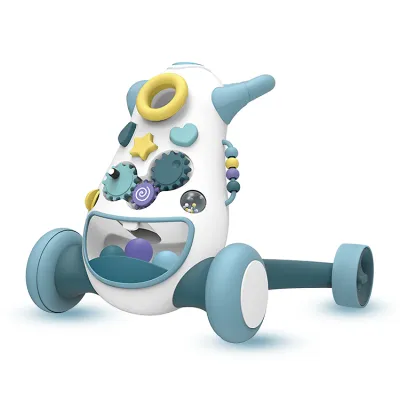
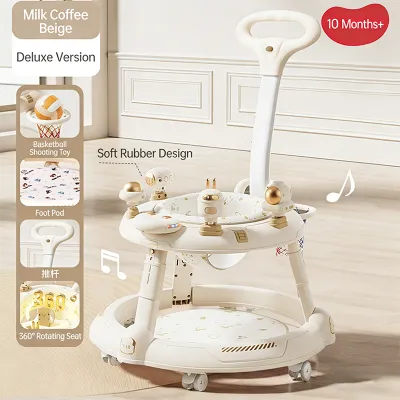
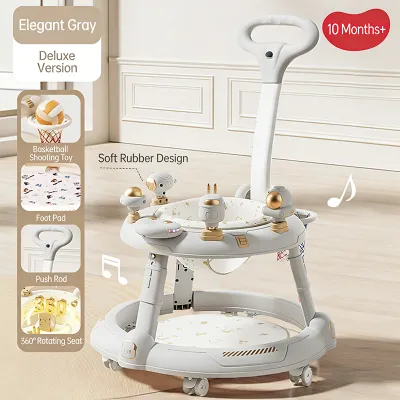
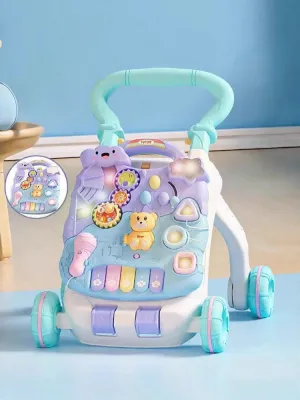
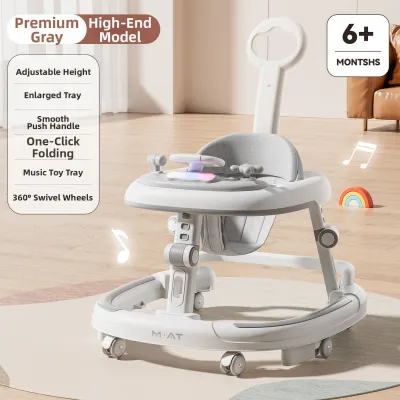

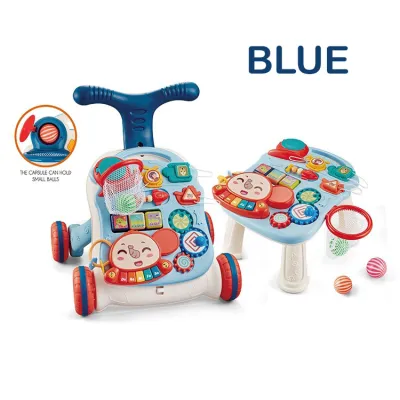

Prices are valid at publication and may change. Please refer to the product page for the latest price.
This artificial mobility also extends the child’s vertical reach. A baby who would normally be limited to crawling on the floor is suddenly elevated to a height where they can reach kitchen countertops, table edges, and low shelves. This height access dramatically increases the risk of pulling down hot liquids, touching electrical cords, or grabbing sharp objects and toxic household cleaners that would otherwise be safely out of reach.
Falls and tip-overs represent another severe physical hazard. Walkers are highly unstable on uneven surfaces. Moving from a smooth tiled floor to a thick rug, or bumping into a small toy left on the ground, can easily cause the walker to capsize. The danger is compounded exponentially near stairs or steps. If a wheeled walker tumbles down a staircase, the infant is trapped inside the frame, which frequently results in severe head trauma, concussions, or bone fractures.
Beyond the immediate physical dangers, traditional walkers can actively hinder motor development. There is a persistent myth that these devices help babies learn to walk faster. In reality, pediatric physical therapists point out that walkers encourage poor biomechanics. Because the baby is suspended in a fabric crotch strap, they do not have to balance their own trunk or bear their full weight.
This lack of weight-bearing often leads to toe-walking, which tightens the calf muscles and delays the development of a natural heel-to-toe gait. It also bypasses crucial developmental stages like crawling and pulling up, which are essential for building bilateral coordination and core strength. If you notice your child consistently walking on their toes or showing signs of developmental delay, stop using the device and consult a qualified healthcare professional.
Key Safety Features to Inspect Before Buying
If you decide to purchase a baby walker, you must carefully inspect its physical construction. Do not rely on aesthetic appeal or brand popularity. Instead, look for specific hardware and design elements engineered to minimize safety risks, and always verify the age, weight, and development stage suitability from the manufacturer’s official documentation.

Wide Base and Anti-Tip Design
The physical base of the walker must be significantly wider than the upper frame and the seat. A wide, stable perimeter prevents the walker from tipping over when the baby leans sideways or forward to grab an object. When inspecting a model, check that the base is broad enough to prevent the baby’s hands from easily reaching outer obstacles. Always verify the manufacturer’s specified weight and height limits on the product label. A baby who is too heavy or too tall for a specific model can easily shift the center of gravity, rendering the anti-tip design ineffective.
Stair-Fall Prevention and Braking Mechanisms
Modern baby walkers must incorporate safety features designed to stop the device at edges or drop-offs. Look for models equipped with friction strips, rubber gripping pads, or automatic braking mechanisms on the underside of the base. These pads are engineered to make contact with the floor and halt the walker’s movement if one or more wheels lose contact with the ground, such as at a step or threshold. However, parents must understand that these are secondary safeguards. They can fail on certain floor textures or if the walker is moving with high momentum, and they must never be viewed as a substitute for physical barriers like securely installed safety gates.
Adjustable Height and Foot Placement
An adjustable seat height is critical for ensuring proper physical posture. When your baby is seated in the walker, their feet must be able to rest flat on the floor. This flat-foot contact allows the baby to bear weight through their heels and knees naturally, which supports healthy joint and muscle development. Avoid using a walker if the lowest setting forces your baby to stand or push off on their tiptoes. Continuous tiptoe alignment can strain the Achilles tendon, shorten calf muscles, and contribute to developmental walking delays. Conversely, if the seat is too low and the baby’s knees are excessively bent, it can cause joint strain and discomfort.
Lockable Wheels for Stationary Use
One of the most practical safety features to look for is a wheel-locking mechanism. Some models allow you to lock the wheels completely or retract them, effectively converting the mobile walker into a stationary activity center. This configuration eliminates the mobility-related hazards—such as rolling into dangerous areas or tipping over—while still providing the baby with interactive toys and an upright view of the room. If you want to use the product as a play seat, always ensure the locks are fully engaged and verified before placing your child inside.
How to Verify Safety Standards and Product Recalls
Before bringing any baby product into your home, you must verify its compliance with safety regulations. Do not take a manufacturer’s safety claims at face value. Look for physical labels on the packaging or the walker itself that indicate compliance with recognized international safety standards, such as ASTM F977 in the United States or EN 1273 in Europe. These standards dictate rigorous testing for stability, frame strength, and the effectiveness of stair-fall prevention mechanisms.
Using second-hand or older baby walkers carries significant risk. Older models often lack modern safety features, such as the friction pads required by current safety standards. Furthermore, plastic can degrade over time when exposed to sunlight and cleaning chemicals, making the frame brittle and prone to cracking. Straps, buckles, and height-adjustment mechanisms can also wear down, increasing the risk of sudden collapse.
Always perform a recall check before using a new or pre-loved walker. You can search official manufacturer websites or local consumer safety portals, such as those managed by Enterprise Singapore, to check for active product recalls. If a specific model or batch has been recalled due to safety hazards, structural defects, or choking risks, do not use it under any circumstances.
Safer Alternatives for Play and Early Mobility
If you are looking for ways to entertain your baby or support their transition to walking, there are several safer alternatives that do not carry the high risks of traditional wheeled walkers.
Stationary Activity Centers
Stationary activity centers, often called exersaucers or stationary jumpers, provide a similar upright experience without the wheels. These products feature a secure seat surrounded by interactive toys, mirrors, and activities, often allowing the baby to bounce, spin, and pivot safely in place. Because the base is completely stationary and rests firmly on the floor, there is no risk of the baby rolling toward stairs, kitchens, or other hazardous areas. This design offers a secure environment for supervised play while giving parents a brief, hands-free window to complete household tasks.
Push Walkers (Walk-Behind Toys)
For babies who are already pulling themselves up to stand and showing an interest in taking steps, a push walker (or walk-behind toy) is an excellent developmental tool. Unlike sit-in walkers, push walkers require the baby to stand independently, balance their own body weight, and actively push the toy forward. This process naturally strengthens the core, legs, and ankles, and promotes a proper heel-to-toe walking gait. When choosing a push walker, opt for models that feature adjustable wheel resistance or tension settings. Tightening the wheels prevents the toy from rolling away too quickly on smooth tiled or wooden floors, helping your baby maintain their balance and build confidence safely.
Harm Reduction: Rules for Supervised Use and When to Stop
If you choose to use a traditional baby walker, you must implement strict harm-reduction rules to minimize the inherent risks. First, ensure the environment is completely prepared. The walker must only be used on flat, level surfaces that are free of loose rugs, electrical cords, or raised thresholds. Block off all access to stairways, steps, and balconies with sturdy, hardware-mounted safety gates. Keep the baby far away from high-risk zones such as the kitchen, bathroom, and swimming pools.
Active supervision is non-negotiable. An adult must remain within arm’s reach of the baby at all times while they are in the walker. Simply being in the same room is insufficient, as a baby in a walker can move across a room in a split second. Additionally, limit walker sessions to short intervals of no more than 15 to 20 minutes per day. This prevents physical fatigue, reduces the risk of muscle strain, and limits the baby’s exposure to potential hazards.
Finally, know when to retire the walker. Stop using it immediately if your baby reaches the manufacturer’s maximum weight or height limit, or if they show signs of being able to climb out of the seat. Once your baby can take independent steps or walk without assistance, the walker has served its purpose and should be discontinued to prevent falls or developmental interference.
Frequently Asked Questions (FAQ)
Do baby walkers help babies learn to walk faster?
No, baby walkers do not help babies learn to walk faster. Pediatric consensus shows that they can actually delay independent walking. Because walkers suspend the baby and allow them to glide across the floor with minimal effort, they do not help build the core strength, balance, or hip stability required for walking. Additionally, walkers often encourage toe-walking, which can tighten calf muscles and disrupt natural motor development.
Are push walkers safer than traditional sit-in walkers?
Yes, push walkers are generally much safer than traditional sit-in walkers. Push walkers require the baby to stand, balance, and bear their own weight naturally, which supports healthy motor development. Because the baby is not suspended in a seat, they are not trapped inside a device that can roll down stairs or grant them high-speed access to elevated hazards.
At what age or weight should a baby stop using a walker?
You should stop using a baby walker immediately when your baby reaches the manufacturer’s maximum weight or height limits, or when they can sit up or walk independently. Additionally, if your baby attempts to climb out of the seat, or if their feet can no longer rest flat on the floor at the lowest height setting, you should retire the walker to prevent injuries.
Community discussion
Share your experience or ask a question. Comments are reviewed before publication.