
The Short Answer: Are Baby Walkers Safe?
Traditional baby walkers present notable safety risks and are generally not recommended by pediatricians and child safety organizations. While they remain popular for keeping infants entertained and giving parents a brief hands-free window, their convenience comes with increased exposure to household hazards.
If you choose to use a baby walker, its safety depends entirely on active adult supervision, thorough environmental childproofing, and selecting a model with modern safety mechanisms. No walker can guarantee absolute safety on its own, and they should never be used as a substitute for supervised floor play. Before introducing any mobility aid, it is highly recommended to consult your pediatrician to discuss your child’s physical readiness and explore safer developmental alternatives.
Common Safety Risks Associated with Baby Walkers
To make an informed decision, it is essential to understand why baby walkers are viewed with caution by medical professionals. The primary concern is not the device itself, but the artificial speed and height it grants to a child who is not yet developmentally equipped to handle them.
Products mentioned in this guide
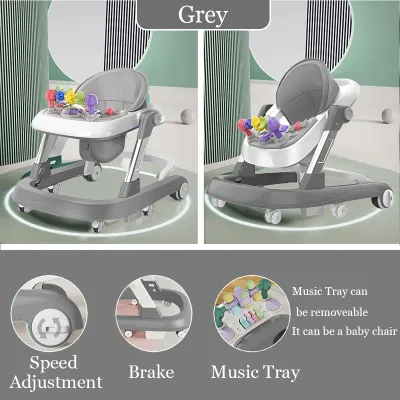
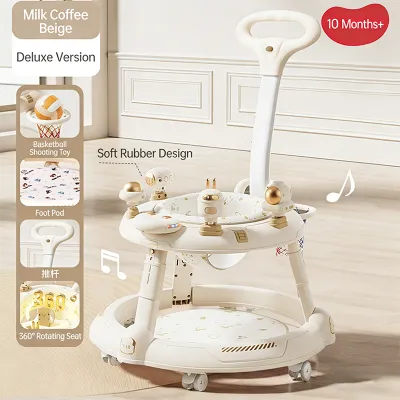

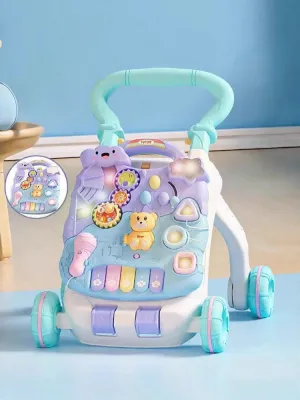

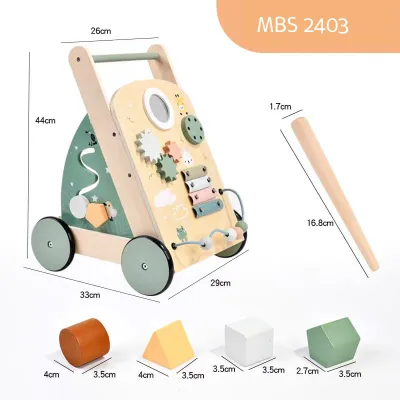
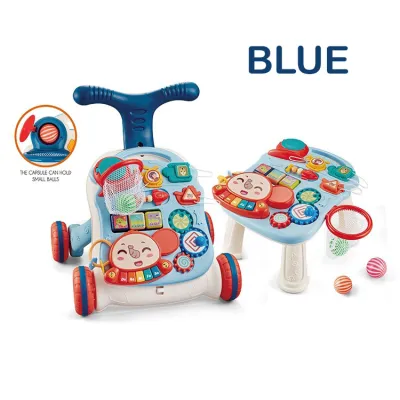
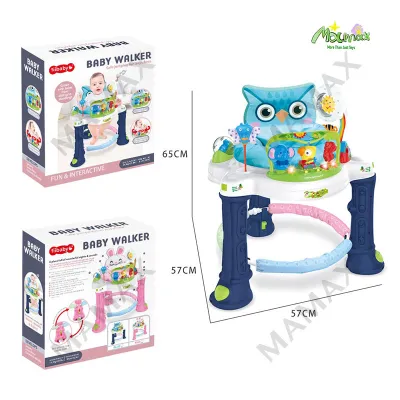
Prices are valid at publication and may change. Please refer to the product page for the latest price.

Falls and Tipping
A baby in a walker can move at surprisingly high speeds, making it incredibly difficult for a caregiver to react in time if the walker heads toward danger. On smooth surfaces common in Singapore homes, such as polished marble, ceramic tiles, or vinyl flooring, a walker can glide effortlessly. If the wheels strike a small obstacle, such as the edge of a play mat, a stray toy, or a door threshold, the sudden stop can cause the entire unit to tip over, leading to head injuries or bruised limbs. The most severe injuries occur when a walker falls down stairs or off split-level flooring, which can result in serious fractures or concussions.
Increased Reach and Speed
When seated in a walker, a baby is elevated higher than they would be while crawling or sitting on the floor. This increased height, combined with rapid mobility, allows them to reach items that are normally far out of their grasp. They can quickly pull down tablecloths, grab hot cups of coffee or tea from low coffee tables, reach electrical cords, or access household cleaning products stored in low cabinets. The window of time a parent has to intervene is dramatically shortened.
Finger and Toe Injuries
Baby walkers feature numerous moving parts, folding frames for storage, and rotating wheel casters. These mechanisms present pinch hazards for tiny fingers and toes. A baby can easily get their toes pinched under the rolling wheels, or catch their fingers in the folding hinges of the frame if the locking mechanisms are not fully engaged. Additionally, if older siblings are playing nearby, their hands or feet can easily be run over by the heavy base of the moving walker.
Developmental Considerations
A common misconception is that baby walkers help infants learn to walk faster. In reality, excessive use of a walker can have the opposite effect. Walkers support the baby’s weight, preventing them from practicing the balance and core stabilization required for independent walking. Furthermore, babies in walkers tend to push themselves forward using only their toes. This toe-walking tightens the calf muscles and limits the development of the heel-and-toe walking motion. It also reduces the time spent crawling and pulling up, which are critical milestones for building shoulder, hip, and core strength.
Essential Safety Features to Check Before Buying
If you decide to purchase a baby walker despite the risks, you must prioritize safety-first design over aesthetic appeal or toy attachments. When shopping, carefully inspect the product specifications and physical build to verify the presence of these critical safety features.
Stair Safety Mechanisms
If your home has any steps, split levels, or stairs, you must look for a walker equipped with automatic stair-stopping features. These typically consist of friction strips, rubber stoppers, or gripping pads integrated into the underside of the walker’s base. When a wheel rolls over the edge of a step, these pads are designed to immediately contact the floor, creating enough friction to halt the walker’s forward momentum. Before buying, check the product manual to confirm how these safety grips function and how to maintain them.
Wide and Stable Base
A safe baby walker should feature an extra-wide, heavy base that is significantly larger than the upper tray and seating area. This wide footprint lowers the center of gravity and acts as a physical bumper, preventing the baby from getting too close to walls, door frames, or furniture corners. A broad, rigid base also makes it much more difficult for the walker to tip over if the baby leans heavily to one side or collides with an obstacle.
Adjustable Height Settings
Babies grow rapidly, and a walker that is too high or too low can compromise their posture and safety. Look for a model that offers multiple, secure height adjustment levels. When your baby is seated in the walker, their feet must be able to rest flat on the floor with their knees slightly bent. If only their tiptoes touch the ground, the walker is too high; if their knees are bent excessively, it is too low. The adjustment mechanism should lock firmly into place to prevent accidental collapsing.
Safety Certifications
Do not rely on generic marketing claims of safety approval or premium quality. Instead, look for physical labels or documentation indicating compliance with recognized international safety standards, such as ASTM F977 (the standard consumer safety specification for infant walkers) or EN 1273 (the European standard for baby walking frames). These standards govern structural stability, dynamic strength, and the effectiveness of stair-fall prevention mechanisms. Verify these markings on the product packaging or the manufacturer’s official website before making a purchase.
How to Create a Safe Environment for Walker Use
Even the most advanced safety features cannot replace a carefully prepared environment. If you choose to use a baby walker, you must transform the designated room into a highly controlled, hazard-free zone.
Hazard Removal
Before placing your baby in the walker, perform a thorough sweep of the floor. Remove all loose rugs, mats, charging cables, and small toys that could catch the wheels and cause a tip-over. Ensure that low tables are completely clear of hot liquids, heavy decorative items, and sharp objects. Secure heavy furniture, such as television consoles, bookshelves, or sideboards, to the wall using safety straps to prevent them from tipping if the baby bumps into them or attempts to pull themselves up.
Blocking Stairs and Drop-offs
If your home has stairs, split levels, or raised thresholds (common in older flats or multi-story landed properties), you must block these areas off completely. Install sturdy, hardware-mounted safety gates at the top and bottom of all staircases. Pressure-mounted gates are not recommended for this purpose, as a fast-moving baby in a walker can exert enough force to dislodge them. Keep doors to bathrooms, kitchens, and balconies firmly closed and locked at all times.
Active Supervision
It is a common mistake to view a baby walker as a safe place to leave a child while you attend to household chores. A baby in a walker requires continuous, active, and direct visual supervision by an adult in the same room. You must remain within arm’s reach and keep your eyes on the baby at all times. Accidents with walkers happen in a split second, far too quickly for a caregiver to run from another room to intervene.
Time Limits
To protect your baby’s physical development and prevent fatigue, strictly limit their time in the walker. Pediatric experts generally recommend restricting walker sessions to no more than 10 to 15 minutes at a time, with a maximum of 30 minutes per day. The rest of their active time should be spent on the floor, where they can crawl, roll, sit, and pull up naturally.
When to Stop Using the Baby Walker
A baby walker is a temporary transitional tool with a very narrow window of safe use. Knowing when to retire the walker is just as important as knowing how to use it safely.
Manufacturer Limits
Every baby walker comes with strict weight and height limitations specified by the manufacturer. Regularly weigh and measure your baby to ensure they remain well within these boundaries. Once your baby reaches the maximum weight limit (often around 11 to 12 kg, though this varies by model) or the maximum height limit, stop using the walker immediately. Exceeding these limits can compromise the structural integrity of the frame or make the unit top-heavy and prone to tipping.
Developmental Milestones
Monitor your baby’s physical milestones closely. If your baby can sit up, stand, or walk independently, the walker is no longer safe or necessary. Furthermore, if your baby is highly active and attempts to climb out of the fabric seat, you must discontinue use immediately to prevent fall injuries.
Transitioning to Push Toys
Once your baby outgrows the walker or shows signs of wanting to walk, transition them to sturdy, non-ride-on push toys (such as a wooden activity cart or a weighted push trolley). Unlike seated walkers, push toys require the baby to support their own body weight, engage their core muscles, and practice natural balance and coordination. Ensure the push toy is heavy enough or has adjustable wheel tension to prevent it from rolling away too quickly from a learning toddler.
Frequently Asked Questions (FAQ)
Do baby walkers delay walking milestones?
Yes, evidence suggests that frequent use of baby walkers can delay the onset of independent walking. Walkers do not teach babies how to walk; instead, they teach them to glide across the floor without supporting their own body weight or practicing balance. Because the walker’s frame keeps them upright, the baby does not develop the crucial core, hip, and thigh muscles that are built during crawling, pulling up, and cruising along furniture. To support natural motor development, prioritize supervised floor play, tummy time, and crawling, which build the foundational strength required for independent walking.
What is the recommended age to start using a baby walker?
There is no single chronological age that dictates when a baby is ready for a walker, as physical development varies widely. Instead, readiness is determined by developmental milestones. A baby must be able to sit up completely unassisted and demonstrate strong, steady head and neck control before they can be placed in a walker. Additionally, their feet must be able to touch the floor flatly when the walker is adjusted to its lowest setting. Always verify the manufacturer’s specific minimum age, weight, and height requirements on the product label, and consult your pediatrician if you are unsure of your baby’s developmental readiness.
Community discussion
Share your experience or ask a question. Comments are reviewed before publication.