
Baby push walkers—often designed as wooden carts, activity trolleys, or plastic push toys—are generally safe and can be highly beneficial for your baby’s physical development. Unlike traditional sit-in walkers, which suspend a child in a seat, a push walker requires your baby to actively support their own weight, engage their core muscles, and practice balance. When introduced at the right developmental stage and used under close supervision, these toys offer a fun way for your little one to explore their environment and build confidence.
However, the safety and developmental impact of a push walker depend heavily on your baby’s readiness, the design of the toy, and the safety of the space where they use it. Understanding how these toys interact with your baby’s growing body is key to making an informed decision for your household.
Push Walkers vs. Sit-In Walkers: Why the Distinction Matters for Safety
To understand why push walkers are widely accepted by developmental experts, it is essential to distinguish them from traditional sit-in walkers. A sit-in walker features a wheeled frame with a suspended fabric seat in the center, allowing a baby who cannot yet stand to sit and propel themselves with their feet. In contrast, a push walker is a sturdy, upright toy with wheels and a handle that a baby stands behind and pushes forward, much like a miniature shopping cart.
Products mentioned in this guide
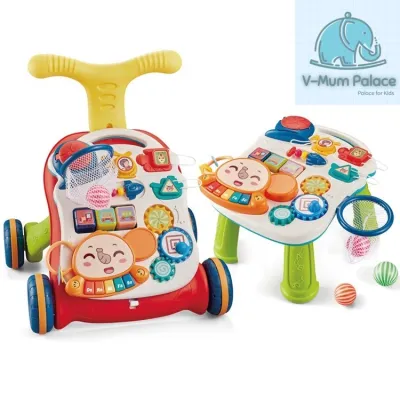
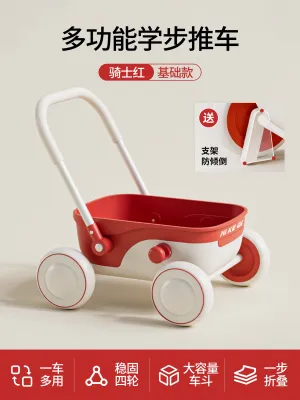
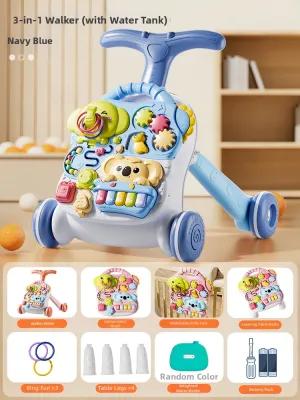
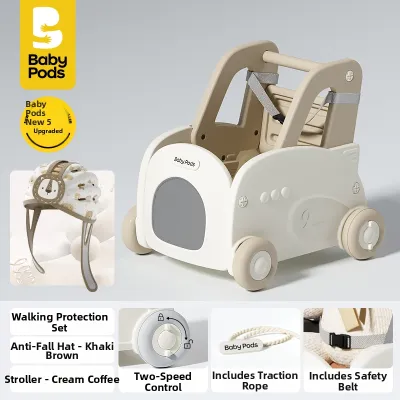
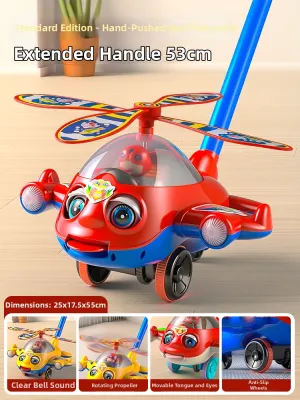
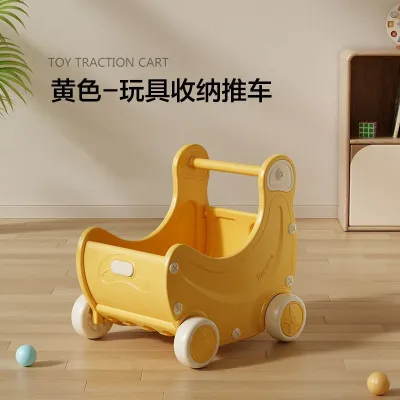
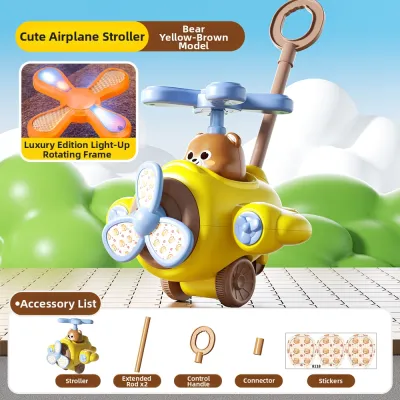
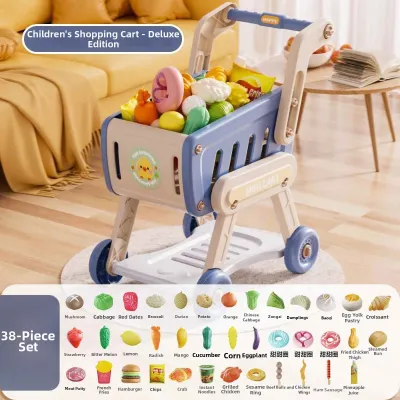
Prices are valid at publication and may change. Please refer to the product page for the latest price.
Traditional sit-in walkers are strongly discouraged by pediatric health organizations worldwide, including the American Academy of Pediatrics and healthcare professionals in Singapore. These devices pose significant safety hazards, particularly the risk of tipping over or falling down stairs, which can lead to severe head injuries. Furthermore, sit-in walkers place babies in an unnatural, semi-seated position that forces weight-bearing on underdeveloped hips and joints, often leading to delayed motor milestones and poor gait patterns.
Push walkers avoid many of these developmental drawbacks because they do not force your baby into an unnatural posture. With a push walker, your baby is entirely in control of their own movement, balance, and weight distribution. They must actively stand on their own feet, grip the handle, and use their own muscle strength to push the toy forward. This self-initiated movement aligns much better with natural motor development.
Ultimately, while sit-in walkers are viewed as developmental hindrances and safety hazards, push walkers are generally considered supportive play tools. However, their safety is not automatic. The benefits of a push walker depend entirely on whether your baby is physically ready to use one and whether the product’s design matches your home environment.
How Push Walkers Affect Posture, Joints, and Walking Milestones
A common misconception is that push walkers “teach” a baby how to walk. In reality, walking is a complex neurological and muscular milestone that babies must master through floor play, crawling, pulling up, and cruising. A push walker does not accelerate this timeline; rather, it acts as a supportive tool for babies who are already highly motivated to stand and move upright.

Walking Milestones and Confidence For a baby who is already taking tentative steps or cruising along furniture, a push walker can provide a sense of stability and independence. It allows them to practice the mechanics of forward movement and steering in an open space. This can boost their confidence, encouraging them to spend more time practicing upright balance and strengthening the leg muscles required for independent walking.
Addressing Posture and Tiptoe Walking One potential drawback of push walkers is their tendency to alter a baby’s posture if the toy moves too quickly or is adjusted incorrectly. If a push walker is too light or lacks wheel resistance, it can roll away from the baby, forcing them to lean too far forward. This forward lean often causes babies to walk on their tiptoes to keep up with the moving toy. To prevent this, look for models with adjustable tension wheels or a weighted base, and ensure the handle height allows your baby to stand relatively upright with a slight bend in the elbows.
Supporting Joint and Hip Health From a joint health perspective, self-initiated weight-bearing is highly beneficial. When your baby stands and pushes a toy, their bones and joints experience natural, gravity-assisted loading, which helps strengthen bone density and joint stability. This contrasts sharply with sit-in walkers, where the baby’s pelvis is suspended, often causing them to push off the floor with their toes while their hips are in an unaligned position.
The Importance of Floor Time While push walkers can be a valuable part of your baby’s daily routine, they should never replace unstructured floor play. Crawling, rolling, and sitting are critical for developing core strength, shoulder stability, and bilateral coordination. Excessive reliance on any mobility aid can limit the time your baby spends on the floor, which may paradoxically delay the very milestones you hope to encourage. Balance is key, and push walkers should be treated as one of many play options.
Developmental Signs Your Baby Is Ready for a Push Walker
Chronological age is a poor metric for determining when to introduce a push walker, as babies develop motor skills at highly individual rates. Instead of relying on age recommendations on the packaging, parents should look for specific physical milestones that indicate their baby’s musculoskeletal system is strong enough to handle a push toy.
Key Readiness Milestones Before introducing a push walker, ensure your baby can perform the following actions independently:
- Pulling to Stand: Your baby should be able to pull themselves up to a standing position using furniture or your hands without assistance.
- Cruising: Your baby should be actively "cruising"—walking sideways while holding onto a sofa, coffee table, or playpen for support.
- Flat-Footed Standing: When standing, your baby should bear weight evenly across their entire feet, keeping them flat on the floor rather than constantly resting on their tiptoes.
- Independent Balance: Your baby should show brief moments of standing unsupported or maintaining balance when transitioning between pieces of furniture.
If your baby cannot yet stand or cruise on their own, do not prop them up against a push walker or force them into a standing position to use it. Doing so can strain their developing joints and spine, which are not yet ready to support their full body weight. Additionally, forcing a baby to stand before they are ready can lead to frustration and a lack of confidence in their physical abilities.
If you notice any unusual movement patterns, such as your baby favoring one leg, dragging a foot, or showing persistent stiffness, it is best to hold off on introducing a push walker. In such cases, consult your pediatrician or a pediatric physiotherapist in Singapore for a professional assessment of your child’s motor development.
Essential Safety Precautions and When to Stop Using It
Even the most well-designed push walker can become a hazard if used in an unsafe environment. Because these toys allow babies to move much faster than they can on their own, creating a secure play space and maintaining constant vigilance is essential.
Environmental Hazards and Baby-Proofing Before letting your baby loose with a push walker, thoroughly inspect the play area. In Singaporean homes, smooth flooring like polished marble, ceramic tiles, or vinyl can cause a push walker to slide forward very quickly. Consider placing the walker on a large, low-pile play mat or carpet to provide more traction and slow down the wheels.
- Stairs and Steps: Block off all staircases, sunken living areas, or balcony entrances with securely mounted safety gates.
- Sharp Corners: Ensure coffee tables, TV consoles, and low shelves have protective corner guards, as a baby steering a walker can easily lose control and bump into sharp edges.
- Slippery Surfaces: Keep floors dry and free of loose rugs, cables, or toys that could catch the wheels of the walker and cause a fall.
Product Safety Checks When selecting a push walker, prioritize safety features over aesthetics. Check the manufacturer’s age, weight, and height limits printed on the product label. Look for a walker with a wide, heavy base that resists tipping over when your baby pulls themselves up using the handle. Many high-quality wooden and plastic models feature adjustable speed dials or rubber strips on the wheels to control friction, which is highly recommended for smooth indoor floors. Ensure there are no small, detachable parts that pose a choking hazard, and verify that the frame has smooth, rounded edges to prevent pinched fingers.
The Role of Active Supervision A push walker is an active developmental toy, not a babysitting device. Never leave your baby unattended while they are using a push walker, even for a brief moment. An adult should always be within arm’s reach to assist if the baby loses balance, steers toward an obstacle, or struggles to turn the toy around.
When to Retire the Push Walker As your baby’s physical abilities evolve, the push walker will eventually outlive its usefulness. You should phase out the toy when your baby is walking confidently and independently without any support. At this stage, they may begin to use the walker to run at unsafe speeds, climb onto furniture, or push heavy objects around, increasing the risk of accidents. If your baby shows frustration with the toy or loses interest, it is a natural sign that they are ready to transition to other forms of active, unstructured play.
Frequently Asked Questions (FAQ)
Can a push walker cause bow legs or joint damage?
No, a push walker will not cause bow legs or joint damage when used by a baby who is developmentally ready. Bow legs are a normal part of infant development and typically resolve naturally as the child grows and begins to bear weight flat on their feet. Because push walkers rely on self-initiated standing, your baby will only use the toy when they have the strength to support themselves. The risk of joint strain or unnatural alignment arises primarily from traditional sit-in walkers or when parents force a baby to stand and use a push toy before they can pull themselves up independently. If you have concerns about your baby’s leg alignment or notice persistent bowing after they start walking independently, consult your pediatrician.
What should I do if my baby only walks on their tiptoes with the push walker?
If your baby consistently walks on their tiptoes while using a push walker, it is usually a sign that the walker is moving too quickly or the handle is positioned too high. When the toy rolls away too fast, the baby must lean forward and use their toes to chase after it. To correct this, try adding weight to the walker’s storage compartment (such as heavy books) to slow it down, or adjust the wheel tension if your model has that feature. You can also adjust the handle height so your baby can stand taller. If the tiptoe walking persists, temporarily put the walker away and encourage your baby to cruise flat-footed along furniture. If your child continues to walk on their tiptoes most of the time outside of using the walker, seek advice from a child physiotherapist.
Are push walkers with removable activity boards safe?
Push walkers featuring removable activity boards are safe and offer excellent multi-functional play, but they must be evaluated carefully. Ensure that the activity board does not contain small, loose parts that could present a choking hazard, and check that it attaches securely to the walker frame so it cannot fall on your baby’s feet. While the sensory toys, buttons, and gears on these boards are excellent for fine motor skills and cognitive development during seated play, they do not contribute to your baby’s gross motor walking milestones. Remember to balance stationary play at the activity board with plenty of active floor time, crawling, and assisted cruising to support your baby’s overall physical development.
Community discussion
Share your experience or ask a question. Comments are reviewed before publication.