
To prevent a baby shower cap from slipping during bath time, the most critical features to look for are adjustable sizing mechanisms (such as multi-position snap buttons or premium hook-and-loop straps), a high-friction inner silicone grip ring, and a lightweight, flexible brim. These design elements work together to create a secure, watertight seal without exerting excessive pressure on your baby’s delicate head.
When bathing a squirming infant or toddler, water and baby shampoo act as lubricants, making a snug, high-friction fit essential for safety. A slipping cap is not just an inconvenience; it poses safety risks by sliding down over a child’s eyes, nose, or mouth, which can cause sudden panic or obstruct breathing. Selecting a cap with targeted anti-slip features ensures a peaceful, tear-free bath time for both parent and child.
Quick Guide: Must-Have Anti-Slip Features for Baby Shower Caps
When shopping for a baby shower cap, prioritizing specific structural elements will save you from the frustration of a sliding visor. The three most critical features to look for include:
Products mentioned in this guide

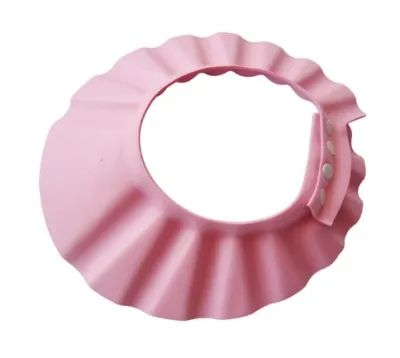
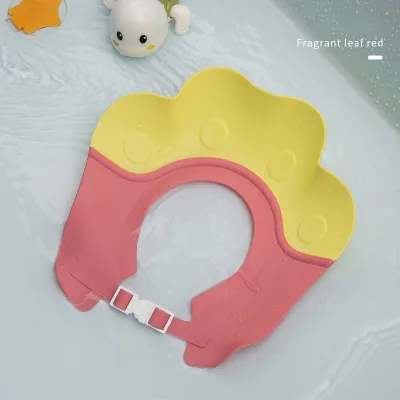
![[SG STOCK] Adjustable Baby Shampoo Bath Shower Cap Hat For Babies Kids and Children Wash Hair Shield Face](https://img.lazcdn.com/g/p/e04506701bf872b31da4074345285ca5.jpg_400x400q80.jpg_.webp)
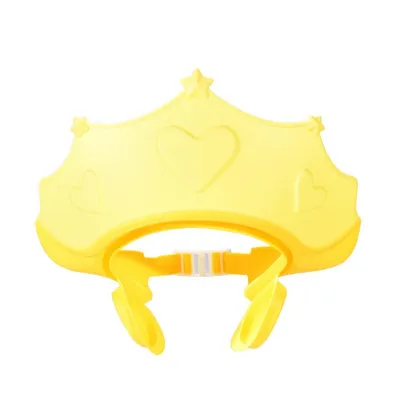

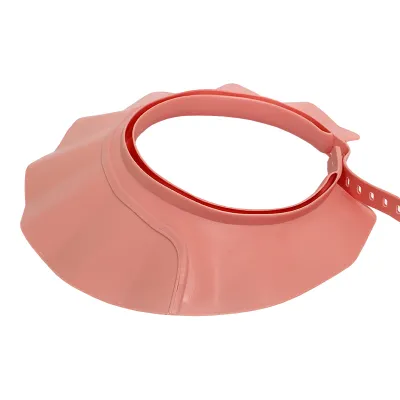
Prices are valid at publication and may change. Please refer to the product page for the latest price.
- Adjustable Sizing Mechanisms: Multi-point fasteners allow the cap to grow with your child and provide a customized, snug fit that prevents water from seeping under the rim.
- Inner Silicone Grip Rings: These rings create the necessary friction against fine hair and skin, acting as a non-slip barrier even when exposed to soapy water.
- Lightweight, Flexible Brims: Soft visors reduce the downward drag and leverage that heavier, rigid plastics exert when wet.
Beyond keeping soapy water out of sensitive eyes, a secure fit prevents the cap from shifting downward during active movement. If a cap slips, it can block your baby’s vision, induce anxiety, or cover their airway. Choosing a model with a reliable grip ensures the visor remains positioned safely above the brow line throughout the washing process.
Always remember that a baby shower cap is a convenience tool, not a safety device. Never leave your baby unattended in the bath, even for a brief moment, regardless of how secure the cap seems. Active adult supervision is the most crucial safety measure in any bathroom environment.
Essential Design Features That Prevent Slipping
Adjustable Sizing Mechanisms
Infant heads grow rapidly during the first two years of life, making fixed-size caps highly impractical. To maintain a secure, slip-free grip, a baby shower cap must feature a reliable adjustment system that can be fine-tuned to your child’s current head circumference.

The three most common adjustment types are hook-and-loop (Velcro) straps, plastic snap buttons, and elastic bands. Hook-and-loop fasteners and multi-point snap buttons are highly recommended because they allow for precise micro-adjustments. This ensures the cap is tight enough to stay put but loose enough to remain comfortable for your child.
In contrast, simple elastic bands often present durability issues. Elastic tends to stretch out and lose its tension over time, especially when repeatedly exposed to warm water and baby shampoos. Furthermore, wet elastic can slip more easily against fine hair than a mechanical fastener.
When evaluating fasteners, prioritize durability and safety. High-quality snap buttons made from food-grade plastic resist water degradation and do not lose their grip. If choosing a hook-and-loop strap, ensure it is a soft-loop variety that will not scratch your baby’s skin or snag their hair during application or removal.
Inner Grip and Material Texture
The interface between the cap’s inner rim and your baby’s skin is where slip prevention succeeds or fails. Without sufficient friction, the lubricating effect of water and baby shampoo will inevitably cause the cap to slide down the forehead.
To combat this, premium caps incorporate an inner silicone ring or a textured, grooved inner band. Silicone naturally exhibits high friction against both wet skin and fine baby hair, creating a gentle seal that holds the visor firmly in place without requiring excessive tightening.
Conversely, caps with smooth, untextured interiors made entirely of cheap plastic or standard ethylene-vinyl acetate (EVA) foam are highly prone to sliding. When these materials get wet, they become incredibly slick, allowing the weight of the water pooling on the brim to pull the entire cap downward.
While friction is vital, the inner grip must also protect your baby’s delicate skin. Look for hypoallergenic, medical-grade, or food-grade silicone that feels soft to the touch. This prevents the cap from leaving painful red marks, indentations, or causing contact dermatitis on your baby’s sensitive forehead.
Brim Flexibility and Weight Distribution
The physical design of the visor brim plays a major role in whether a shower cap stays in place. A brim that is too stiff, heavy, or excessively wide acts as a lever, amplifying the downward force of water and pulling the cap out of position.
When water pools on a rigid brim, the center of gravity shifts forward. If your baby tilts their head down, this added weight can pull the front of the cap over their eyes. Soft, flexible, and lightweight brims solve this issue by allowing water to channel off quickly without creating a heavy downward drag.
A flexible brim also yields when it encounters resistance. If your baby bumps their head against the side of the tub or tries to brush the cap away, a flexible brim will bend and spring back into shape rather than dislodging the entire cap from the head.
Look for designs that utilize lightweight EVA foam or thin, high-grade silicone for the brim. These materials maintain a wide enough profile to shield the face from splashes while remaining light enough to avoid pulling the inner band down.
Breathability for Humid Climates
Environmental factors can significantly impact the performance of a baby shower cap, particularly in tropical climates like Singapore. High ambient humidity combined with warm bathwater creates a steamy environment that causes babies to sweat rapidly.
When sweat and body heat are trapped under a solid, non-breathable cap, moisture builds up between the skin and the inner band. This micro-layer of sweat acts as an additional lubricant, drastically reducing the friction of the anti-slip grip and causing the cap to slide off.
To maintain a secure grip in humid conditions, consider caps with open-crown designs. These caps feature a wide visor ring that encircles the hairline while leaving the top of the head completely open. This allows heat to escape freely and makes washing the top of the head straightforward.
For full-coverage designs, look for models that incorporate breathable mesh panels or moisture-wicking fabric linings along the forehead band. These elements help manage perspiration, keeping the baby’s skin relatively dry and preserving the cap’s non-slip performance throughout the bath.
Recommended Shower Cap Designs for a Secure Fit
Silicone-Edged Adjustable EVA Caps
- Target Audience: This design is highly versatile and best suited for babies and toddlers with moderate to thick hair, typically from 6 months of age and older.
- Why It Prevents Slipping: This style combines the ultra-lightweight properties of an EVA foam brim with a soft, high-friction silicone inner edge. The adjustable outer strap—usually featuring snap buttons—allows you to dial in the perfect tension, while the silicone inner ring acts as a dual-locking mechanism that clings gently to the hairline.
- Limitations: The EVA foam brim, while lightweight, can be bulky to store and cannot be easily folded flat without risking permanent creasing. Additionally, the boundary where the silicone edge meets the EVA foam must be thoroughly dried after each use to prevent mold and mildew from developing in the crevices.
- Pre-Purchase Check: Inspect the construction of the cap carefully before buying. Verify that the silicone edge is seamlessly co-molded or securely integrated with the EVA brim rather than simply glued. Glued edges can easily detach after repeated exposure to warm water, creating a peeling hazard and ruining the watertight seal.
Soft Silicone Crown Caps
- Target Audience: These caps are specifically designed for younger infants (around 3 to 6 months) or babies with very fine, sparse hair who struggle to hold traditional, heavier visors in place.
- Why It Prevents Slipping: Resembling a modified, open-top swimming cap, this design features a wide, highly flexible silicone band that wraps securely around the entire upper head. The all-silicone construction creates a gentle, suction-like seal against the skin, relying on the material's natural elasticity and high coefficient of friction to remain anchored.
- Limitations: Because these caps prioritize a close, suction-like fit around the head, the brim is often narrower and more angled than a flat EVA visor. This means they may be less effective at shielding the face from direct, heavy splashes of water compared to wide-brim designs. They can also feel uncomfortably tight if the sizing is not carefully monitored as the baby grows.
- Pre-Purchase Check: Ensure the silicone material is certified food-grade or medical-grade, indicating it is free from harmful plasticizers and safe for sensitive skin. It should be highly stretchable and pliable to the touch to ensure it conforms to your baby's head shape without restricting blood circulation.
Wide-Brim Visor Caps with Dual Straps
- Target Audience: This heavy-duty design is ideal for active, squirming toddlers (1.5 years and older) who frequently tilt their heads, splash vigorously, or actively try to pull the cap off during bath time.
- Why It Prevents Slipping: Active toddlers present a unique challenge, as their movements can easily dislodge a standard visor. This design solves the problem by incorporating a dual-strap system. A primary strap secures the cap around the head circumference, while a secondary strap anchors the cap at the back of the head, preventing it from sliding backward or tilting forward.
- Limitations: The addition of a secondary strap can cause discomfort or resistance in toddlers who dislike feeling restricted. If a strap is not designed with safety in mind, it can also pose a potential snagging or choking hazard if the child moves suddenly.
- Pre-Purchase Check: Strictly avoid any shower caps that feature rigid, non-yielding, or non-breakaway chin straps. Prioritize designs where the secondary strap is purely intended for back-of-head stabilization, or select models equipped with a quick-release breakaway clasp that immediately unclips under tension to ensure safety.
How to Measure and Fit a Baby Shower Cap Safely
Before purchasing any baby shower cap, it is essential to obtain an accurate measurement of your child’s head. Use a soft, flexible measuring tape and wrap it gently around your baby’s head, positioning it just above the eyebrows in the front and over the ears, wrapping around the widest part of the back of the skull. Write down this measurement in centimeters, as most manufacturers list their sizing ranges by head circumference rather than age.
Once you have adjusted the cap and placed it on your baby’s head, you must verify that the fit is secure but not overly constrictive. A reliable way to test this is the “two-finger” rule. Slide two of your fingers flat between the cap’s inner band and your baby’s forehead. If you can slide your fingers in with mild resistance, the tension is correct. If you cannot fit your fingers, the cap is too tight; if the fingers slide in with no resistance at all, the cap is too loose and will likely slip when wet.
Always monitor your baby’s skin during and after bath time. When you remove the shower cap, inspect their forehead and hairline for any signs of irritation. While a faint, temporary pink line that fades within a couple of minutes is normal, deep red indentations or persistent red marks indicate that the cap is far too tight. A cap that is too tight can restrict blood flow, cause headaches, and turn bath time into an unpleasant experience for your child.
It is vital to remember that baby shower caps are comfort and convenience accessories, not life-saving safety devices. They do not prevent drowning or water accidents. You must maintain active, hands-on adult supervision at all times during bath time. Never leave your baby unattended in the bathtub, even for a brief moment to grab a towel, regardless of how secure and slip-free the shower cap appears to be.
Frequently Asked Questions (FAQ)
At what age can a baby start using a shower cap?
There is no universal minimum age for using a baby shower cap, but readiness depends heavily on your child’s physical development, head size, and neck strength. Most adjustable shower caps are designed to fit head circumferences starting around 40 to 45 centimeters, which typically corresponds to infants between 4 and 6 months of age.
It is highly recommended to avoid using shower caps on newborns. Newborns have highly sensitive skin, open fontanelles, and developing neck muscles that may not comfortably support the weight of a wet visor brim. Wait until your baby has achieved strong, stable neck control and their head circumference falls comfortably within the manufacturer’s specified range.
How do I clean and maintain the anti-slip silicone grip?
Proper maintenance is essential to keep the silicone grip functioning effectively. After every bath, thoroughly rinse the shower cap under clean, running water to wash away all traces of baby shampoo, soap, and body oils. If left on the silicone, these residues create a slick film that destroys the material’s natural friction, causing the cap to slip during the next use.
Once rinsed, shake off excess water and hang the cap to air-dry completely in a well-ventilated area before storing it away. Avoid leaving the cap in damp, dark corners of the bathroom, as trapped moisture will degrade the silicone grip over time and promote the growth of mold and mildew.
When cleaning the cap, never use harsh chemical detergents, bleach, or abrasive scrubbing sponges. These can micro-scratch the soft silicone surface, degrading its textured grip and potentially causing skin irritation for your baby. A mild dish soap and a soft cloth are all that is needed for occasional deep cleaning.
Community discussion
Share your experience or ask a question. Comments are reviewed before publication.