
Quick Answer: Which Air Walker Design Offers the Best Safety and Durability?
When choosing a baby walker, there is no single brand or model that represents a universal “best” choice. Instead, the safest and most durable option depends heavily on your specific home layout—such as a compact Singapore apartment with smooth homogenous tiles versus a larger home with outdoor patio transitions—and your child’s current stage of physical development. Rather than focusing solely on brand names, parents must evaluate the fundamental design characteristics of the walker.
Generally, brands that prioritize a wide, flared base and adjustable wheel resistance excel in providing indoor stability for infants who are just beginning to stand. On the other hand, walkers featuring air-filled (pneumatic) tires and reinforced frames offer superior shock absorption and traction, making them ideal for navigating varied surfaces, thresholds, and outdoor paths safely. To ensure long-term reliability and safety, you should always prioritize verified safety certifications and robust structural integrity over aesthetic additions like electronic toy consoles or bright color schemes.
Critical Safety Features to Compare Across Popular Brands
Evaluating the safety of an air walker requires looking past marketing claims to understand the physical mechanisms that prevent accidents. Because babies can move quickly once they gain traction, a walker’s design must actively mitigate risks such as tipping, falling down steps, or rolling out of control.
Products mentioned in this guide
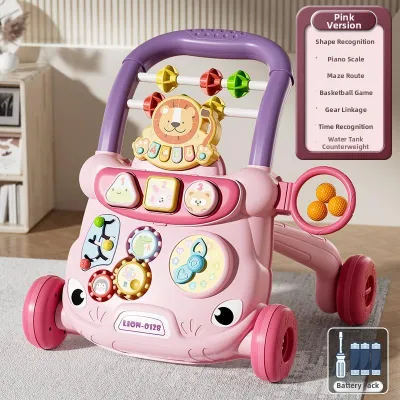
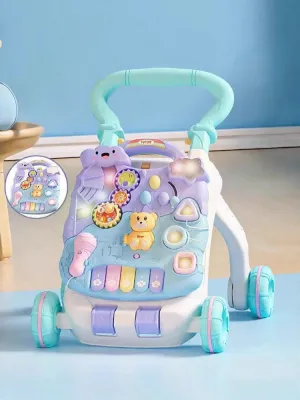
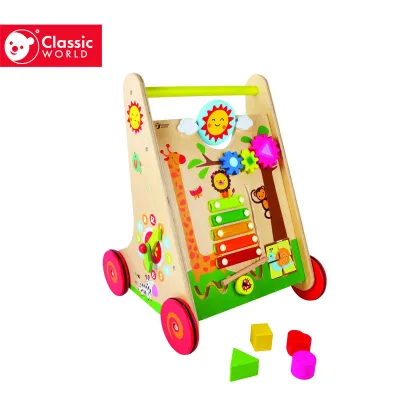
Prices are valid at publication and may change. Please refer to the product page for the latest price.

Stability, Braking, and Anti-Tip Mechanisms
The physical stability of a walker is primarily determined by its base width and weight distribution. When a baby leans over the side to reach for a toy, a narrow base can easily allow the center of gravity to shift past the support edge, leading to a dangerous tip-over. High-quality brands design their walkers with a wide, trapezoidal or flared base that is significantly wider than the upper frame. This design distributes the baby’s weight evenly across a larger surface area, keeping the center of gravity low and centered.
Stair-fall prevention is another critical mechanism, particularly in multi-level homes. Premium walkers are equipped with friction strips or rubberized grip pads on the underside of the base. If a wheel slips over the edge of a step or a high threshold, these pads instantly contact the floor surface, creating enough friction to halt the walker’s forward momentum. However, caregivers must inspect and clean these pads regularly, as accumulated dust, pet hair, and floor polish can reduce their effectiveness over time. On highly polished marble or glazed ceramic tiles, some rubber compounds can lose grip if a layer of fine dust or moisture is present, so wiping down the rubber pads weekly with a damp microfiber cloth is highly recommended.
Speed control is equally vital for matching the walker’s movement to your baby’s developing motor skills. Look for models that feature adjustable wheel resistance or manual locking mechanisms. For a baby who is just learning to stand, high wheel resistance prevents the walker from sliding forward too quickly, which could cause a slip-and-fall. As your child’s leg strength and coordination improve, you can gradually loosen the resistance to allow for smoother, faster movement. Wheel locks are also essential for converting the walker into a stationary play station when needed.
Wheel Design and Surface Grip
The choice between air-filled (pneumatic) tires and solid plastic or rubber wheels represents one of the most significant design differences in modern walkers. Air-filled tires function similarly to small bicycle tires, using compressed air to absorb impacts. This design provides exceptional shock absorption, which is highly beneficial if your baby transitions between different flooring types, such as rolling from smooth tiles onto thick rugs, or navigating the raised thresholds common in balcony doors and entryways. The soft rubber of pneumatic tires also delivers superior traction, reducing the risk of the walker sliding sideways on slick surfaces.
However, air-filled tires come with distinct trade-offs that parents must consider. They are inherently bulkier and heavier than solid wheels, which increases the overall footprint of the walker and can make it more difficult to maneuver through tight hallways or compact rooms. They also require ongoing maintenance, including periodic air pressure checks and manual inflation, to prevent flat spots or uneven rolling.
In contrast, solid wheels—typically made of hard plastic or dense polyurethane—are entirely maintenance-free and allow for a much lighter, more compact walker frame. The trade-off is that solid wheels transmit every vibration directly to the baby’s legs and joints, which can be uncomfortable on textured surfaces. Furthermore, cheap plastic wheels can easily slip on highly polished marble or ceramic tiles, offering very little grip and potentially sliding out of control if the baby pushes off with sudden force. When comparing brands, look closely at the wheel diameter and tread pattern; larger wheels with defined treads transition much more safely across different floor surfaces.
Assessing Build Quality: Materials, Joints, and Longevity
A walker’s durability is directly tied to the quality of its materials and how securely its components are assembled. Because walkers are subjected to constant bumping, pushing, and occasional spills, selecting a model with high structural integrity is essential for ensuring it remains safe throughout its lifespan.
Frame Materials and Structural Integrity
Manufacturers generally construct walker frames from high-impact plastics, metal alloys, or sustainable wood. High-impact plastics, such as heavy-duty polypropylene, are favored for their lightweight nature and ease of cleaning. However, not all plastics are created equal; lower-grade plastics can degrade and become brittle when exposed to the high humidity and indirect sunlight common in tropical climates like Singapore’s. Metal alloys, such as aircraft-grade aluminum or steel tubing, offer exceptional strength-to-weight ratios and provide a naturally lower center of gravity, which greatly enhances stability. Wooden frames, often made from beechwood or birch plywood, provide excellent natural weight and structural rigidity, though they must be checked to ensure they are sealed against moisture to prevent warping.
When evaluating a walker’s frame, closely inspect the joint reinforcements and hardware. Look for heavy-duty bolts and metal locking pins rather than simple plastic snap-fit joints, which can wear down or crack under stress. If the walker features a folding mechanism for storage, verify that it includes a dual-action safety lock. This requires two distinct manual actions to fold the frame, ensuring that the walker cannot accidentally collapse while your baby is using it. Additionally, examine the folding hinges for potential “pinch points”—gaps where a baby’s fingers or skin could become trapped during use or adjustment.
外部 certification is also crucial. Because infants frequently explore their toys by chewing on them, chemical safety is just as important as structural strength. Always check the manufacturer’s documentation to verify that all plastics, paints, and textile components are certified non-toxic, BPA-free, phthalate-free, and lead-free.
Seat, Harness, and Moving Parts
For sit-in walker models, the seat unit and harness are the primary points of contact with your baby, making their durability and ergonomic design paramount. A robust harness system, such as a 3-point or 5-point safety harness, is essential for keeping your baby securely positioned. Inspect the harness buckles to ensure they require sufficient force to open, preventing an older sibling or the baby from accidentally releasing them. The stitching where the harness straps connect to the fabric seat should be heavily reinforced, preferably with box-stitching, to resist tearing under tension.
The seat itself must provide adequate ergonomic support to prevent your baby from slouching or putting undue pressure on their developing hips and spine. Look for a seat with a high, rigid backrest and thick, high-density foam padding. The fabric should be highly breathable—mesh panels are highly advantageous in warm climates—and completely removable for machine washing, as it will inevitably encounter spills, crumbs, and diaper leaks.
From a developmental perspective, pediatricians and pediatric physiotherapists often emphasize the importance of hip health. If a baby is suspended in a seat with a narrow crotch strap, their legs can hang straight down, putting excessive strain on the hip joints and increasing the risk of hip dysplasia. A high-quality walker seat should support the baby’s thighs in a wide, “M-position” (or jockey position) where the knees are slightly higher than or level with the hips. If you notice your baby constantly toe-walking or dragging their feet awkwardly, stop using the walker and consult a pediatric physiotherapist or pediatrician for guidance.
Additionally, examine the moving parts that allow for height adjustment and steering. Walkers designed for longevity utilize metal-reinforced tracks and locking pins to adjust the height, which remain secure even after years of adjustments. Avoid models that rely solely on plastic friction clips, which can slip over time as the plastic wears down. For the steering mechanism, high-quality caster wheels utilize sealed ball bearings. These bearings prevent household dust, hair, and fiber debris from entering the axle, ensuring the wheels continue to swivel smoothly without jamming or locking up.
Side-by-Side Comparison: Evaluating Top Air Walker Options
To help you make an informed decision, the table below compares four representative walker design types commonly available in the Singapore market, focusing on their physical specifications and safety features.
| Design / Model Type | Wheel Type | Frame Material | Key Safety Features | Ideal Environment |
|---|---|---|---|---|
| Hybrid All-Terrain Push Walker | Large Pneumatic (Air-Filled) Rubber Wheels | Aircraft-Grade Aluminum Alloy | Adjustable rear wheel resistance, wide rear wheelbase, non-slip rubber handlebar grip | Mixed indoor and outdoor surfaces, balcony thresholds, garden paths |
| Multi-Stage Sit-In Activity Walker | Solid Polyurethane Casters (Rubber-Coated) | High-Impact Polypropylene & Steel | 3-position height lock, 6 friction brake pads on base, dual-action folding lock | Smooth indoor tiles, low-pile carpets, flat apartment layouts |
| Classic Wooden Balance Walker | Solid Wood Wheels with Rubber Traction Strips | Sustainable Birchwood & Metal Axles | Weighted storage compartment (adjustable center of gravity), limited steering angle | Spacious indoor hardwood, marble, or homogeneous tile floors |
| Compact Foldable Travel Walker | Solid Plastic Casters | Lightweight Plastic & Aluminum | Dual safety lock hinges, extra-wide bumper base, removable seat harness | Small apartments, frequent travel, smooth indoor surfaces |
Each of these design types involves clear trade-offs that must be balanced against your living situation. For example, the Hybrid All-Terrain Push Walker offers unmatched stability and shock absorption due to its large air-filled wheels and robust aluminum frame, making it excellent for active families who transition between indoor living rooms and outdoor park connectors. However, its larger footprint and heavier weight make it less practical for tight HDB hallways or small storage closets.
Conversely, the Compact Foldable Travel Walker fits easily into small spaces and is highly portable, but its small, solid plastic wheels provide very little traction on slick tiles and transmit significant vibration on textured surfaces. The Classic Wooden Balance Walker provides a highly stable, non-toxic, and aesthetically pleasing option for toddlers learning to balance, but it lacks the height-adjustability and folding capability of plastic and metal models.
Verification Checklist for Parents Before finalizing any walker purchase, complete the following safety verification steps:
- Check for Active Recalls: Visit local consumer product safety databases and the manufacturer's official website to confirm the specific model has not been subject to any safety recalls.
- Verify Safety Markings: Inspect the product packaging or official documentation to confirm compliance with recognized safety standards, such as EN 1273 or ASTM F977.
- Confirm Weight and Height Limits: Ensure your baby's current weight and height fall safely within the manufacturer's specified ranges.
- Examine Physical Joints: Check that all screws are tight, plastic edges are smooth and free of burrs, and folding hinges lock securely without play.
Final Decision Guide: Matching the Right Walker to Your Home and Baby
Selecting the right walker requires matching the product’s physical design to your baby’s developmental stage and your home’s physical layout. Use the following decision framework to guide your choice:
- Choose an air-filled wheel walker if: You frequently transition between indoor living areas and outdoor spaces (such as patios, balconies, or paved pathways), have uneven flooring transitions or rugs, and prioritize maximum shock absorption to protect your baby's developing joints from repetitive vibrations.
- Choose a solid-wheel, lightweight plastic walker if: You live in a compact apartment with smooth tile or hardwood floors, require a walker that folds completely flat for easy storage under furniture, and want a zero-maintenance product that does not require checking tire pressure.
- Choose a heavy-duty wooden or metal-frame walker if: You prioritize long-term durability, environmental sustainability, and a naturally weighted base that provides a lower center of gravity to support active toddlers who are learning to balance independently.
Knowing When to Stop Using the Walker Caregivers must monitor their baby’s growth closely and stop using the walker immediately when certain developmental milestones or physical limits are reached. You must discontinue use if:
- Your baby exceeds the manufacturer's maximum weight limit (typically between 11 kg and 13 kg) or height limit.
- Your baby's head or chest extends above the top edge of the walker's frame, which significantly increases the risk of tipping.
- Your baby can stand completely flat-footed in a sit-in walker even when the seat is adjusted to its highest position.
- Your baby begins attempting to climb out of the seat or over the protective bumper frame.
- Your baby can walk independently without support, at which point the walker is no longer developmentally beneficial.
The Golden Rule of Walker Safety Regardless of how robust a walker’s build quality is or how many advanced safety features it boasts, it can never replace the active, undivided supervision of an adult. Walkers give infants a high degree of mobility, allowing them to move at speeds of up to one meter per second. This rapid movement can quickly bring them into contact with hazards that are normally out of reach, such as hot liquids, electrical cords, or sharp furniture corners. Always keep your baby within arm’s reach and under direct line of sight whenever they are using a walker.
Frequently Asked Questions (FAQ)
Do air-filled wheels make a baby walker safer on uneven surfaces?
Yes, air-filled (pneumatic) wheels significantly improve safety on uneven surfaces by acting as natural shock absorbers. They cushion the impact when rolling over door thresholds, rug edges, or outdoor paved paths, which prevents the sudden jolts that can cause a walker to tip over. However, they do require periodic pressure checks to maintain their shape, and they may require slightly more effort to push on highly polished indoor tiles than specialized rubberized caster wheels.
What safety certifications should I look for when buying an air walker in Singapore?
When purchasing a walker in Singapore, you should verify that the product complies with recognized international safety standards. Look for markings indicating compliance with EN 1273 (the European standard specifically for baby walkers) or ASTM F977 (the US standard). These standards subject the walker to rigorous testing for dynamic and static stability, structural integrity, resistance to tipping, and the prevention of finger entrapment. Always check the physical packaging or the manufacturer’s official website for these certifications, and remember to register your purchase directly with the manufacturer to ensure you receive immediate notifications regarding any future product recalls.
Community discussion
Share your experience or ask a question. Comments are reviewed before publication.