
When shopping for an inflatable bath for your infant in Singapore, you may encounter online listings claiming their products are “HSA certified” or “HSA approved.” It is important to clarify immediately that standard inflatable baby bathtubs do not carry or require Health Sciences Authority (HSA) certification. The HSA regulates medical devices, therapeutic products, and cosmetics, meaning a standard baby bathtub is classified as a general consumer product rather than a medical item. To ensure your baby’s safety, you should look for international consumer safety standards, non-toxic material certifications, and robust structural designs rather than searching for an HSA registration number.
Understanding HSA Certification for Baby Bathing Products
The Health Sciences Authority (HSA) of Singapore is responsible for regulating health products to safeguard public health. This regulatory scope includes western medicines, Chinese proprietary medicines, cosmetics, and medical devices. A standard inflatable baby bathtub is designed for daily hygiene and comfort, not for medical treatment, diagnosis, or therapeutic intervention. Consequently, it does not qualify as a medical device under the Health Products Act and does not fall under the regulatory purview of the HSA.
If a seller claims their basic inflatable tub is “HSA certified,” this is typically a marketing misrepresentation or a misunderstanding of local regulations. The only exception would be a specialized therapeutic bath designed for clinical rehabilitation or specific medical conditions, which would be classified as a Class A medical device. Standard consumer tubs sold on online marketplaces do not require this registration.
Products mentioned in this guide
![🇸🇬 [READY STOCK] Multifunctional Inflatable Baby Bath tub Cute Foldable Infant Bathtub Bathing Stool](https://img.lazcdn.com/g/p/0373a8ab67d48739b273ddd5f505cd4d.jpg_400x400q80.jpg_.webp)
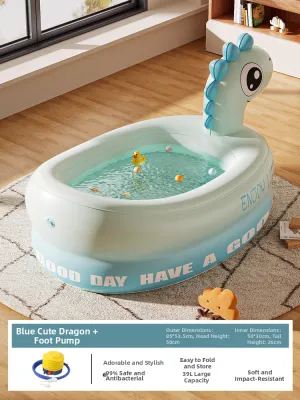
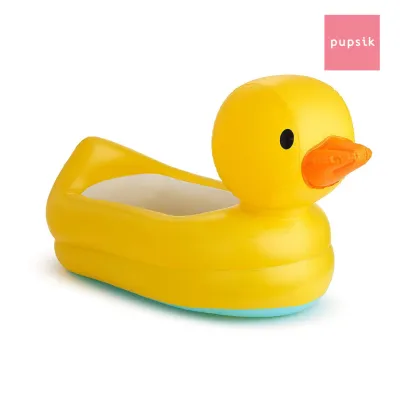
Prices are valid at publication and may change. Please refer to the product page for the latest price.
Instead of looking for an HSA mark, parents should focus on recognized international safety standards for nursery products. In Singapore, general consumer goods are monitored by Enterprise Singapore under the Consumer Protection (Consumer Goods Safety Requirements) Regulations. These regulations require consumer products to meet established international safety standards.
For inflatable baby products, the most relevant standards include the European Standard EN71 and the American Society for Testing and Materials (ASTM) standards, specifically ASTM F2670 for infant bath tubs. These standards ensure that the materials used are free from hazardous levels of heavy metals and that the physical design minimizes risks of tipping, entrapment, or sharp edges.
How to Verify HSA Certification Before Purchase
When browsing ecommerce platforms, you might see sellers using regulatory buzzwords to build unearned trust. If a seller insists a product is HSA-registered, you can easily verify this claim. The HSA maintains public, searchable databases, including the Class A Medical Device Register, on its official website. If a product is genuinely registered, the seller must provide a specific registration or notification number that you can cross-reference in the database.

If a search of the official database yields no results, the claim is misleading. Beyond HSA registration, verifying general safety compliance requires looking closely at the product packaging and documentation. Reputable manufacturers who have invested in safety testing will clearly display compliance marks, such as the CE mark or references to ASTM standards, directly on the packaging or the product’s warning label.
Be cautious of listings on online marketplaces that feature vague safety claims without providing verifiable documentation. If a listing lacks a physical brand address, manufacturer contact details, or clear instructions in English, it is a significant red flag. If you are unsure about a product’s safety, you can contact the brand’s customer service directly and ask for a copy of their independent laboratory test reports.
A certificate of conformity from an independent testing laboratory, such as SGS, TÜV SÜD, or Intertek, is the most reliable proof of safety. If a seller cannot or will not provide this documentation upon request, it is safer to assume the product has not undergone rigorous safety evaluations and to choose an alternative.
Key Safety and Material Checks for Inflatable Baby Bathtubs
Inflatable baby bathtubs are primarily made from flexible plastics like polyvinyl chloride (PVC). While PVC is durable and lightweight, the manufacturing process historically involved phthalates to make the plastic soft and pliable. Because babies frequently put their hands in bathwater and then into their mouths, choosing non-toxic materials is critical.
Look for products that explicitly state they are BPA-free, phthalate-free, and lead-free. High-quality modern inflatable baths often use food-grade PVC or thermoplastic polyurethane (TPU), which is inherently more flexible and does not require harmful chemical plasticizers. These materials are safer for your baby’s skin and overall health.
Structural integrity is another vital check. Examine the seams of the inflatable bath; they should be wide, smooth, and high-frequency welded rather than glued. Welded seams are far less likely to split under the weight of water and a moving child, preventing sudden deflation or water leakage.
The inflation valves must be designed to push flat into the tub’s surface once inflated. Exposed valves can scratch a baby’s delicate skin or be accidentally pulled open by an active infant. Additionally, check for a textured, anti-slip bottom to prevent your baby from sliding around during the bath.
New inflatable items often have a strong plastic smell when first unpacked, which is a result of off-gassing. To mitigate this, inflate the tub and place it in a well-ventilated, shaded outdoor area or balcony for at least 24 to 48 hours. Before the first use, wash the entire tub thoroughly with warm water and a mild, baby-safe detergent to remove any manufacturing residues.
Essential Features to Look for in an Inflatable Bath
The ideal inflatable bath should match your baby’s developmental stage. For newborns and infants under six months who cannot sit up independently, look for a tub with an integrated ergonomic incline or an inflatable backrest. Many models feature an inflatable safety post or saddle horn in the center of the tub floor, which gently supports the baby’s crotch and prevents them from sliding downward into the water.
For older infants and toddlers who can sit up, a flat, open interior is preferable, but it must feature an anti-slip textured bottom to prevent slips and falls. The tub should provide enough space for the baby to sit comfortably while still allowing you to maintain full control and support.
Valve design is also crucial for convenience and safety. Look for tubs with one-way safety valves that prevent air from escaping rapidly if the valve cap accidentally pops open. Some models feature multiple independent air chambers; this is an excellent safety feature because if one chamber punctures, the remaining chambers will keep the tub structurally sound long enough for you to safely remove your baby.
Additionally, a reliable drainage plug at the base of the tub is essential. Attempting to tip over a water-filled inflatable tub can cause the flexible sides to collapse, spilling water everywhere and potentially damaging the seams over time. The plug should sit flush with the tub floor so it does not cause discomfort to the baby.
Safe Setup, Usage, and Maintenance Guidelines
Proper setup is the foundation of safe bathing. When inflating the tub, follow the manufacturer’s guidelines closely and avoid using high-pressure air compressors, which can easily over-inflate and rupture the internal baffles. Air expands when heated, so filling the tub with warm water or exposing it to Singapore’s warm, humid climate will naturally increase the internal pressure. Inflate the tub until it is firm to the touch but still retains a slight give when pressed with a finger.
Always place the inflatable tub on a flat, stable, and non-slip surface, such as the floor of your bathroom or inside a standard adult bathtub. Never place it on elevated surfaces like countertops, tables, or beds, as the flexible nature of inflatable tubs makes them prone to sliding or tipping if the baby shifts weight.
Water safety requires absolute vigilance. Fill the tub with only a few centimeters of water—just enough to keep the baby warm. Always test the water temperature with your wrist or elbow before placing your baby in the bath; it should feel comfortably warm, ideally between 37 and 38 degrees Celsius.
Most importantly, maintain constant physical contact or close visual supervision at all times. Never leave your baby alone in the bath, even for a fraction of a second, to answer the door, retrieve a towel, or check your phone. If you must leave the bathroom, take your baby with you.
After the bath, maintenance is key to preventing mold and mildew, which thrive in Singapore’s high humidity. Drain the water completely and rinse the tub to remove soap scum and body oils. Wipe all surfaces dry with a clean towel, paying close attention to the deep crevices between the inflatable chambers where water tends to pool. Hang the tub to dry in a well-ventilated area out of direct sunlight, as prolonged exposure to UV rays can degrade the plastic and cause it to become brittle or sticky.
Frequently Asked Questions (FAQ)
Are all baby bathtubs required to have HSA certification in Singapore?
No, baby bathtubs are not required to have HSA certification in Singapore. The Health Sciences Authority (HSA) only regulates products that fall under health-related categories, such as medical devices, pharmaceuticals, and cosmetics. Since standard inflatable baby bathtubs are general consumer goods, they do not undergo HSA evaluation or registration. Instead, they are regulated under general consumer product safety guidelines managed by Enterprise Singapore. To ensure a tub is safe, parents should verify that it complies with international safety standards such as the European Union’s EN71 or the United States’ ASTM F2670, which test for physical hazards and chemical safety.
How often should I replace an inflatable baby bathtub?
You should replace an inflatable baby bathtub as soon as you observe any signs of wear, material degradation, or structural compromise. Common warning signs include slow air leaks that require frequent reinflation during a single bath session, weakened or pulling seams, and a sticky or tacky texture on the plastic surface, which indicates that the material is breaking down chemically. Additionally, if you notice persistent black mold or mildew spots deep within the seams that cannot be removed with thorough cleaning, the tub should be discarded to protect your baby’s respiratory health and skin. Even in the absence of visible damage, many parents choose to replace inflatable tubs after 9 to 12 months of daily use due to the natural wear and tear caused by constant inflation, water exposure, and humidity.
Community discussion
Share your experience or ask a question. Comments are reviewed before publication.